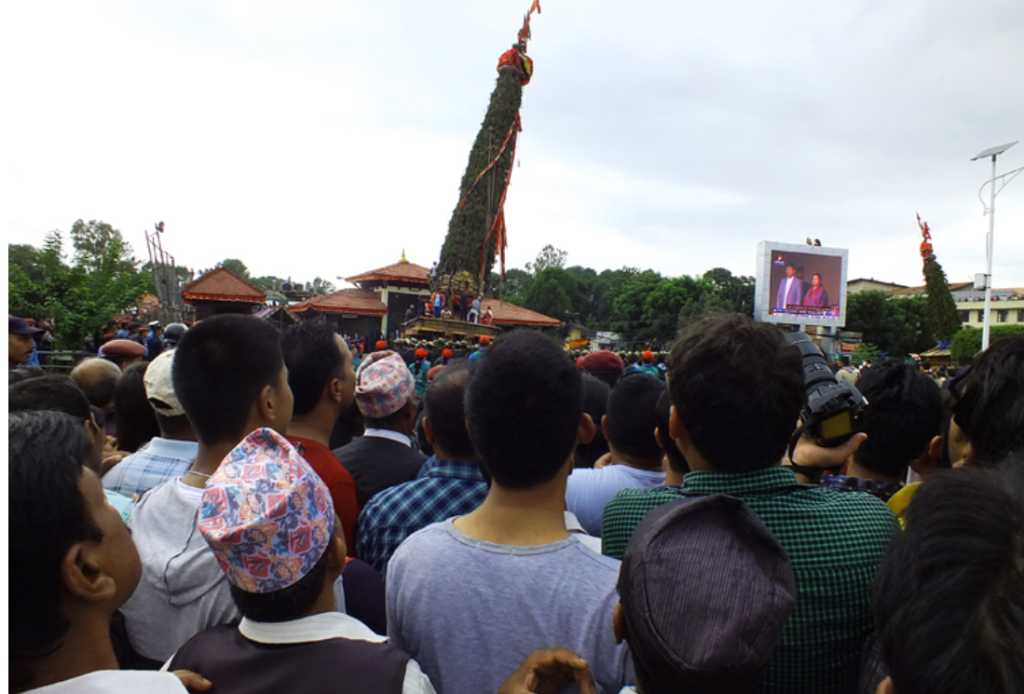
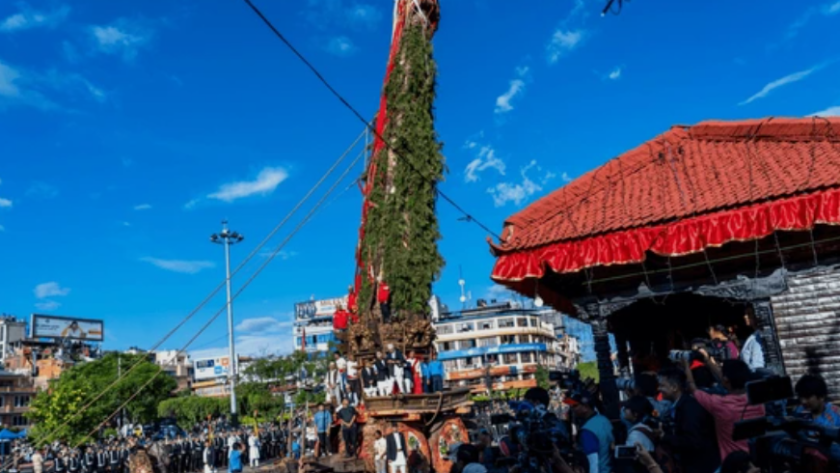
A giant chariot moves through crowded streets where many people cheer. This is Bhoto Jatra in Nepal.
The Bhoto Jatra festival in Nepal has music and traditions. People gather to see a special outfit called a bhoto. It is a fun and colorful event, and it has been celebrated for a very long time.
Here in the article, you will learn:
- What is Bhoto Jatra?
- Why do people celebrate it?
- The story of the famous bhoto?
- How does the celebration take place today?
- Why is Nepali culture important?
Bhoto Jatra
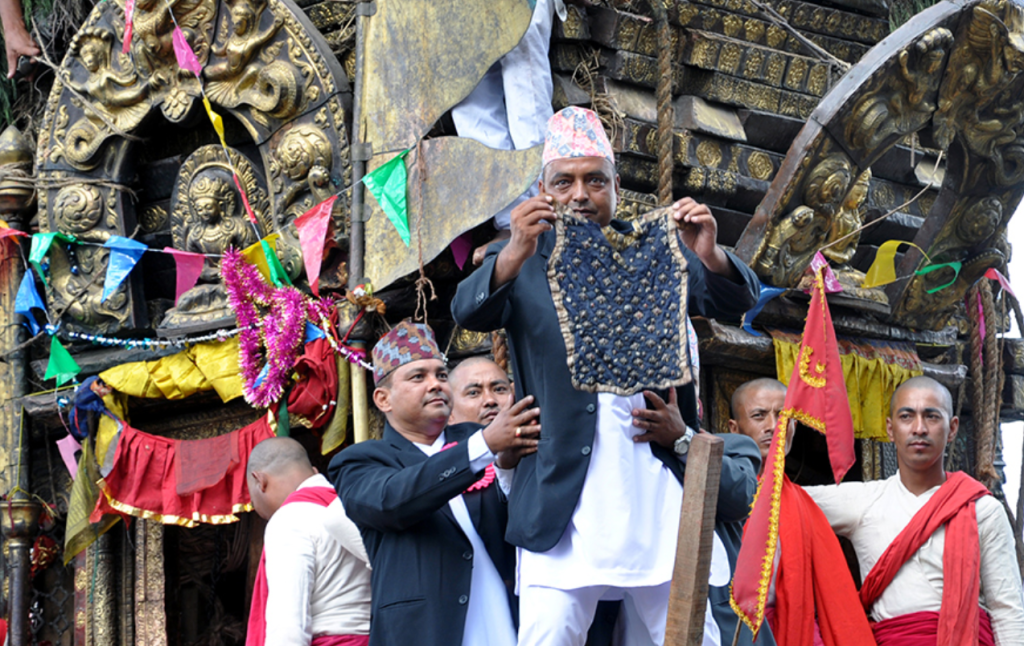
Bhoto Jatra is a traditional festival in Nepal that marks the end of the Rato Machhindranath Jatra. The term “bhoto” means special vest, and during the celebration, a jeweled vest is displayed to a large crowd from a tall chariot. Communities come together to enjoy this festive day.
This tradition continues today during Bhoto Jatra. Rato Machhindranath is also worshipped as the god of rain and compassion. Farmers pray for good rainfall and successful harvests during the festival season.
- The Legend: The vest was gifted by the Serpent King (Karkotak Nag) to a farmer, later stolen by a ghost, and subsequently placed in the care of Rato Machindranath, the god of rain and harvest, when ownership could not be established.
- The Display: The bhoto is displayed from all four corners of the chariot, usually by an official of the Guthi Sansthan, for anyone to claim with proper proof.
- Significance: It serves as a celebration of rain, prosperity, and the enduring cultural heritage of the Kathmandu Valley.
- Observation: The festival, sometimes discussed on community forums is a public holiday in the Kathmandu Valley.
- Final Day: The ceremony is the climax of the longest chariot festival in Nepal.
- Location: The main event takes place at Jawalakhel, Lalitpur.
Major rituals include:
- Pulling the giant wooden chariot
- Religious prayers and offerings
- Traditional Newari musical performances
- Gathering of priests and devotees
- Public display of the sacred bhoto
Major Attractions:
- Giant chariot of Rato Machhindranath
- Public display of the jewel-studded bhoto
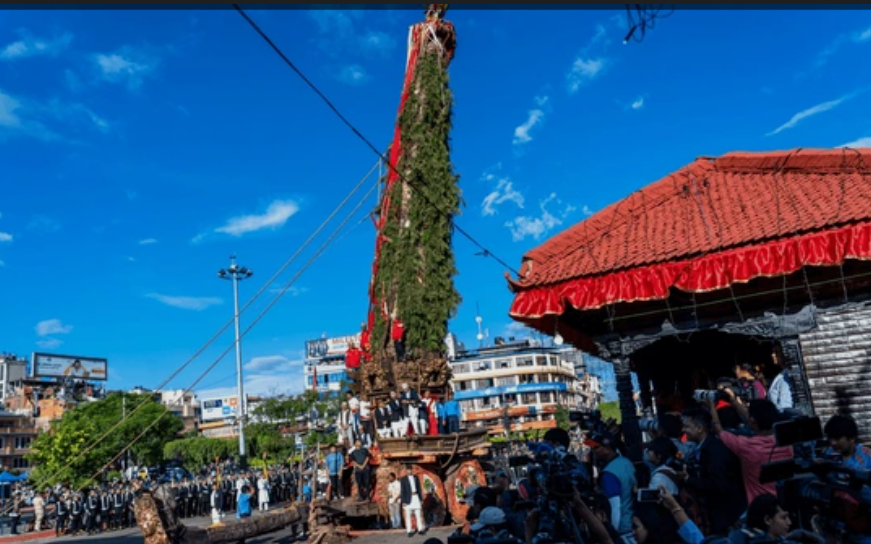
- Traditional Newari music and dances
- Massive public gathering at Jawalakhel
- Cultural unity among Hindu and Buddhist communities
- Presence of national leaders and media coverage
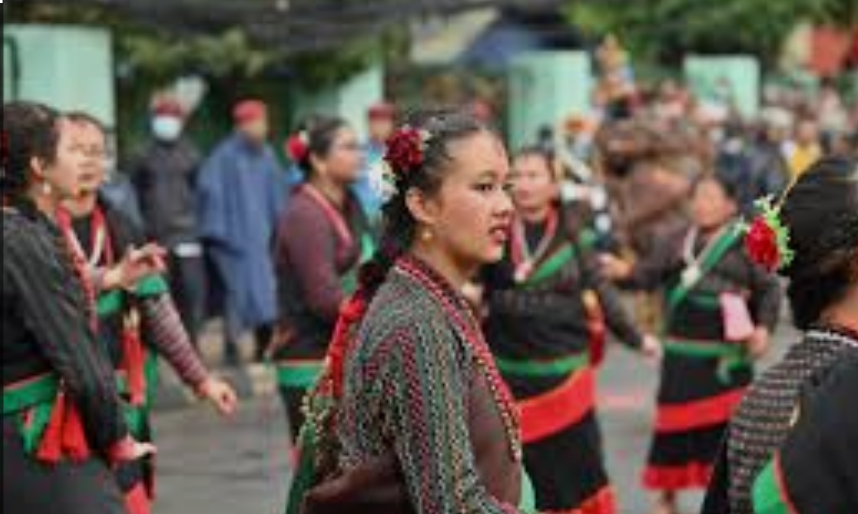
This festival is celebrated by pulling the wooden wheeled chariot along the various part of city.A 60-feet tall spire fabricated from bamboo poles raised from its all four ends is carried by the chariot. The festival ends in four day. At the ends by displaying the bejeweled Bhoto (Vest) claimed to be of Machindranath to the dignitaries and the public.
Then
– The festival was mainly observed by local Newar communities.
– Traditional oil lamps and handmade decorations were common.
– Communication depended on word of mouth.
– Rituals were conducted in a simpler way.
Now
– The festival is broadcast live on television and social media.
– Thousands of tourists attend annually.
– Security arrangements and crowd management have improved.
– Modern technology is used for media coverage and promotion.
Bhoto Jatra is important because:
- It preserves Nepal’s ancient traditions.
- It promotes religious tolerance between Hindus and Buddhists.
- It strengthens cultural tourism.
- It teaches historical myths and values.
- It unites communities through celebration.
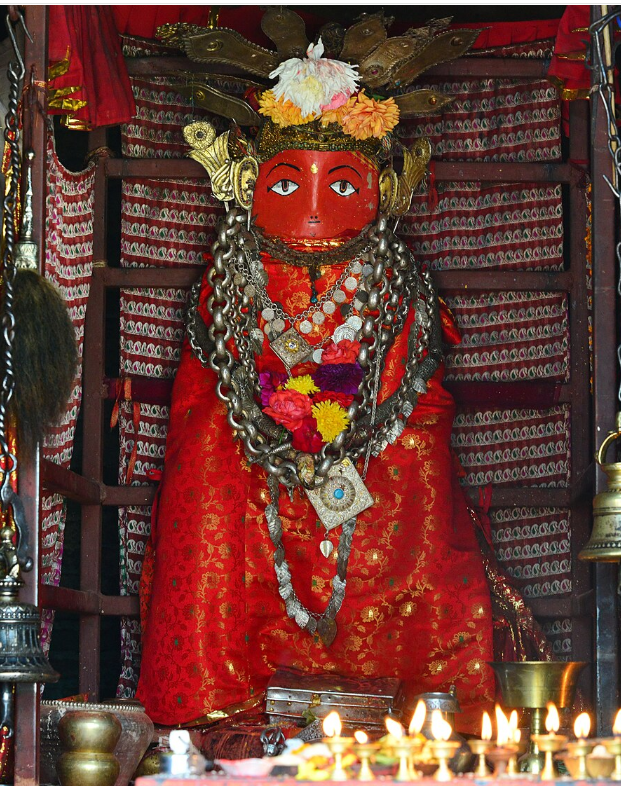
According to the legend, it is stated that when Guru Gorakhnath came to Patan, he didn’t get the food from the locals. He found the Nagas (Serpents) responsible for rain in the valley. He captured all and sat on them, started meditating. When the Nagas were under the control of Guru Gorakhnath they could not make rain, and the valley suffered from severe drought. Then King Narendra Dev was asked to invite Machhendranath, a teacher of Gorakhnath from Assam (India), in hopes to end the drought. When Gorakhnath heard his Guru arrived in Patan, he decided to visit his Guru, and therefore the Nagas were free, and then the valley had plenty of rain. From that day, the locals started to worship Machhendranath for saving them from the drought, and King Narendra Dev had started the festival of Rato Machhendranath.
Final and closing day of the festival, the precious sacred vest (Bhoto) shows to the public in the presence of the head of the country, the Prime minister, ministers, and senior government officials. Bhoto Jatra, means “festival of the vest” and the priests (astrologers) community choose an auspicious day to hold the Bhoto Jatra festival.
According to legend, a local Jyapu farmer lost the vest which he had received as a gift from the serpent god Karkotaka Naga for doing him a favor. One day, when the farmer came to Jawalakhel to watch the chariot procession festival, he saw someone wearing his missing Vest. Then the quarrels began over the Vest. But they didn’t have evidence to prove the ownership. At last, they agreed that the Vest would be kept with Rato Machhendranath until someone brings rightful proof to claim the ownership. Since then, annually the precious Vest has been showing to the public.