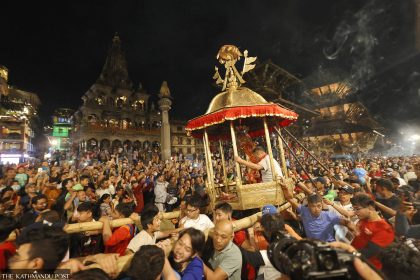

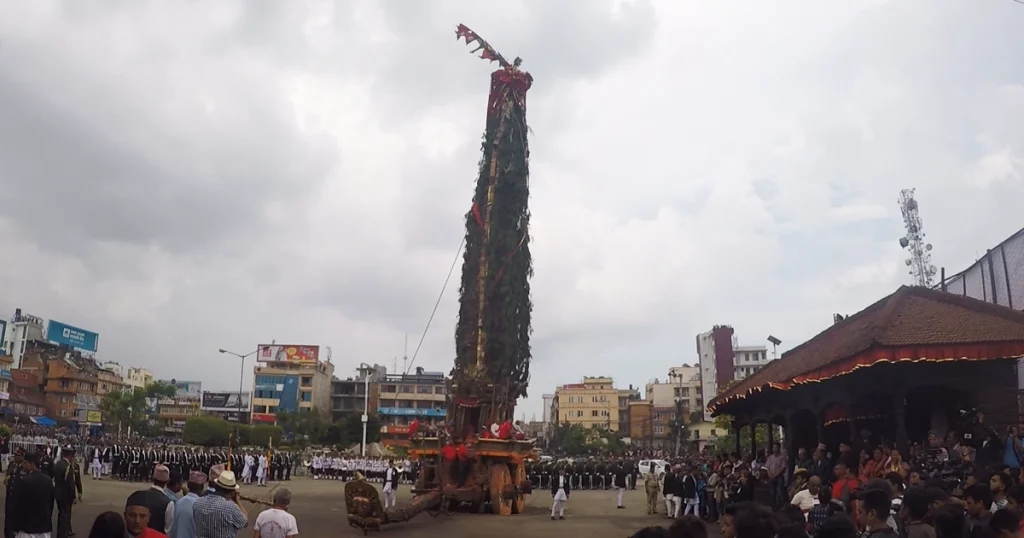
The Rato Machindranath Jatra is more than just a celebration. It’s a vibrant reflection of the Lalitpur Valley’s rich cultural heritage and deep-seated faith. As the longest chariot festival in Nepal, it honors the deity of compassion, who is also revered as the bringer of life-giving rain. Each year, lots of devoted followers comes tn Patan, eagerly gathering to pull the huge 60-foot chariot, their collective efforts seeking to ensure a bountiful monsoon season for the valley. This ancient festival is a testament to the enduring power of tradition and the unwavering devotion of the people, as they come together to invoke the blessings of the deity and usher in a season of prosperity.
Origin and History
The Sacred Legend of the 12-Year Drought
History traces the origins of Rato Machindranath Jatra back to the 10th century. Moreover, people believe that King Gunakama Deva started the festival to appease the god of rain and harvest. According to legend, the valley suffered from a severe drought, and astrologers advised the king to bring the statue of Rato Machindranath from a neighboring town. The king brought the statue to Kathmandu, and the rains came. Moreover, people established the festival as an annual event to ensure good harvests and rainfall. The festival has become an integral part of Nepalese culture and tradition over the years.

Centuries of Tradition in Patan
In the past, the valley faced a severe drought that lasted for 12 years, and all rivers dried up. As a result, the King of Bhaktapur took immediate action and visited Swayambhu to consult a Tantrik. After careful listening, the Tantrik explained that Guru Gorakhnath was angry and meditating on a cushion of nine powerful serpents, which were essential for rainfall.
Moreover, he revealed that rain would not return until the serpents were freed. In addition, he said Rato Machhindranath must arrive to break this condition. Therefore, the king began searching for Machhindranath.
After some time, they discovered that Machhindranath had been reborn as the 108th son of King Sashi in Assam. Consequently, the king of Bhaktapur, a Tantrik, and a Newar representative traveled to Assam to bring him back. However, they failed due to his divine origin.
Later, the Tantrik summoned the four Bhairabs, and they successfully brought Machhindranath to Guru Gorakhnath. Finally, Gorakhnath ended his meditation, the serpents were freed, and rain returned to the valley.


The Big 12-Year Festival Cycle
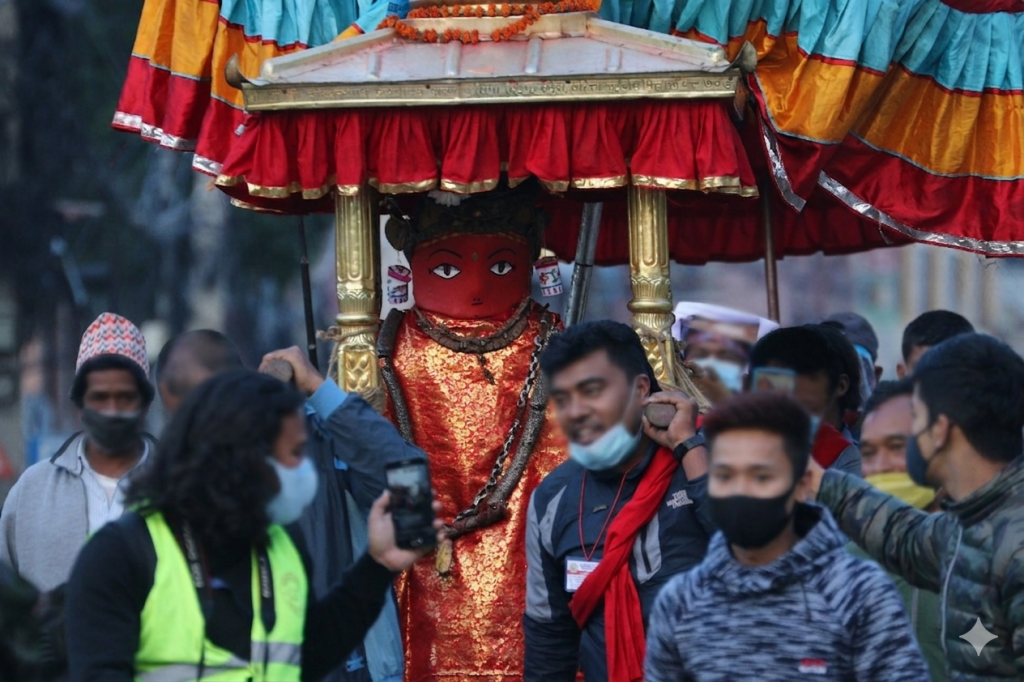
The festival usually takes place in Patan; however, every 12 years, it moves to Bungamati, making the celebration even more special. In that year, the community organizes a grand event with extra excitement and energy. For example, people compare it to a rare birthday celebration that happens only once in a long time. Instead of cake and gifts, they prepare a large chariot procession. Normally, the deity’s journey remains short; however, during this special cycle, it travels a long distance between two villages. As a result, people from all over the country gather to witness this rare event. Moreover, thousands of devotees join the celebration to take part in the festivities. Overall, the 12-year cycle creates a larger and more vibrant version of the regular festival, and it brings the whole community together in a remarkable way.
Why Every 12 Years?
The number 12 is very important in Nepali culture. It represents a full circle of time and stars. When the 12th year arrives, the festival is extra long and extra exciting!
Exploring the Sacred Patan Chariot Route
The Rato Machindranath Jatra follows a very specific path through the city. This Patan Chariot Route is hundreds of years old. The chariot does not move all at once; it stops at different holy spots so everyone can offer prayers. The chariot moves slowly so the “Rain God” can visit different neighborhoods in Patan. Here are the traditional stops along the Patan Chariot Route:
Step-by-Step Chariot Journey
- Gabahal: This is the very first stop after the chariot leaves Pulchowk. Devotees gather here to offer the first prayers of the journey.
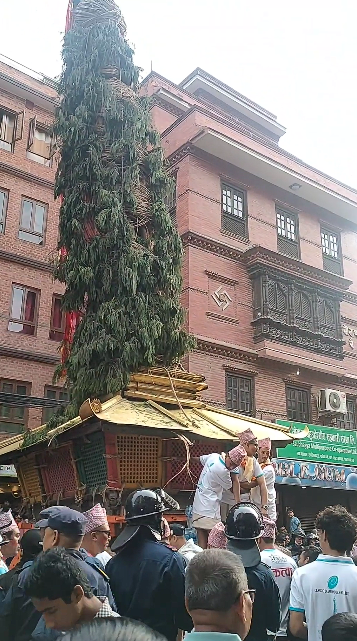
- Mangal Bazar: Next, the crowd pulls the giant wheels to the heart of the city near Patan Durbar Square.
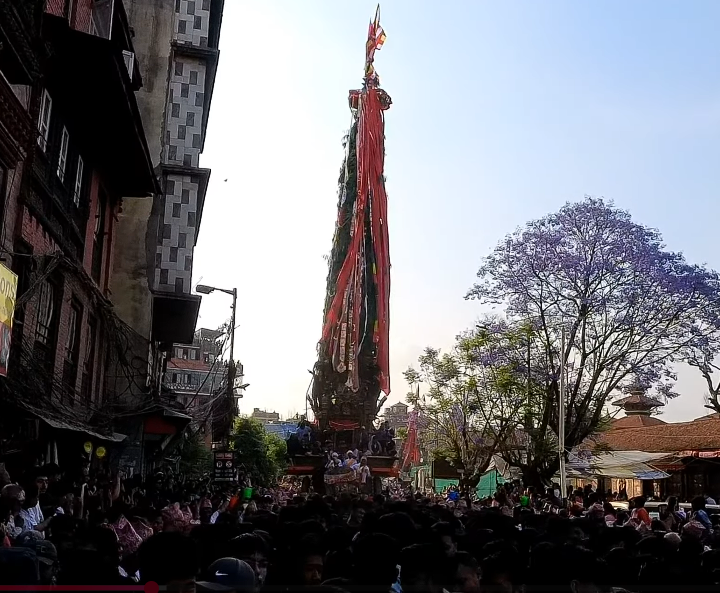
- Hakha: The procession moves through this ancient residential area, where the streets are very narrow.
- Sundhara: The chariot rests near the famous “Golden Spouts”. People believe the water here is holy.
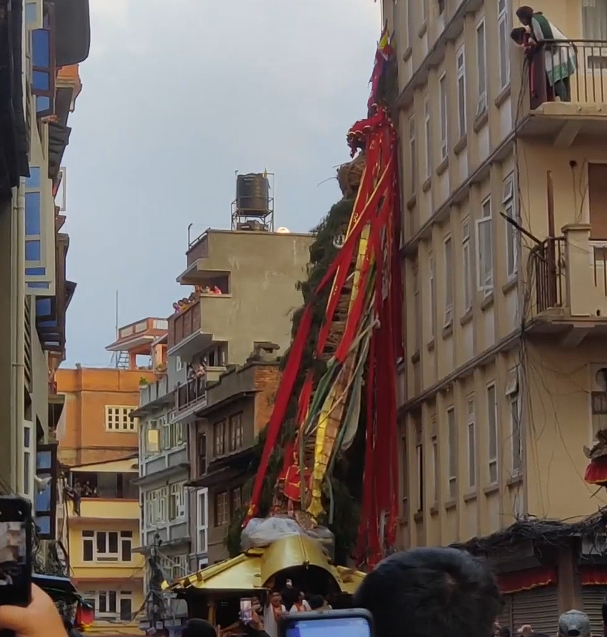
- Chakrabahil: This is a quiet, sacred stop before the chariot reaches the busier parts of town.
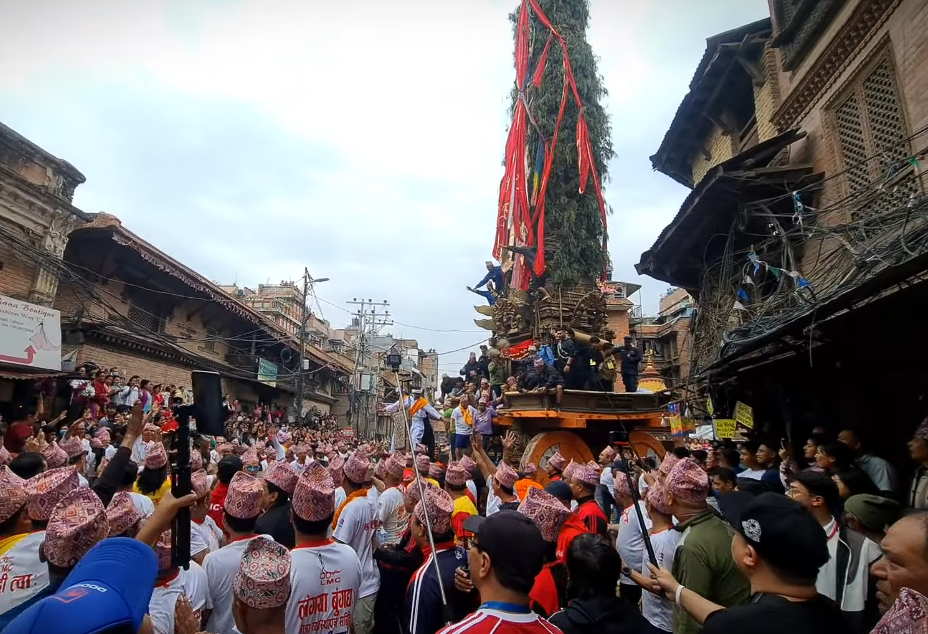
- Lagankhel: This is a major resting area where the chariot stays for several days. Traditional rituals like the “coconut dropping” ceremony happen here.
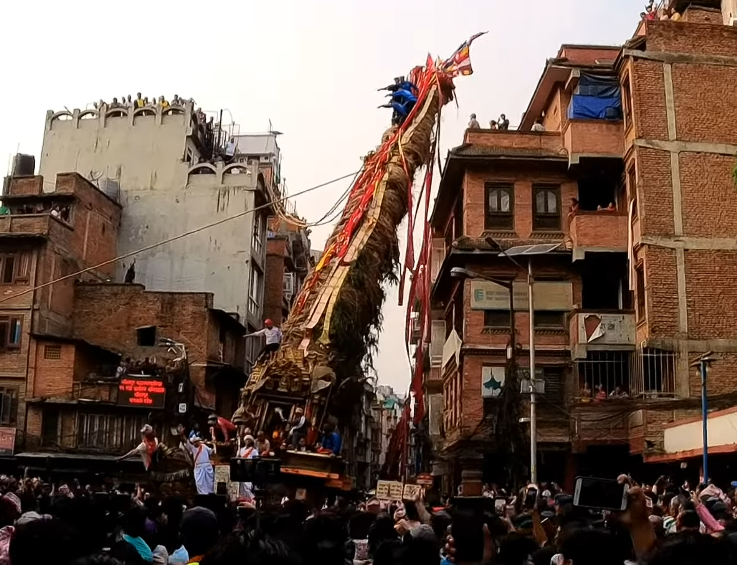
- Jawalakhel: The final destination! This is the large open field where the Bhoto Jatra 2026 takes place and the festival concludes.The journey begins at Pulchowk, where the massive chariot is first built.
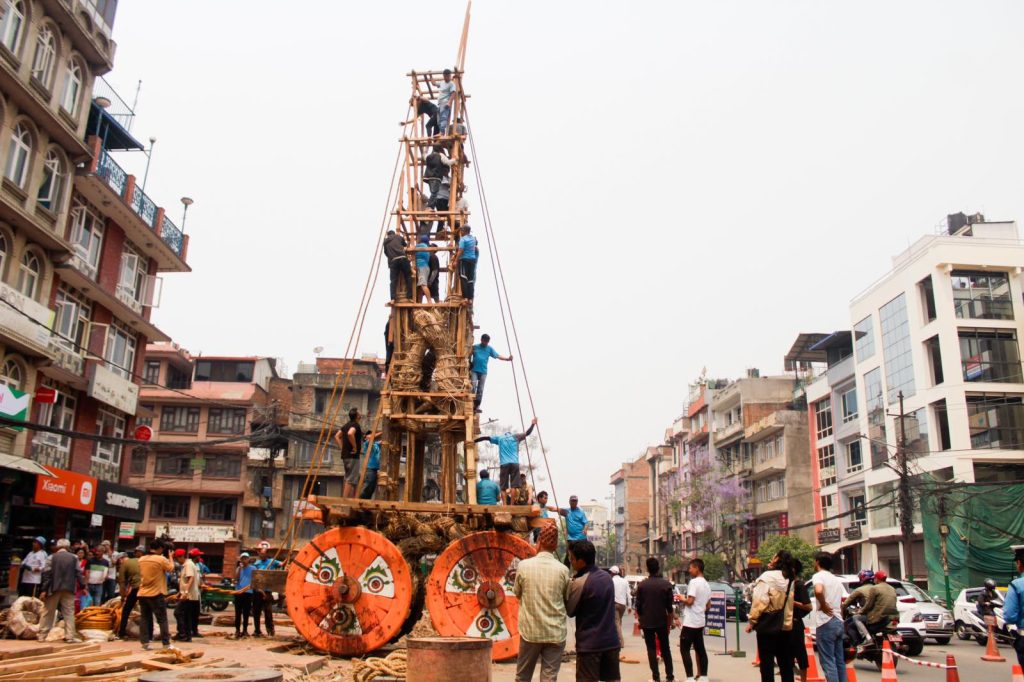
From there, hundreds of people pull the ropes to move it toward Gaubahal and Sundhara. Each stop is like a “rest station” for the deity. The most famous part of the trip is the move from Pulchowk to Jawalakhel. Once the chariot reaches the open field at Jawalakhel, the festival reaches its grand finale. This is where the famous Bhoto Jatra 2026 takes place.
The Ending: The Bhoto Jatra
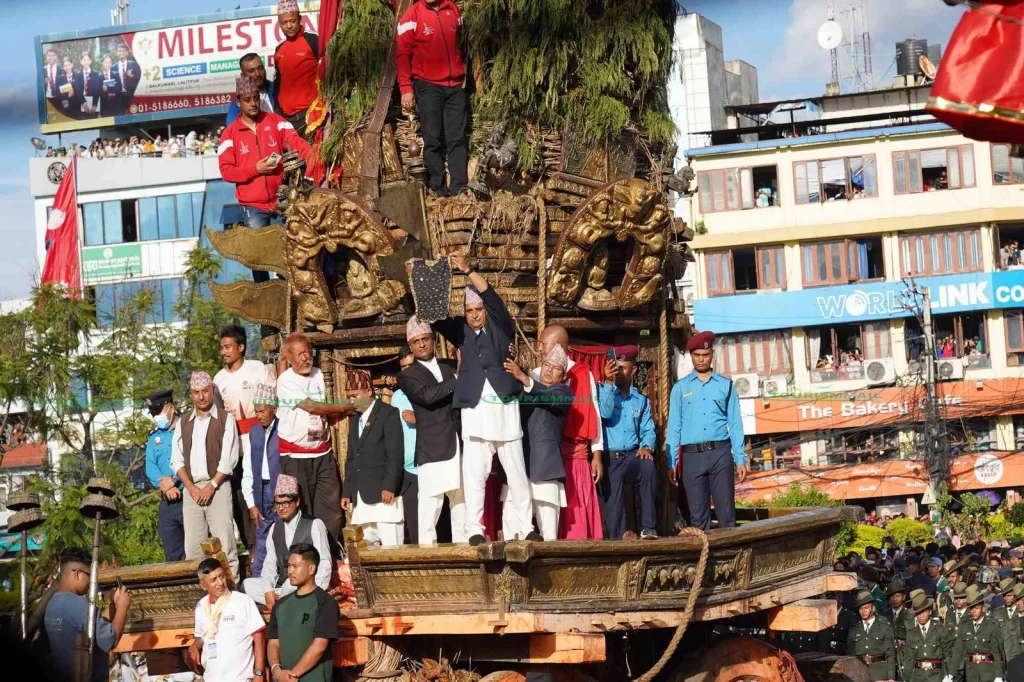
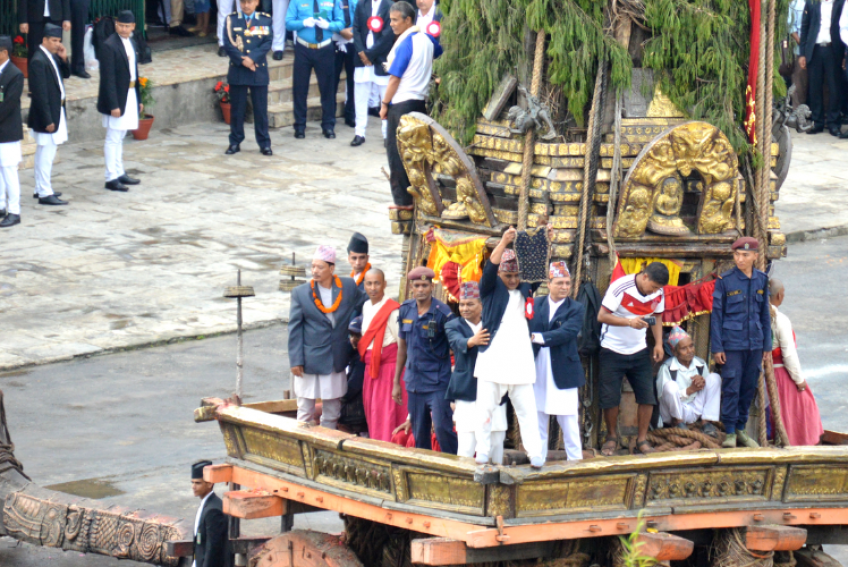
The grand finale of this long journey is called the Bhoto Jatra 2026. On this day, a special official stands on the chariot and holds up a jewel-studded vest.The “Bhoto” is a legendary vest that once belonged to a serpent king! Everyone gathers in the big field at Jawalakhel to catch a glimpse of the sparkling jewels. It is the most crowded and exciting day of the whole festival.

Conclusion
The Rato Machindranath Jatra is a wonderful mix of mystery, teamwork, and ancient history. From the giant chariot to the secret vest, it shows how much the people of Nepal value their traditions. Whether it is a normal year or the special 12th year, the spirit of the Rain God brings everyone together.