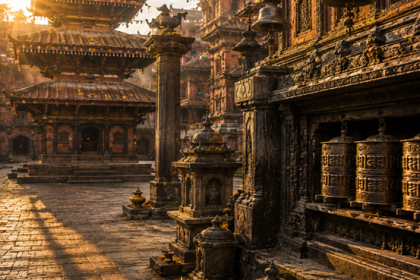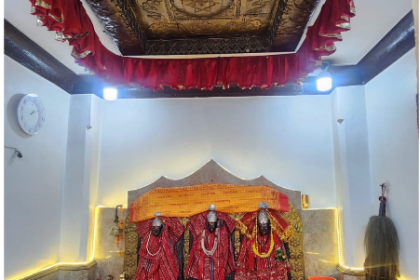

Lalitpur Metropolitan City, which people also call Patan or Yala. It is one of the oldest and most culturally rich cities in Nepal. If you walk around here, you will see that almost every street and courtyard has some religious history. Among the 29 wards of Lalitpur, Ward 4 is unique. Ward 4 features many important religious sites. These include several ancient goddess temples and a powerful Shiva temple. You will also find a traditional mandap here. This structure connects directly to the longest chariot festival of Nepal. These landmarks are essential temples in Lalitpur Ward 4 for any visitor.
Ward 4 includes areas like Jawalakhel, Nakhu (Nakkhu), Ekantakuna, Afaldol, Bagdol, Bhanimandal, and Dhobighat. It stretches from the Nakhu Khola in the south up to Jawalakhel in the north. Whether you live here, study here, or are visiting Nepal to explore culture and religion. This area gives you a very real and meaningful experience.
In this article, you will find a complete and trusted list of temples in Ward 4. We gathered this information directly from the official Ward 4 website.
Complete List of Temples in LMC Ward 4
According to the official records of Lalitpur Metropolitan City Ward No. 4. The following temples and sacred religious sites are located within the ward:
- Nardeveshwar Mahadev Temple — Nakhu
- Chhwaskamani Ajima Temple — Ekantakuna
- Vishnudevi Temple (Yappa Maju) — Nakhu
- Brahmayani Temple (Nekhu Maju) — Bagdol
- Maheshwari Temple (Paligal Maju) — Afaldol
- Lalit Mandap (Bung Dyah / Rato Machhendranath) — Jawalakhel
- Hiranyapith (Saraswati Temple) — Dhobighat area
Temples in LMC Ward 4 – Details
1. NARDEVESHWAR MAHADEV TEMPLE (नारदेश्वर महादेव) – NAKHU

The Nardeveshwar Mahadev Temple is an ancient Shiva temple situated in Nakhu, Ward 4. It is dedicated to Lord Mahadev and holds deep significance in the religious landscape of the area. What makes this temple particularly special is its connection to the ancient text of Swasthani Vrat Katha. The tenth chapter of the Swasthani Katha describes the Hiranyapith area. This text mentions Nardeveshwar Mahadev as a sacred presence at this holy ground. Devotees visit this temple regularly, especially on Mondays, during Shivaratri, and throughout the holy month of Shrawan (July–August).
2. CHHWASKAMANI AJIMA TEMPLE (छ्वासकामनि अजिमा) – EKANTAKUNA

The Chhwaskamani Ajima Temple is located at Ekantakuna. It is one of the most unique and living religious sites in Ward 4. The goddess Chhwaskamani Ajima is worshipped as a powerful deity associated with rain, protection, and community wellbeing. This temple holds a special role in the Rato Machhendranath Jatra — Nepal’s longest chariot festival. The deity Rato Machhendranath stays in Patan’s Tebaha for six months. He spends the other six months at Bungmati’s Machhindra Bahal. The annual procession carries the deity through Ward 4. During this time, the community rests the chariot at the Chhwaskamani Ajima mandap in Ekantakuna. The Ward 4 office actively manages and secures this sacred enclosure throughout the year.
3. VISHNUDEVI TEMPLE -YAPPA MAJU (विष्णुदेवी -यप्पा माजु) – NAKHU

The Vishnudevi Temple, locally called Yappa Maju, is situated in the Nakhu area of Ward 4. The origin story of this goddess is deeply rooted in the Swasthani Vrat Katha. Tradition says Goddess Vishnudevi took the fierce form of Ugrachandi. She performed intense penance for over 300 years. This act freed Lord Vishnu from the curse of Vrinda. After her penance, the goddess descended to the mortal world. She now awaits liberation through the prayers of a devoted ascetic. This temple is also a key stop for the Rato Machhendranath chariot. The chariot rests at the mandap directly in front of the temple. This tradition connects the ancient goddess to the living festivals of Lalitpur.
4. BRAHMAYANI TEMPLE – NEKHU MAJU (ब्रम्हायणी – नेखु माजु) -BAGDOL

The Brahmayani Temple, known locally as Nekhu Maju, is located in Bagdol within Ward 4. This shrine is one of the famous Ashta Matrika (Eight Mother Goddesses) of Patan. Eight divine goddess shrines protect the ancient city of Patan from every direction. The Brahmayani shrine plays a vital role in the historic Ashta Matrika Naach. This 350-year-old masked dance tradition began during the Malla period. During the festival, thirteen divine performers represent different sacred characters. All dancers must fast and shave their heads to maintain the tradition’s sanctity. Performers are not permitted to remove their masks until the dance is fully complete. Dancer-devotees visit Brahmayani in Bagdol as part of the ritual circuit of all eight mother goddess shrines across Lalitpur.
5. MAHESHWARI TEMPLE – PALIGAL MAJU (महेश्वरी – पलिगाल माजु) -AFALDOL

The Maheshwari Temple, popularly known as Paligal Maju or Parigal Devi. It is located at Afaldol in Ward 4, near the Sundarighat area along the Bagmati River, northwest of Malpokhari. Maheshwari Devi is also recognized by the name Rudrayani Mata. The name Parigal is an evolved form of the original Palingal. It is believed that this Shaktipeeth guards the entry into Patan city from the direction of Kirtipur.
This temple is one of the Ashta Matrika shrines and is also an essential stop in the Dipankha Yatra. An important religious pilgrimage circuit of Nepal Mandal. The Ward 4 office has committed to developing this Shaktipeeth as a religious tourism destination. Including construction of a Newa Guthi community building and full temple complex development.
6. LALIT MANDAP – BUNG DYAH (ललित मण्डप) – JAWALAKHEL

The Lalit Mandap at Jawalakhel is the sacred pavilion associated with Bung Dyah. The Newar name for Rato Machhendranath — the god of rain, harvest, and compassion. Rato Machhendranath is also known as Raktalokitsarva Karunamaya. And the chariot festival held in his honor has been celebrated for thousands of years. The procession traditionally begins on Baisakh Shukla Pratipada and concludes on Ashadh Shukla Chaturthi.
Jawalakhel is the final destination of the Rato Machhendranath chariot festival every year. The festival concludes here with the celebrated Bhoto Jatra ceremony. A public event where a sacred bejeweled vest (Bhoto) is displayed. In the presence of Nepal’s head of state, foreign dignitaries, the living goddess Kumari, and tens of thousands of devotees. It is believed that both humans and spirits gather at this occasion to witness the display of the Bhoto. This makes Jawalakhel and Lalit Mandap one of the most spiritually and culturally significant locations in all of Nepal.
7. HIRANYAPITH – SARASWATI TEMPLE (हिरण्यपिठ) -DHOBIGHAT

The Hiranyapith is a sacred area in Ward 4’s tourism zone, home to an ancient Saraswati Temple. The Swasthani Vrat Katha’s tenth chapter describes the Saraswati temple at Hiranyapith. This ancient text details the holy surroundings of the site. According to the legend, Goddess Saraswati performed intense prayers and penance here. Afterward, she received a divine blessing for her devotion. She wished to reside in the speech of all living beings. Today, this sacred land remains a powerful center for wisdom and voice.
This makes Hiranyapith not just a tourist site, but a deeply mythological and spiritually layered sacred ground. Many students and families visit the Saraswati temple during Basant Panchami. This annual festival celebrates the spirit of knowledge and learning. Visitors offer prayers to gain wisdom for their studies. It is a vibrant time for the local community in Ward 4.
Why LMC Ward 4 is a Religious Heritage Zone
LMC Ward 4 is one of the most concentrated areas of living religious heritage in Lalitpur. Three of Patan’s eight Ashta Matrika goddess shrines — Vishnudevi, Brahmayani, and Maheshwari — are all within this single ward. Ward 4 serves as a vital ritual corridor for the Rato Machhendranath festival. The chariot makes two official ceremonial stops in this area. These locations are the Vishnudevi mandap in Nakhu and Chhwaskamani Ajima mandap in Ekantakuna. Finally, the festival reaches its grand conclusion at the Jawalakhel grounds.
The Hiranyapith area connects the ward to the Swasthani Vrat Katha, one of Nepal’s most beloved religious texts. And the 350-year-old Ashta Matrika Naach (Gaan Pyaakhan) continues to bring these shrines to life every year during Dashain.
For anyone visiting Lalitpur, exploring Ward 4 is not just a cultural activity. It is a journey through a living, breathing religious tradition that has survived and flourished for over a thousand years.
Watch: Temples and Festivals of LMC Ward 4
Frequently Asked Questions (FAQ)
Q: Where exactly is LMC Ward 4? A: LMC Ward 4 covers Jawalakhel, Nakhu (Nakkhu), Ekantakuna, Afaldol, Bagdol, Bhanimandal, and Dhobighat in Lalitpur Metropolitan City, Nepal.
Q: How many temples are in LMC Ward 4? A: There are 7 verified temples and sacred sites within LMC Ward 4. Including three of Patan’s eight Ashta Matrika goddess shrines and one site directly mentioned in the Swasthani Vrat Katha.
Q: What is the most famous religious event connected to LMC Ward 4? A: The Bhoto Jatra ceremony at Jawalakhel. Which marks the conclusion of the Rato Machhendranath chariot festival, is the most famous event. It is attended by Nepal’s head of state and the living goddess Kumari.
Q: Are there any heritage structures in Ward 4 that are not temples? A: Yes. Ikuhiti and Jawalahiti are ancient Malla-era stone water spouts (Dhunge Dhara) within Ward 4. They are important heritage structures but are not temples. Malpokhari is also a historic pond in the ward.