Overview
Have you ever looked up and thought a cloud looked like a giant piece of popcorn? Or maybe you saw thin, wispy streaks that looked like horse tails? The sky is like a giant, moving map. If you know how to read it, clouds can tell you exactly what the weather will do next. In this guide, we will learn how to spot different clouds and what they mean for your weekend plans!


What is Cloud?
Clouds are visible masses of tiny water droplets or ice crystals that float in Earth’s atmosphere. They form when the sun heats water on the surface, causing it to evaporate into the air. As the warm air rises, it cools and condenses around small particles like dust, and consequently, clouds begin to develop. Clouds appear in many shapes, sizes, and heights depending on temperature and weather conditions. For example, some clouds look thin and wispy, while others appear dark and heavy before rain. Moreover, clouds play a major role in weather because they bring rain, provide shade, and help regulate Earth’s temperature daily.
Three main clouds type are:
- High-level [The attic]: These live at the very top
- Mid-level [The living room]: These hang out in the middle
- Low-level [The Basement]: These sit near the ground
The Three Main Cloud Families
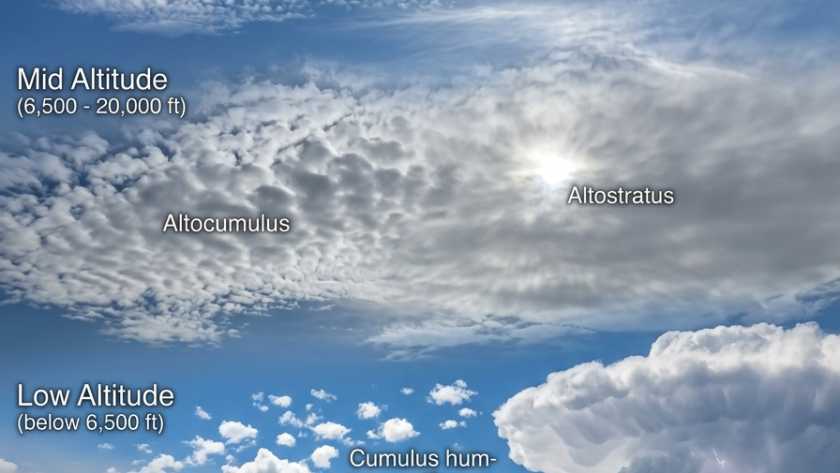
Scientists put clouds into groups based on how high they are in the sky. It is like a three-story house:
- High-level: These live at the very top (the attic).
- Mid-level: These hang out in the middle (the living room).
- Low-level: These sit near the ground (the basement).
High-Flying Wisps: The Cirrus Family
The highest clouds in the sky are called Cirrus. They live so high up that they are actually made of tiny ice crystals instead of water drops. They are usually above 20,000 Fts.
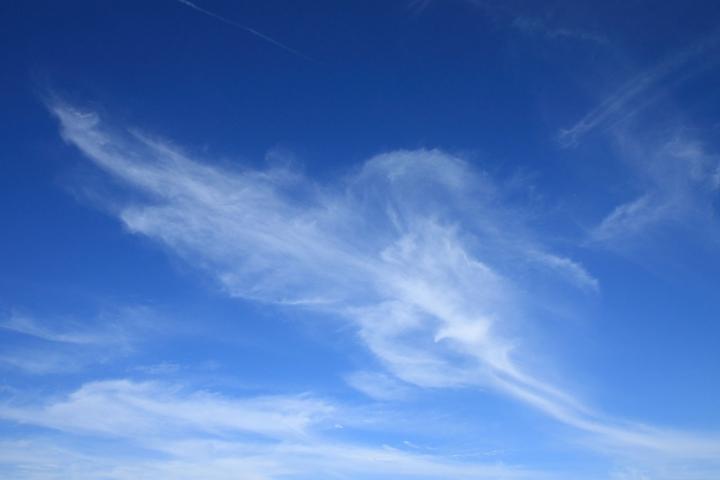
What they tell us:
- The weather is nice right now.
- A change in the weather is coming soon.
- Wind is blowing very fast high up in the sky.
If you see these thin streaks, enjoy the sun while it lasts. Rain might be headed your way in a day or two.
Cirrocumulus Clouds
- Appearance: Small, rippled “cotton patches”
- Weather meaning: Fair but cold; may signal storms in tropical regions

Trivia: Sometimes, cirrocumulus clouds are called a “mackerel sky” based on the folklore, “Mare’s tails and mackerel scales make tall ships take in their sails.” These clouds can precede an approaching warm front. Warm fronts can bring veering winds and precipitation. So, a sailor might take in his sails.
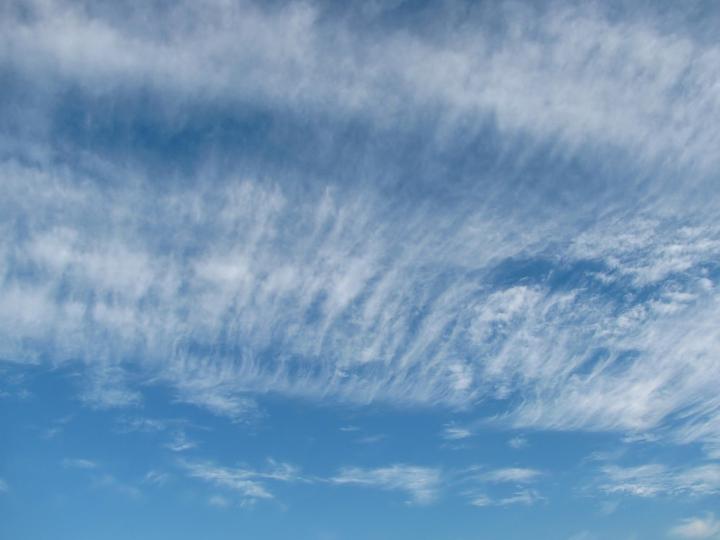
Cirrostratus Clouds
- Appearance: Thin, veil-like layer covering the sky
- Weather meaning: Rain or snow likely within 24 hours
Middle Clouds: The Altos
Middle-level clouds usually start with the word “Alto.” They sit between 6,500 and 20,000 feet high.
Alto-Cumulus: The Polka Dot Sky
An alto-cumulus pattern looks like a bunch of small, grey or white balls. If you see a sky full of these, it might look like a sea of fish scales.
- Appearance: Gray or white puffy patches
- Weather meaning: Generally fair weather

Altocumulus clouds
What they tell us:
- If you see them on a warm, sticky morning, get ready.
- It often means thunderstorms will happen by late afternoon.
Altostratus: The Grey Blanket
These cover the whole sky like a giant, fuzzy grey blanket. You can still see the sun through them, but it looks watery or dim, like looking through a foggy window.

- Appearance: Gray or bluish sheet covering the sky
- Weather meaning: Steady rain or snow on the way
What they tell us:
- Continuous rain or snow is likely on the way.
- The air is getting wetter.
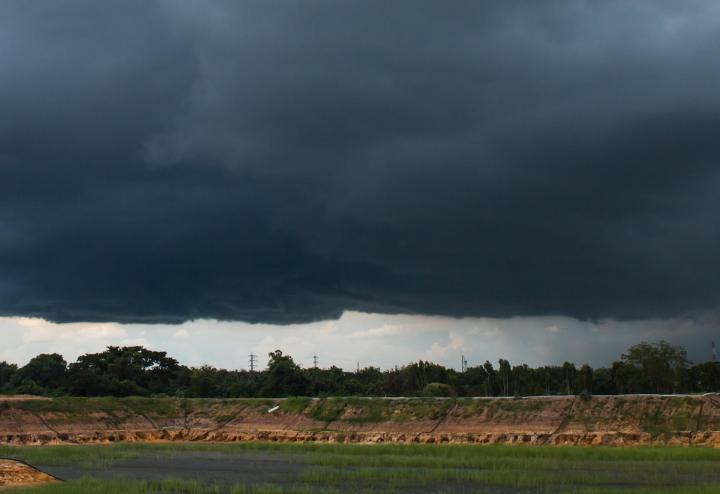
Nimbostratus Clouds
- Appearance: Thick, dark, shapeless
- Weather meaning: Continuous rain or snow
Low Clouds: The Big and The Gloomy
Low clouds sit below 6,500 feet. These are the ones we interact with the most. Sometimes, they even touch the ground.
Stratus: The Rainy Roof
Stratus clouds are flat and featureless. They hang low and make the whole world look a bit grey and sleepy.

What they tell us:
- Light mist or drizzle is likely.
- The weather will probably stay gloomy for the rest of the day.
Cumulus: The Fair-Weather Friends
These are the normal clouds. They look like bright white cotton balls with flat bottoms. They are usually spaced apart with lots of blue sky in between.

What they tell us:
- The weather is great!
- As long as they stay small and white, you are safe to play outside.
The Storm Clouds
Sometimes, a small Cumulus cloud starts to grow. It drinks up warm air and gets taller and taller. This creates a Cumulonimbus cloud. Cumulonimbus cloud is a tall, dark, and dense cloud that often brings heavy rain, thunderstorms, lightning, hail, and sometimes tornadoes. These clouds grow vertically high into the sky because warm, moist air rises quickly. As a result, the cloud becomes unstable and produces severe weather. Moreover, cumulonimbus clouds usually appear before storms and can change weather conditions rapidly.

Why Does Cloud Color Matter?
Have you ever wondered why some clouds are white and others are almost black? It is all about the sunlight!
White clouds are thin enough for sunlight to bounce off the water droplets and reach your eyes. This makes them look bright and happy.
Dark clouds are thick and packed with billions of water drops. The sunlight gets trapped inside and can’t get through to the bottom. It’s like standing under a very thick umbrella.
Conclusion
The sky is never boring once you know how to read the clouds. From the high ice crystals of the Cirrus to the low, heavy blankets of the Stratus, every shape tells a story.
Next time you head out, take a second to look up. Is the weather staying sunny, or should you keep an umbrella nearby? Knowing your cloud pattern types makes you the neighborhood weather expert!
Related Guide Video