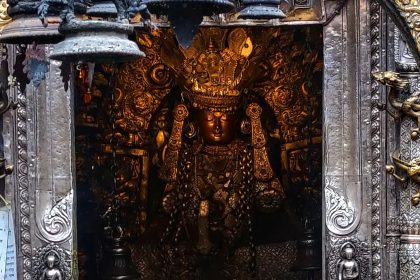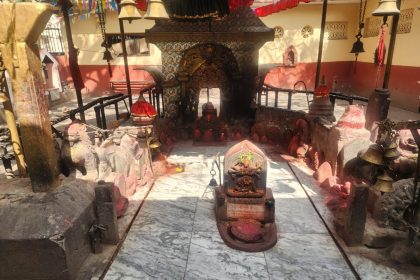
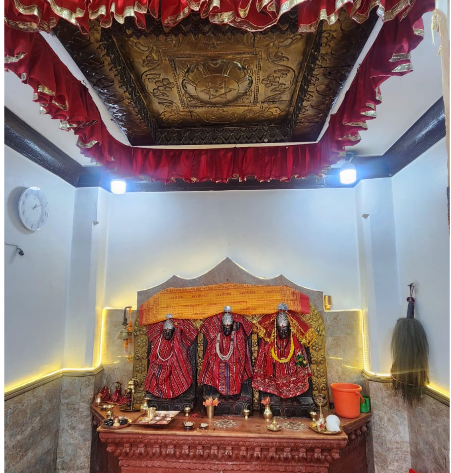
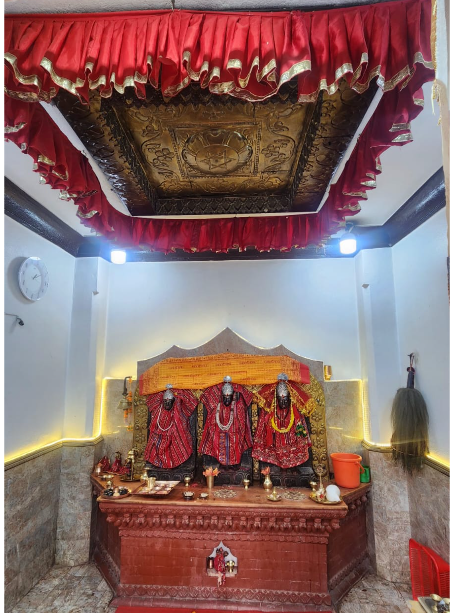
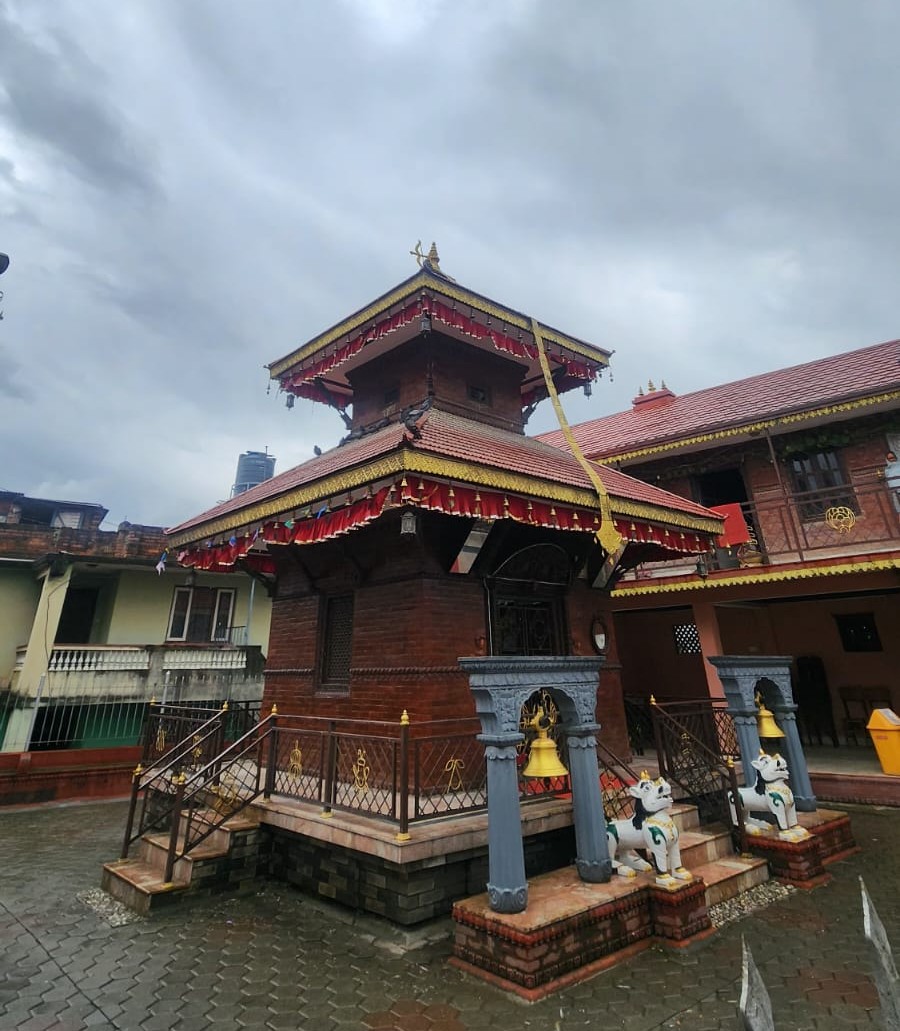
Ram Mandir stands as a symbol of cultural, religious, devotion, unity and cultural heritage of Afaldole, Dhobighat within Lalitpur Metropolitan City, Ward 4. Amongst the local community of Afaldole, this temple has gradually become one of the significant religious landmark. The devotees and visitors among the community attracted by the spiritual peace and blessings of Bhagwan Shree Ram.
From a Pokhari (Pond) to a Sacred Temple
Before the establishment of Ram Mandir, the area was occupied only by a pokhari (pond). The place was also used for community gatherings for Kirtans, Bhajans and Saptaha. Over the time, the local community and devotes envisioned to transform this area to a sacred spiritual centre dedicated to Bhagwan Shree Ram. Their collective efforts and dedication eventually led to the construction of the beautiful temple that now stands proudly in Afaldole. The transformation of this area to a religious landmark reflects the local community preserving their Sanatan traditions and spiritual values.
Inauguration by Nepal’s First President
With the dedication of local community, devotees and spiritual aligned people made the temple inaugurated in 2065 B.S. with the presence of Dr. Ram Baran Yadav, the first President of Nepal. The event was celebrated with great enthusiasm by local residents, religious devotees, and community leaders.Since then, Ram Mandir has become not only a place of worship but also a source of pride for the people of Afaldole and the surrounding Dhobighat area.
Management by Ram Guthi
The temple is operated and managed by the Ram Guthi, a local religious trust actively involved in preserving cultural and spiritual heritage in the community. Besides Ram Mandir, the Guthi also oversees several other important religious sites, including, Paringali Temple. Khulal Basnet Kuldevta Temple and Pancha Kumari Temple. Through regular religious activities, maintenance, and community participation, Ram Guthi has played a vital role in keeping these sacred places alive and spiritually vibrant.
Support from Government Bodies
The development and maintenance of Ram Mandir have been supported financially by several governmental institutions. Contributions from Lalitpur Metropolitan City, Kathmandu Metropolitan City, and the district office have significantly helped in the temple’s construction, infrastructure improvement, and preservation efforts. This cooperation between local communities and government bodies highlights the importance of protecting Nepal’s religious and cultural heritage for future generations.
A Center for Devotion and Community Gatherings
Today, Ram Mandir serves as an important center for worship, especially during festivals such as Ram Navami, Dashain, and other religious occasions. Devotees gather to offer prayers, perform bhajans and kirtans, and participate in spiritual activities dedicated to Lord Ram.
The temple premises also provide a peaceful environment where visitors can meditate and experience spiritual serenity amidst the busy urban surroundings of Lalitpur and Kathmandu.
Preserving Faith and Heritage
The story of Ram Mandir in Afaldole is not merely about the construction of a temple; it is about the preservation of faith, culture, and community identity. From a humble pokhari to a respected spiritual destination inaugurated by Nepal’s first President, the temple reflects the collective devotion and dedication of the people who envisioned a sacred place for future generations.
As the temple continues to flourish under the care of Ram Guthi and the support of the community, Ram Mandir remains a shining example of how cultural heritage and spirituality continue to shape the identity of local communities in Nepal.