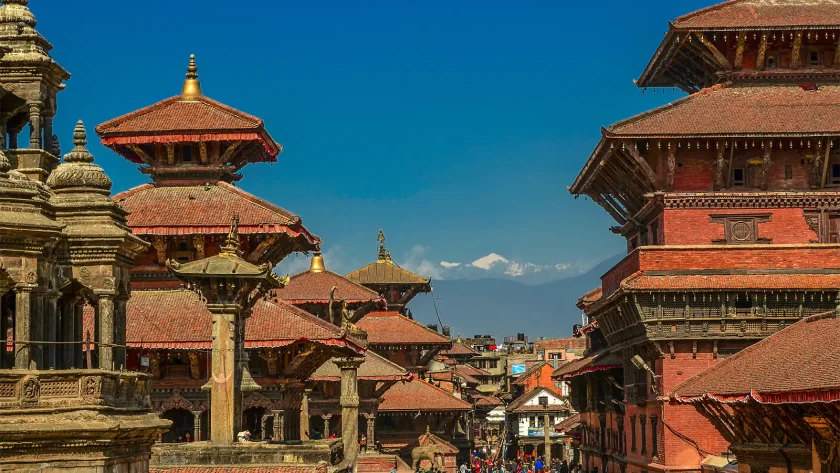
Lalitpur Metropolitan City which is mostly known as “City of Fine Arts” is rich in cultural heritages. This city has a lot of places rich in cultural heritages. Among them, Patan area is one of the oldest and richest areas in terms of history and culture. It has unique architectures that blend Hinduism and Buddhism. One of the best ways to feel the charm of the city is to take a short heritage walk. A great option for a short and refreshing heritage walk in Lalitpur Metropolitan City starts from Patan Dhoka and ends at Patan Durbar Square. This walk is short but rich in stories and history. The ideal time to take a walk is before 9 AM or after 6 PM as the traffic density is low around that time. Moreover, after 6PM, the lights are turned on and it makes the walk all the more memorable.
Starting at Patan Dhoka
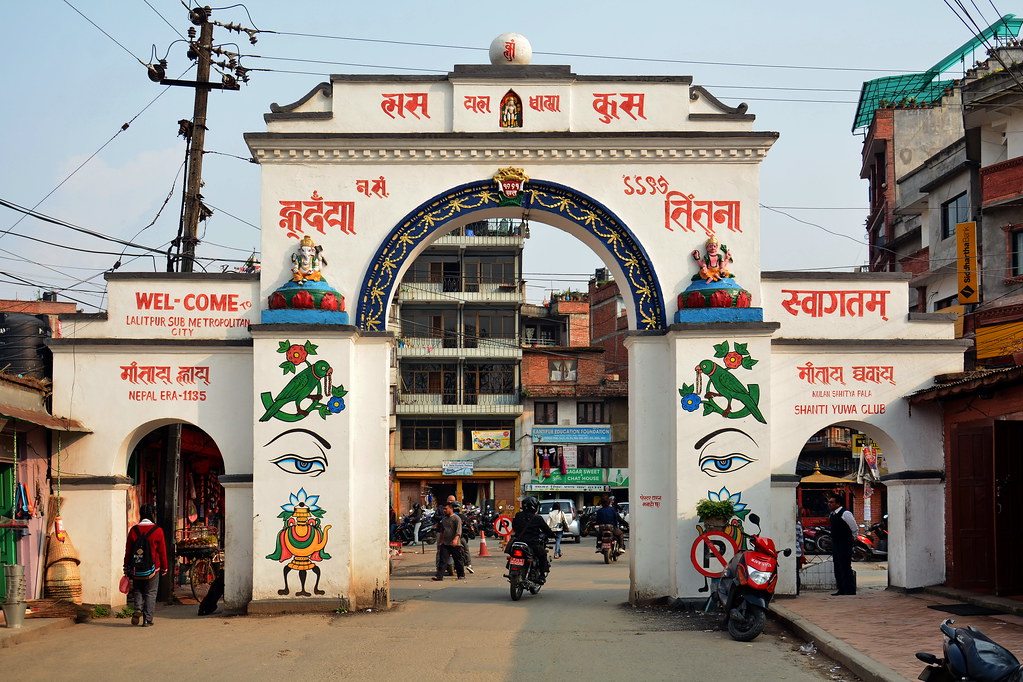
You start your journey at Patan Dhoka, one of the main gates of the old city which is huge and white in color. Also, the red texts on the arched white gate welcome you inside Patan city. In ancient times, people used this gate to enter and protect the city. Now, the area has changed a lot from ancient times and is full of people, shops and vehicles. If you look around, you can see old buildings as well as new ones standing together.
From Patan Dhoka, walk south or southeast along a stone-paved path. Along the way, you can see a small temple on your left. After the temple, you take the right turn and head straight ahead. After a few minutes of walking you arrive at a large stoned-lined pond which is known as Pimbahal Pokhari (or Jagmadu Pukhu).
Arriving at Pimbahal Pokhari
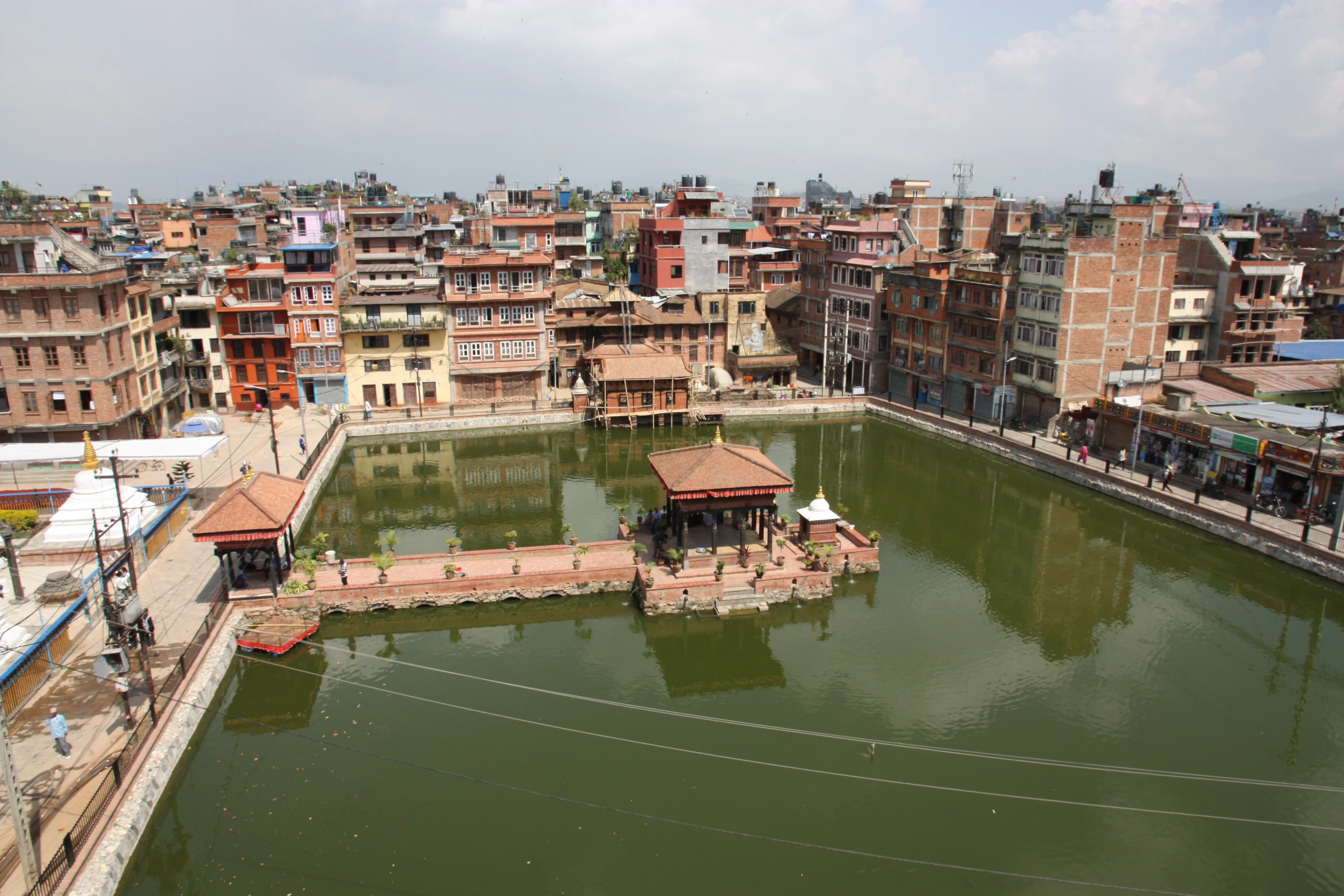
Pimbahal Pokhari was constructed for water conservation and for management of groundwater levels during the 14th century. This pond famously connects with legends of Lakhey (a legendary, fierce demon from Nepalese folklore) and serves as crucial religious site during festivals.
Various buildings of past and present surround the pond from all directions. Furthermore, there is a platform in the middle where you can sit and feel calmness of the pond. You see a lot of people coming around Pimbahal area for refreshments. Many shops and stalls are present around the pond area where you can grab a quick snack. In the pond, you can see fishes and ducks swimming. In addition, you can buy fish food and feed the fish in the pond. After you have relaxed around Pimbahal Pokhari for some time, it is time to move ahead. You then head towards southeast direction from Pimbahal Pokhari and after passing through narrow pathways with old traditional buildings on both sides you arrive at Patan Durbar Square.
Ending at Patan Durbar Square, the heart of Lalitpur Metropolitan
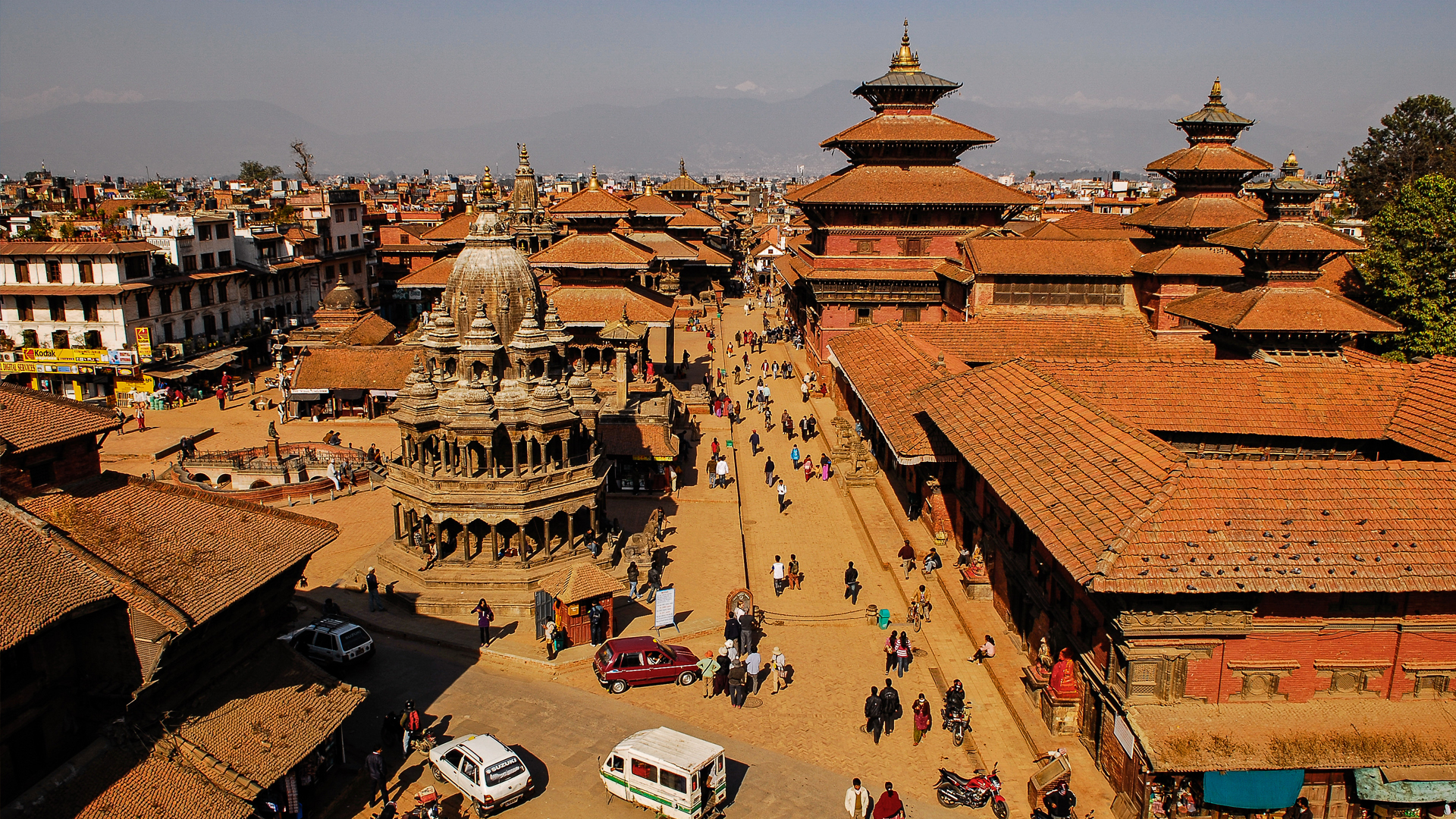
Patan Durbar Square is a UNESCO World Heritage Site as it is rich in culture, tradition and history. Taking a walk around here feels like stepping into the past itself. The Durbar Square consists of beautiful palaces and temples. Therefore, the people work hard to preserve the culture, tradition and history of this in the form of the art, words and carvings. The area is full of pagoda style buildings and temples. Furthermore, traditional newari culture and detailed wood carvings are also a major source of attraction.
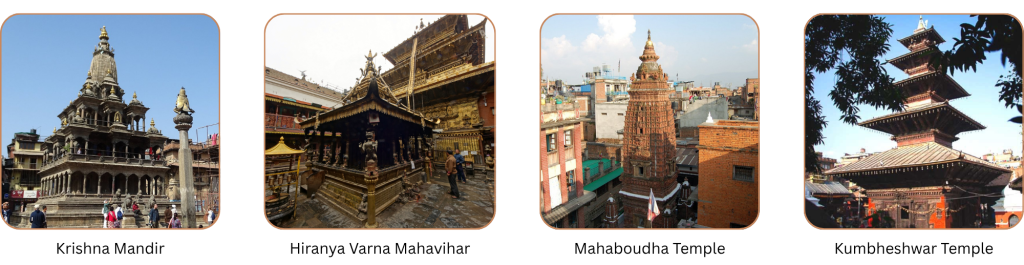
After arriving at Patan Durbar Square, you find yourself surrounded by a lot of traditional and historic architectures. The Patan museum used to be palace and courtyard for ancient Malla kings. To enter inside the museum, ticket price differs according to domestic and foreign tourists. This area is also rich in religious sites mainly temples. Some of the temples in the area are:
After you finish exploring Patan Durbar Square, this short heritage walk comes to an end. This walk is pretty short but it shows starts from a main gateway to Patan and ends the heart of Lalitpur Metropolitan City. Also this route helps the walkers get a good idea about the culture, tradition and history of Patan.