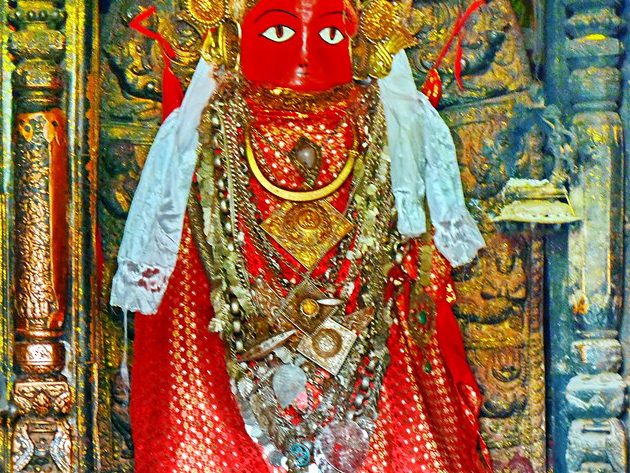
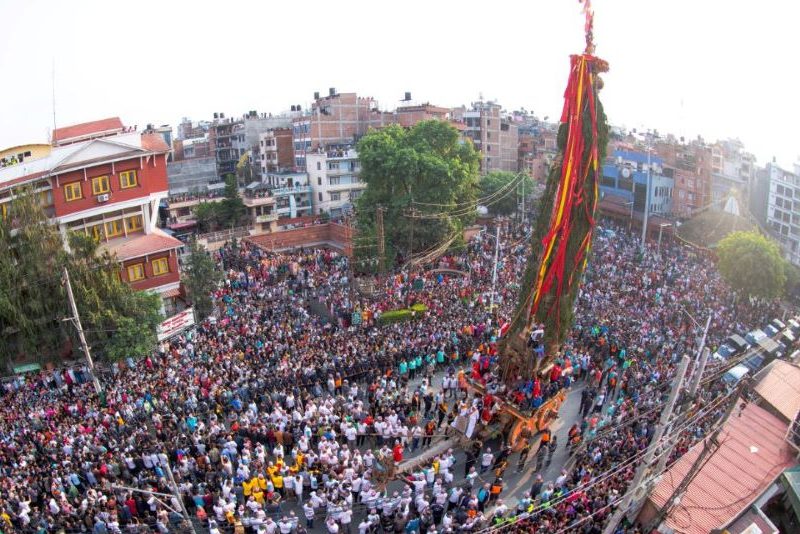
The relationship between Karkotak Nagaraja (also referred to in local variations as Satya Naga), his wife, and the deity Rato Machhindranath (Karunamaye) is a profound tapestry of mythology, gratitude, and divine geography. Within the context of the Bahra Barse Rato Machhindranath Jatra (the 12-year cycle) and the silent crossing of the Nakkhu River, these relationships explain why a rain god’s journey is punctuated by moments of absolute stillness and specific ritualistic detours.
To understand the connection in the depth required, we must look at the intertwining of three specific narrative threads: the healing of the Queen of Serpents, the role of Karkotak in the quest for the deity, and the symbolic presence of the divine mother during the river crossing.
The Bond of Gratitude: Karkotak Nagaraja and the Quest
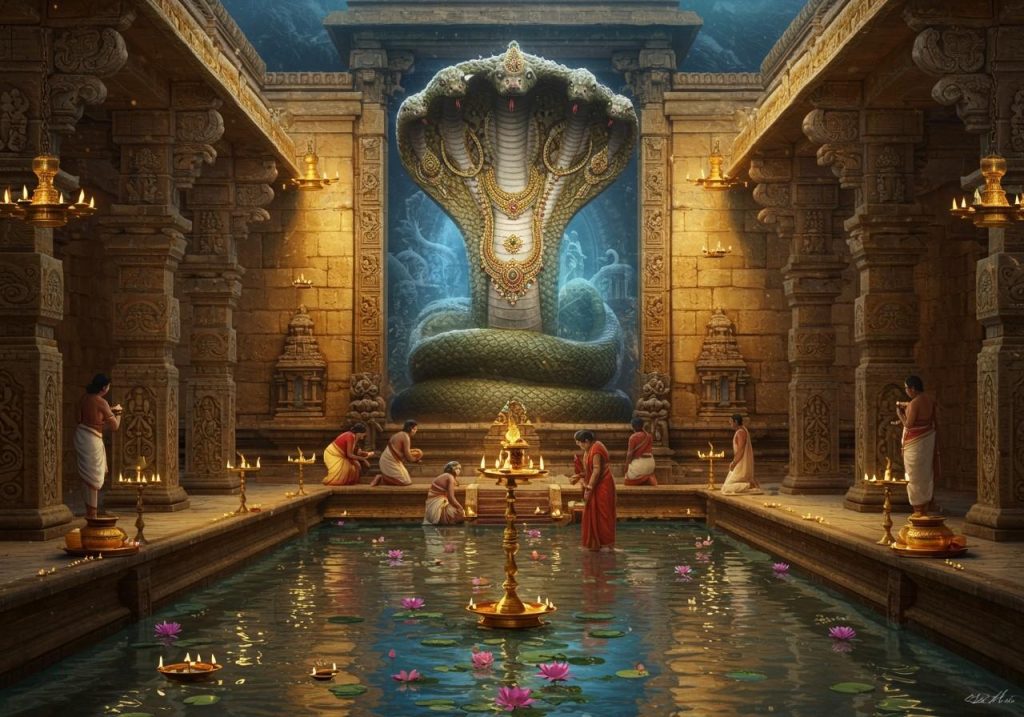
The relationship begins with the existential crisis of the Kathmandu Valley—the 12-year drought. Karkotak Nagaraja, the King of Serpents residing in the Taudaha Lake, is a central figure in the survival of the valley. Unlike the nine serpents trapped under Guru Gorakhnath, Karkotak was free, yet powerless against the Yogi’s meditation.
When King Narendra Deva, Tantric Bandhudatta Acharya, and the farmer Lalit Jyapu set out for Yakshya Desh (Assam) to bring Karunamaye to Nepal, Karkotak Nagaraja joined them. His involvement was not merely as a companion but as a representative of the subterranean world—the very realm that controls the waters. By assisting in bringing Karunamaye (his teacher’s teacher, in some esoteric interpretations) to the valley, Karkotak established a permanent link between the serpent race and the deity of rain.
This bond of service is why the Jatra is so significant to the Nagas. Rato Machhindranath is effectively the “liberator” of the serpents, the one whose mere presence forced Gorakhnath to stand up, thereby releasing the Nagas to bring rain once more.
The Eye of the Serpent: Satya Naga’s Wife and the Healing
A pivotal sub-plot that cements the relation between the Nagas and the Jatra is the story of the Bhoto (The Vest). While the primary story involves a farmer from Bhaktapur, the catalyst is the health of Satya Naga’s (Karkotak’s) wife.
The Queen of Serpents suffered from a chronic eye ailment that no serpent magic could cure. Karkotak, out of love and desperation for his wife, took human form and sought a human healer. This interaction represents a rare moment of vulnerability for the powerful Naga King, showing his deep attachment to his consort. The successful treatment of his wife led to the gift of the diamond-studded vest.
In the context of the 12-year Jatra, this relationship is commemorated through the chariot’s route. While the annual Jatra is a localized event in Lalitpur, the 12-year Jatra is more expansive, physically connecting the deity’s home in Bungamati to the rest of the valley. It is said that during this long cycle, the path taken by the chariot acknowledges the ancient dwellings of the Nagas. The link to Satya Naga’s wife during the 12-year Jatra is a nod to the “Satya” (truth) of the serpent’s devotion; the festival serves as a reminder of the time when the Naga King sought help from the human world to save his wife, eventually leading to the vest being placed under the protection of Rato Machhindranath.
The Nakkhu River: Silence and the Divine Mother
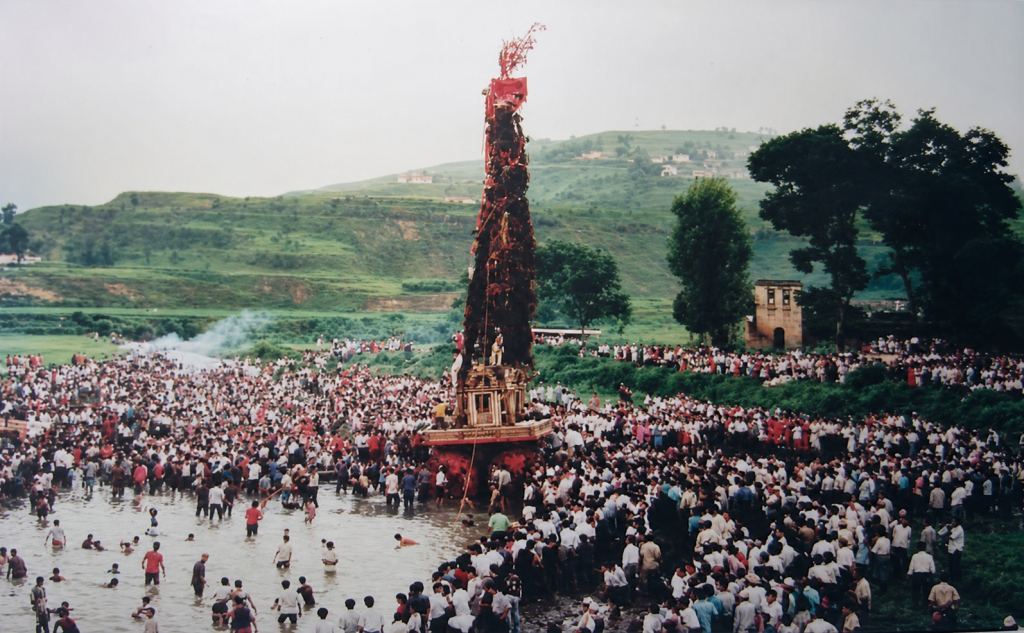
The most mysterious aspect of the 12-year Jatra is the silent crossing of the Nakkhu River. When the massive 60-foot chariot reaches the banks of the Nakkhu, the usual cacophony of Newari drums, trumpets, and the shouting of devotees ceases instantly.
This silence is intrinsically tied to the relationship between the deity and his biological mother, Queen Maya, but it is framed within the territory of the Nagas. According to local lore, the Nakkhu River area is a sensitive spiritual zone.
- The Respect for Motherhood: As the deity (Karunamaye) is being pulled across the river, it is believed that his mother, Queen Maya, is present in spirit to witness her son’s journey. The silence is a mark of supreme “Maryada” (respect). One does not make a clamor in the presence of the Mother.
- The Naga Connection: The Nakkhu River is also associated with the subterranean pathways of the Nagas. In many Newar myths, the waters of the Nakkhu are linked to the Taudaha Lake (Karkotak’s home). The myth suggests that during the 12-year Jatra, Satya Naga’s wife and the Naga King himself are given special reverence as the chariot passes through their aquatic domain.
- The Tragedy of Separation: There is a poignant layer to this relation. It is whispered that the silence at Nakkhu also reflects the sorrow of the Naga Queen, who, despite her husband’s power, remains a figure of the “hidden world.” The quietude allows the divine mother and the serpent spirits to communicate with the deity without the interference of human noise.
The Synthesis of 12-Year Significance
Why does the 12-year Jatra specifically highlight these figures? In Newar cosmology, the number 12 is synonymous with the duration of the Great Drought. Therefore, the Bahra Barse Jatra is a full-scale reenactment of the original journey from Assam.
In this reenactment, the role of the Nagas is elevated. While the annual festival is a celebration of harvest, the 12-year festival is a celebration of History and Lineage.
- Karkotak/Satya Naga is the protector of the valley’s water.
- His Wife represents the personal, emotional connection—the reason the “Bhoto” exists and why the deity is now the “guardian” of a serpent’s treasure.
- The Nakkhu River acts as the physical threshold where the human, divine, and serpent worlds meet.
The relation is one of Interdependence. Rato Machhindranath provides the rain, but he does so by “managing” the Nagas. The Nagas, in turn, offer their treasures (the Bhoto) and their paths (the rivers) to the deity. When the chariot is pulled silently across the Nakkhu, it is a moment where King Narendra Deva’s historical victory, Lalit Jyapu’s labor, and Karkotak Naga’s devotion all converge.
The relationship between Karkotak (Satya Naga), his wife, and Rato Machhindranath is a cycle of Healing and Protection. The serpent king provided the medicine of rain through his teacher; the human farmer provided the medicine for the serpent queen’s eyes. This mutual exchange of “saving” one another is what keeps the Jatra alive. During the 12-year Jatra at the Nakkhu River, the silence is the ultimate tribute to this ancient pact—a moment of peace between the people of the valley and the powerful serpent deities who dwell beneath the waters, all united under the compassionate gaze of Karunamaye.