
Overview
Bhai Tika is the final and most significant day of the five-day Tihar festival, primarily celebrated by Hindus in Nepal. It falls on the second day of the month of Kartik. Moreover, the ceremony celebrates the unique bond between brothers and sisters, while also visualizing the legendary devotion and love between Yamraj (the God of Death) and his sister, the River Yamuna.

Bhai Tika is celebrated to honor the deep bond of love and protection between brothers and sisters. While it is a time for family gatherings, its origins are rooted in a powerful legend from Hindu mythology.
Origin: The Story of Yamraj and Yamuna
Long ago, a loving sister named Yamuna lived with her powerful brother Yamraj, who ruled over death and decided human lifespan. Although he held great power, he deeply loved his sister. One day, Yamuna sensed danger in his life; moreover, she saw signs in dreams. Therefore, she decided to act quickly. Next, she invited Yamraj home and prepared everything with great care. In addition, she cleaned the space and drew a mandala, a sacred protective circle. When Yamraj arrived, she welcomed him with love and seated him inside it. Finally, she prayed for his protection, which formed Bhai Tika’s origin.

Beside, she prepared a seven-colored tika (Saptarangi tika). She carefully applied it to her brother’s forehead. Each color had a meaning:
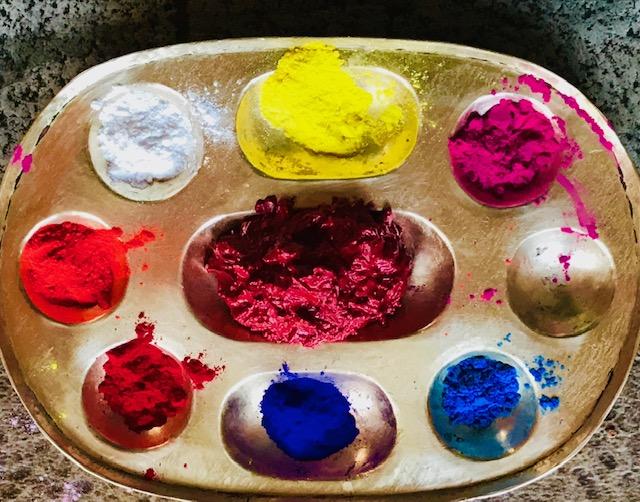
- Red for strength and protection
- White for peace and purity
- Yellow for prosperity
- Green for growth and life
- Blue for calmness
- Black to absorb evil
- Orange for energy and success
By using seven colors, she asked for protection from all directions and dangers. Moreover, Yamuna placed a Makhamali (Globe amaranth) garland around Yamraj’s neck, which people believed stayed fresh for a long time. As a result, it symbolized long life. Then she prepared the tika with oil instead of water. Since oil dries slowly, it stayed longer on the forehead. Thus, she ensured lasting protection for her brother.

Then Yamuna told Yamraj, “You cannot take my brother’s life until this tika fades and this garland dries.” Yamraj understood her love and accepted her condition. Since the tika used oil and the Makhamali flower stayed fresh, it lasted long. Finally, Yamraj felt proud and gave his blessing.
“From today, any brother who receives tika from his sister on this day will be protected and will live a long life.”
Why is it Celebrated?
We celebrate this day for three main reasons:
- To Protect Brothers: Sisters believe that the rituals create a spiritual shield around their brothers.
- To Show Gratitude: Brothers thank their sisters for their prayers and care.
- To Strengthen Family Bonds: It is a time to forgive small fights and start the year with a fresh, loving connection.
How is it Practiced?
The Bhai Tika rituals are very specific and colorful. Each step has a secret meaning. If you visit a Nepali home during this time, here is what you will see:
1. The Protective Circle
Before the Tika starts, the sister uses a small pitcher of water or oil. She walks around her brother three times, pouring a circle on the floor. This circle represents a wall that bad luck and death cannot cross.

2. Cracking the Walnut
The sister places a hard walnut at the doorway and cracks it with a stone. This sounds a bit loud, but it is very symbolic! It represents the sister destroying any obstacles or “enemies” that might try to hurt her brother.

3. Applying the Saptarangi Tika
This is the most famous part of the bhai tika festival. Most Tikas are just red, but for Bhai Tika, sisters use seven different colors (Saptarangi). These colors include yellow, green, blue, white, and red. She applies them in a vertical line on the brother’s forehead. These colors represent the bright and diverse joys of life.

4. The Makhamali Garland
Next, the sister places a garland of purple flowers called Makhamali (Globe Amaranth) around her brother’s neck. These flowers are special because they do not wilt or fade for a long time. By giving this garland, the sister says, “May your life be as fresh and long-lasting as this flower.”

5. The Feast
No festival is complete without food! Sisters give their brothers a decorative plate filled with treats and sweets. This plate usually includes:
- Walnuts and almonds
- Dried fruits and coconut
- Handmade sweets like Sel Roti (a crispy, sweet rice donut)

6. The Exchange of Gifts
After the prayers, the brother shows his respect. He bows to his sister’s feet to thank her. Then, he gives her a gift, which is often money or new clothes. This shows that he will always protect her and support her.
Do you have a brother or sister who always has your back? In Nepal and many Hindu communities, there is a whole day dedicated to celebrating that bond! It is called Bhai Tika. This festival is the grand finale of a five-day celebration called Tihar. It is full of colors, lights, and ancient stories. In this guide, we will explore the Bhai Tika origin, Bhai Tika rituals, and why this day is so important for families.

Meaning Behind the Rituals
Every part of the ritual has a purpose:
- Seven colors protect from all types of harm
- Makhamali flower represents life that does not fade quickly
- Oil in tika helps it stay longer, symbolizing long protection
- Mandala acts as a shield against danger
- Sister’s prayer shows love stronger than fate
Why the Story Still Matters
Today, brothers and sisters celebrate Bhai Tika with joy. They may give gifts and take photos, but the meaning stays the same. A sister prays for her brother’s safety. A brother promises to support his sister.
More than just a ritual, it is the heartbeat of a sibling’s love, sealed with the colors of the Saptarangi Tika
All real images are collected from Google Images, 2d images are generated through Gemini