
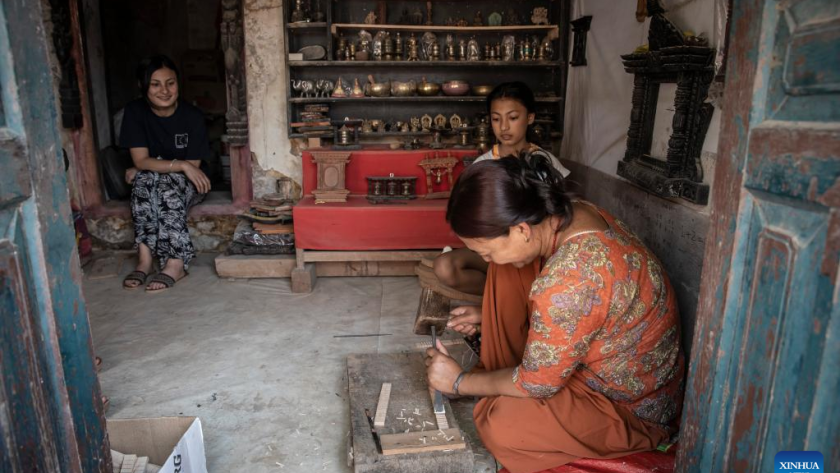
Lalitpur also known asPatan is famous for being the “City of Arts.”Among its many traditional crafts, wood carving stands out as one of the most important industries in the city. Moreover, the wood carving business in Lalitpur combines ancient traditions, artistic skills, and modern economic opportunities. In fact, this business is not only a way for people to earn money, but it is also an important part of the city’s cultural identity. Furthermore, the craft has been passed down from generation to generation for centuries. As a result, wood carving continues to preserve heritage while also supporting tourism and local livelihoods. At the same time, the industry is gradually adapting to modern market demands and global trends
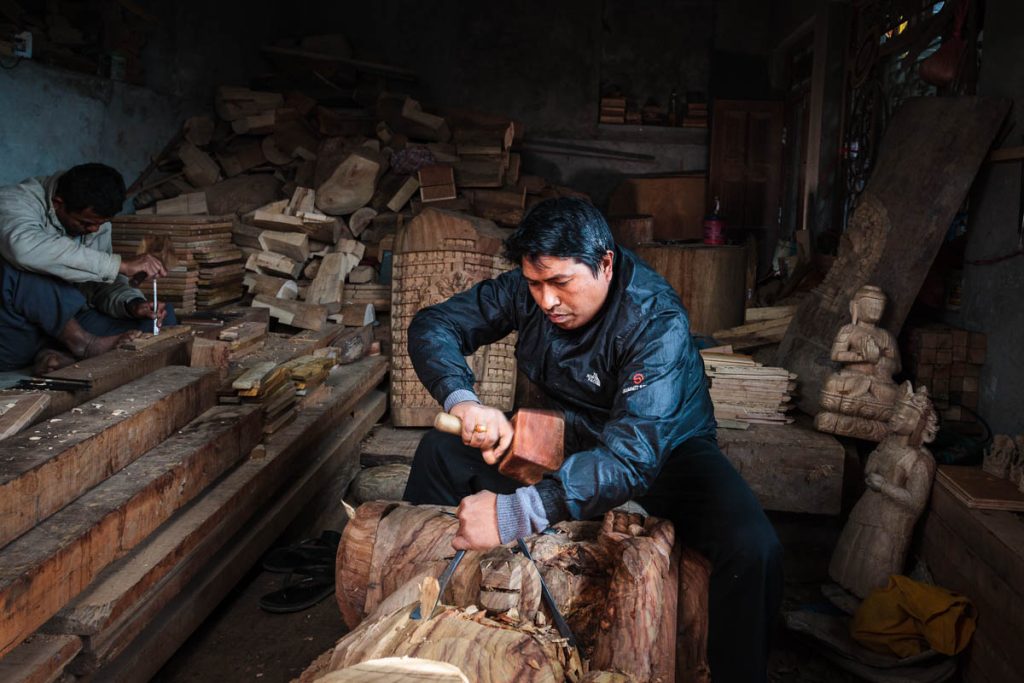
History of the Wood Carving Business in Lalitpur
Early History of Wood Carving in Lalitpur
Wood carving in Lalitpur began centuries ago during the Licchavi and Malla periods. Skilled artisans created detailed wooden designs for temples, palaces, and traditional houses.
Influence of the Malla Period on Wood Carving
During the Malla era, wood carving became highly developed. Kings encouraged artists to decorate windows, doors, and temples with intricate carvings that reflected religious and cultural beliefs.
Traditional Wood Carving Techniques in Lalitpur
Selection of Wood
Artisans carefully choose durable wood such as sal or sisau for carving.
Designing and Pattern Making
Craftsmen draw traditional designs inspired by temples, nature, and culture.
Hand Carving Process
Wood is shaped using traditional hand tools to create detailed patterns.
Finishing and Polishing
After carving, the products are polished and sometimes painted for a smooth finish.
Preservation of Traditional Techniques
Passing Skills to Younger Generations
Experienced artisans teach traditional carving skills to apprentices and family members.
Role of Local Communities
Local communities help preserve wood carving traditions through cultural programs and festivals.
Government and Organizational Support
Different organizations support artisans through training, exhibitions, and financial assistance.
Importance of Tourism in Preservation
Support for Local Artisans
Tourism helps local wood carving artisans earn income from handmade products.
Promotion of Traditional Crafts
Visitors from different countries help promote traditional wood carving art internationally.
Increased Demand for Handmade Products
Tourists often purchase carved windows, statues, and souvenirs, increasing market demand.
Cultural Awareness Through Tourism
Tourism helps people learn about the cultural and historical value of wood carving in Lalitpur.
Future Opportunities for the Wood Carving Business
Growing tourism can create new business opportunities and encourage younger generations to continue the craft.
Cultural and Religious Significance
Wood carving in Lalitpur is deeply connected to religion and daily life. In fact, the carvings are not simply decorative because they also carry symbolic and spiritual meanings. For instance, artisans create carvings of gods, goddesses, animals, and sacred patterns that represent religious beliefs and cultural stories.
Furthermore, in traditional Newar communities, wood carving is considered both a spiritual activity and an artistic profession. Therefore, many artisans begin learning the craft from a young age by observing experienced family members and local masters. Gradually, they develop the skills and techniques needed to create detailed carvings.
Moreover, carved wooden structures can be seen throughout temples, monasteries, and traditional houses in Lalitpur. As a result, the craft shapes the city’s cultural identity and artistic atmosphere. Consequently, visitors walking through the narrow streets of Patan often admire the carved balconies, windows, and doors that reflect the city’s rich heritage.
How the Wood Carving Business Works
Family Workshops
First of all, many wood carving businesses in Lalitpur are family-run workshops. In most cases, skills are passed down from parents to children. Therefore, traditional carving methods continue to survive across generations. Additionally, these workshops are usually located inside homes or small studios.
Industrial Areas
Meanwhile, places such as the Patan Industrial Estate serve as important centers for production and trade. In these areas, artisans and shop owners produce and sell various carved products. For example, they create small souvenirs as well as large architectural decorations.
Artisan Communities
Similarly, villages like Bungamati are widely recognized for their wood carving traditions. In these communities, carving is not only a profession but also a shared cultural identity. As a result, many families participate in the craft industry together.
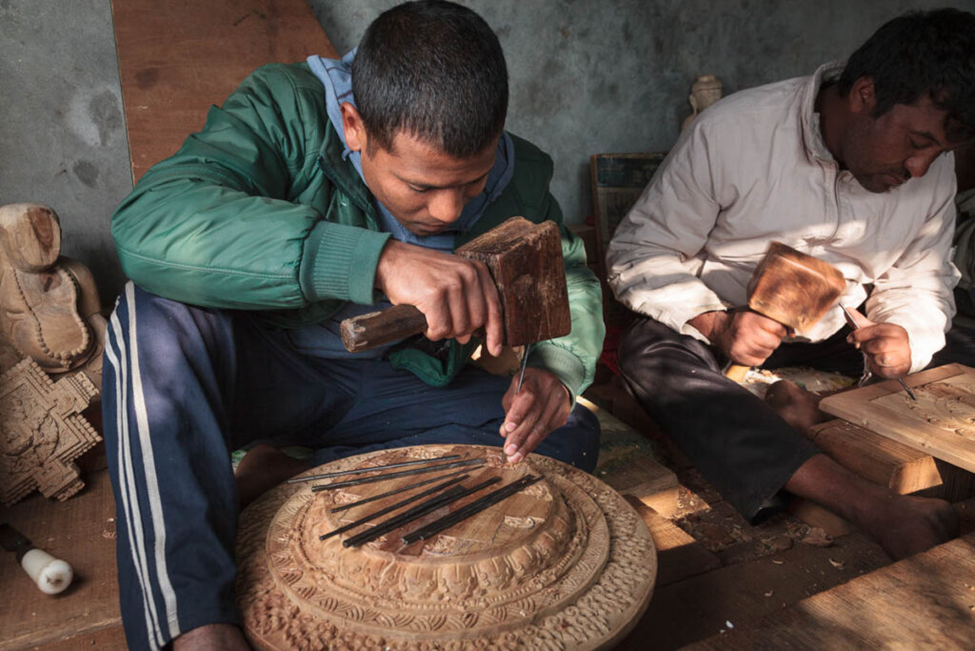
Craftsmen chip away at the details of small mandalas in Ratna’s workshop in Bungamati, Lalitpur
The Craft and Production Process
Wood carving involves shaping wood into useful or decorative products using tools such as chisels, knives, and mallets. Before becoming skilled craftsmen, artisans spend many years learning traditional techniques from experienced elders.
Typically, the production process includes several important stages. First, artisans carefully select high-quality wood that can last for a long time. Next, they design traditional patterns inspired by religion, culture, and nature. Afterward, they roughly carve the wood to create the desired shape. Then, they add detailed carvings and decorative patterns. Finally, they polish and sometimes paint the finished products to improve their appearance.
As a result, artisans create many different items, including carved windows, doors, furniture, statues, and decorative panels. In addition, many workshops produce souvenirs for tourists. Traditionally, the main market focused on temples, monasteries, and traditional homes. However, tourism has significantly increased the demand for wood carvings in recent years. Consequently, visitors to Lalitpur often purchase handmade carvings as cultural souvenirs.
Furthermore, there is now a growing international market for Nepali wood carvings. Therefore, many products are exported to different countries because of their craftsmanship and cultural authenticity.
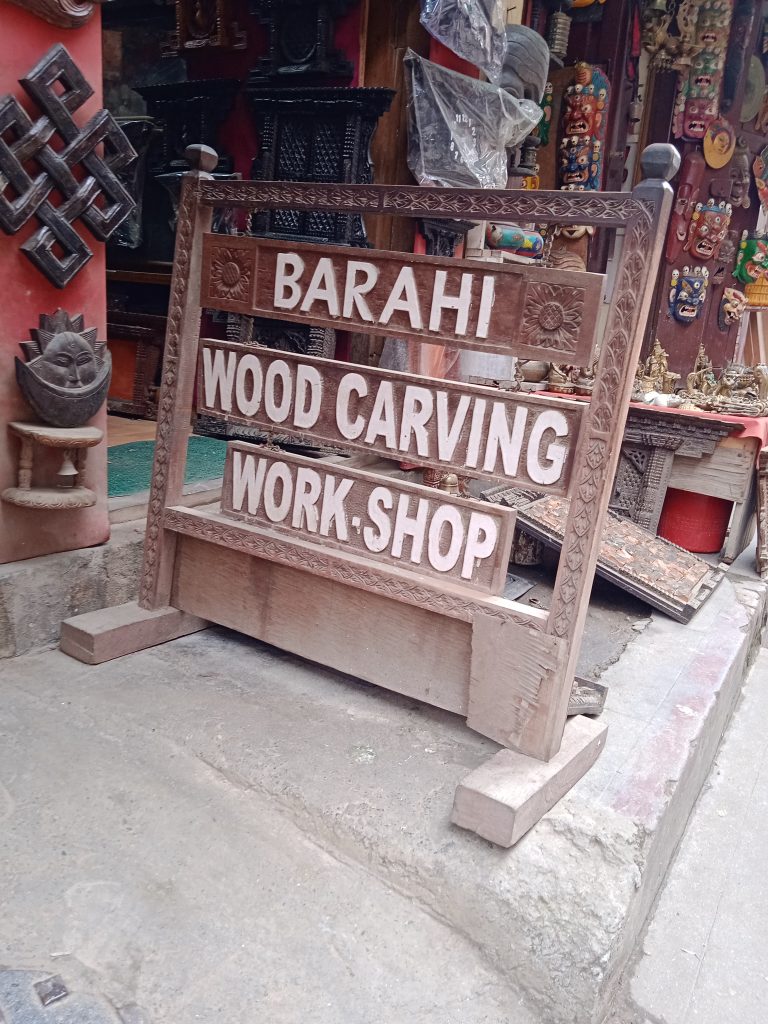
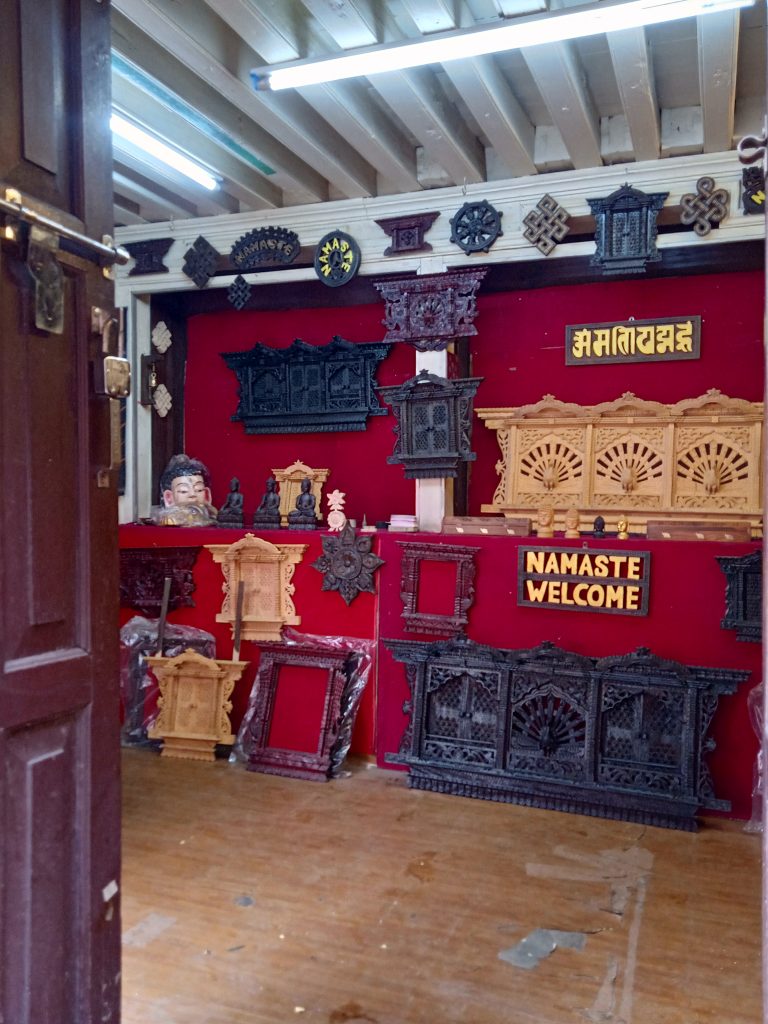
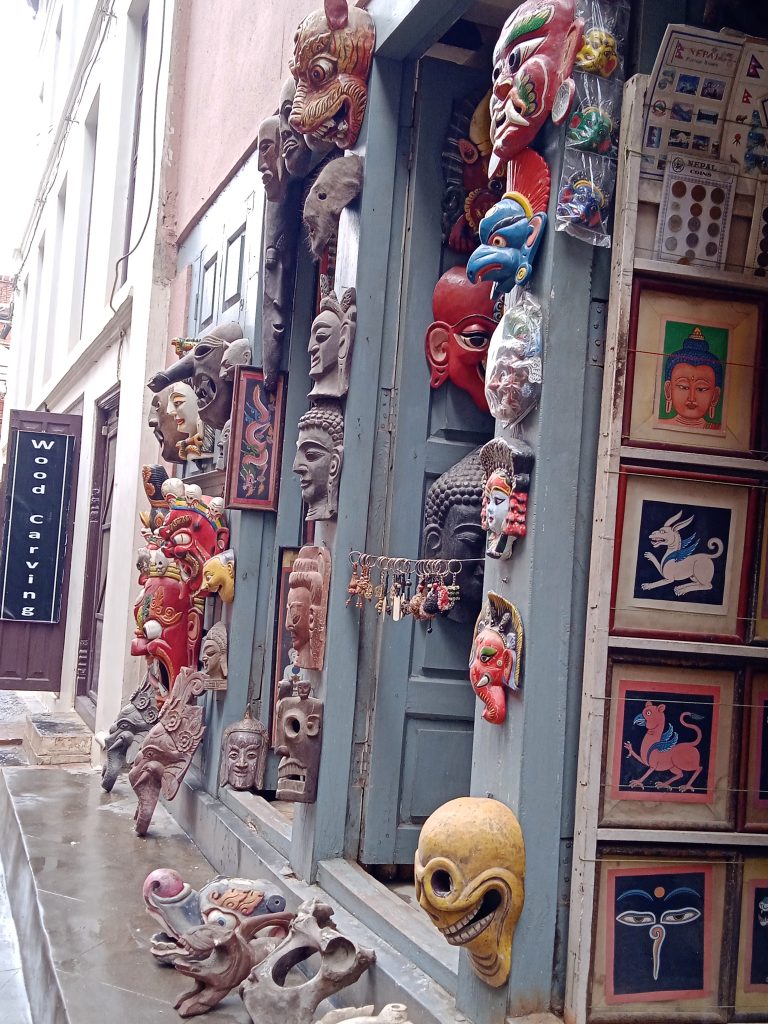
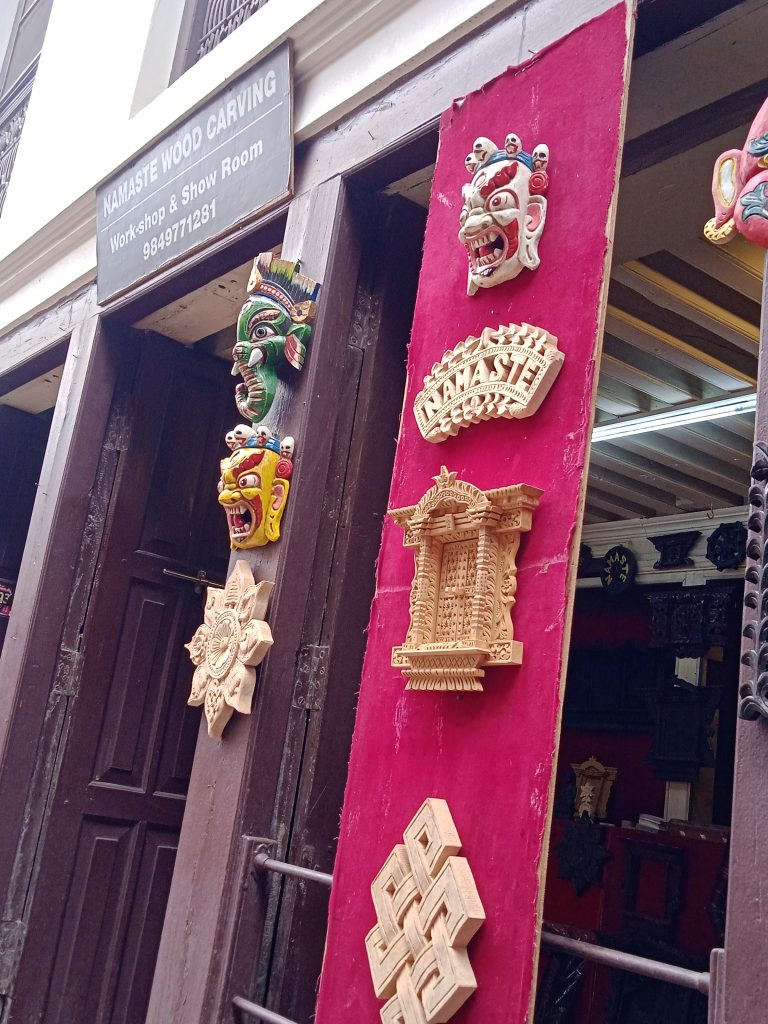
Wood Carving Workshops in Patan area
Techniques and Materials
Wood carving in Lalitpur mainly depends on manual craftsmanship. Therefore, artisans use traditional tools such as chisels and mallets to create detailed patterns and designs. Interestingly, many craftsmen also make and customize their own tools according to specific carving needs.
Different types of wood are selected for different purposes. For example, hardwood is generally used for furniture and structural elements because it is strong and durable. On the other hand, softer wood is often preferred for decorative carvings because it is easier to shape.
Moreover, the carving process requires patience, precision, and years of training. First, artisans prepare and treat the wood carefully. Next, they sketch the design before shaping the material. After that, they focus on fine detailing and decorative carving. Finally, they complete the finishing and polishing process to produce a refined product.
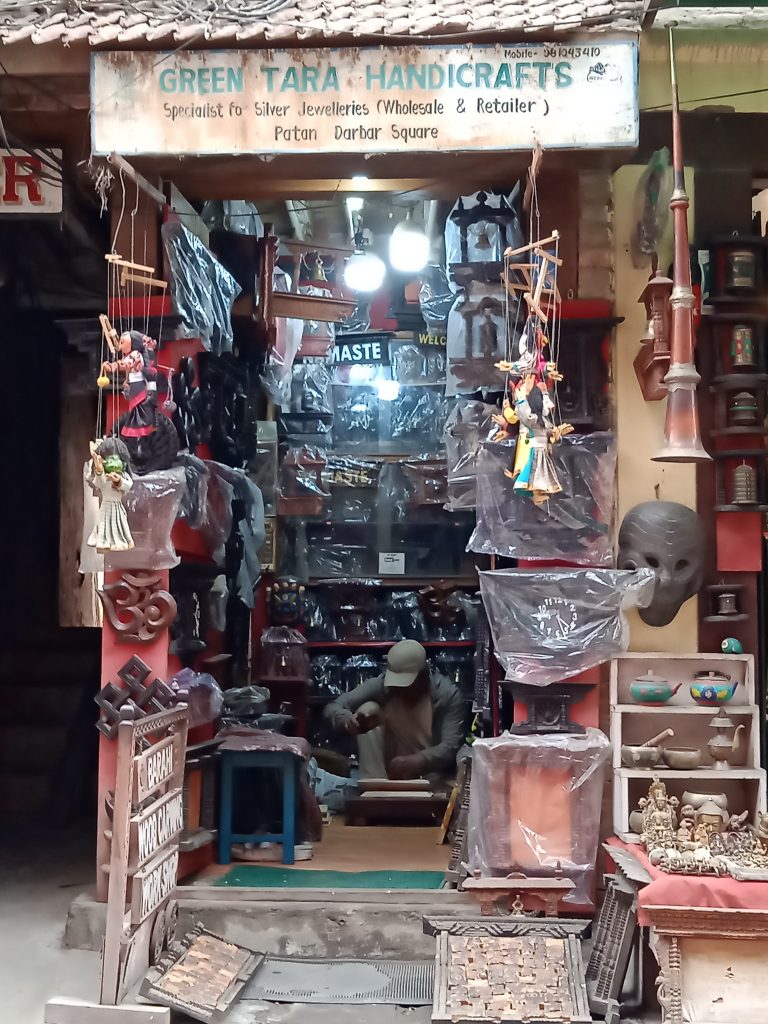
A craftsman making crafts using wood in Patan area
Economic Importance
The wood carving business provides jobs for families in Lalitpur. It helps not the artisans but also the people who supply the raw materials make tools and trade the products. The industry also contributes to Nepal’s handicraft exports with carved items being sold to countries. The business also helps people have livelihoods by keeping traditional skills alive while earning money. In cases the skills are passed down from one generation to the next which ensures that the craft and business continue.
Challenges Facing the Industry
Even though the wood carving business is very important culturally and economically it faces challenges. Some of these challenges include:
1. Competition from Machine-Made Products: Mass-produced items often imported can be cheaper and faster to produce making it hard for handmade products to compete on price.
2. Declining Interest Among Young People: While many families continue the tradition some young people prefer jobs, which raises concerns about the preservation of skills.
3. Limited Access to Raw Materials: Good quality timber can be expensive and hard to find, which affects production costs.
4. Market Fluctuations: Sales that depend on tourism can be unstable during global crises or travel disruptions.
Opportunities and Future Prospects
Despite these challenges the future of the wood carving business in Lalitpur looks promising:
1. Growing Global Appreciation for Handmade Crafts: There is an increasing demand for handmade products worldwide. Lalitpurs wood carvings fit well into this niche.
2. Cultural Tourism: As Nepal continues to promote tourism Lalitpurs identity as a city of artisans strengthens its appeal.
3. Innovation and Design: Some artisans are combining techniques with modern designs creating products that are suited for contemporary markets.
4. Digital Platforms: Online marketplaces and social media allow artisans to reach customers directly reducing their reliance on intermediaries.
Conclusion
In conclusion, the wood carving business in Lalitpur represents a successful combination of tradition, craftsmanship, and entrepreneurship. Although the industry faces challenges such as modernization and competition, its strong cultural roots continue to create opportunities for growth.
Moreover, the increasing global demand for handmade crafts and cultural tourism has strengthened the industry’s future prospects. At the same time, innovation and digital platforms are helping artisans adapt to changing markets.
Most importantly, the wood carving tradition continues to preserve Nepal’s artistic and cultural heritage. Therefore, by supporting artisans, encouraging younger generations, and promoting innovation, Lalitpur can continue to remain a global center for wood carving for many years to come.
Main wood carving shops in Lalitpur
Newa Wood Carving Industry
📍 Kwalakhu / near Golden Temple, Patan
📞 +977 9849499496
🕒 Open daily (except Saturday)
🛠️ Specializes in traditional Newari wood carving (windows, doors, temple art, custom work)
🧾Member of handicraft associations and does custom orders
PURNA WOOD CARVING INDUSTRIES
📍 Thulo Chakra, Lalitpur
📞 +977 1-5422232
🕒 Daytime hours
🛠️ Known for authentic carved windows, frames, and heritage-style pieces
SANTOSH WOOD CARVING
📍 Tichhu Galli, Patan
📞 +977 9841257524
🕒 Open daily
🛠️ Local workshop for custom carvings and smaller decorative items
Surendra Wood Carving
📍Tichhu Galli, Lalitpur
🛠️ Offers hand-carved wooden gifts, masks, and decor items
Traditional Wooden Craft
📍 Bungamati area (artisan village)
📞 +977 9841742275
🛠️ Handmade traditional wood handicrafts and carvings
Wood Carving Industries PVT.LTD
📍 Patan Industrial Estate
📞 +977 1-5521447
🛠️ Larger-scale production of architectural woodwork (doors, structures)
Kirti Wood Carving
📍 Lalitpur
📞 +977 9841538314
🛠️ Focus on custom woodwork and carving supplies/services
Om Handicrafts
📍 Bhimsensthan, Lalitpur
📞 +977 1-5427189
🛠️ High-quality wooden handicrafts, decorative carvings, souvenirs
Banglamukhi Wood Carving
📍 Central Lalitpur
📞 +977 9841703412
🛠️ Focus on religious carvings and traditional motifs
Bunga wood carving tatha handcraft centar
📍 Karyabinayak / Bungamati side
📞 +977 9841343238
🛠️ Handmade local-style carvings and handicraft
Other known (directory-listed) workshops
- Star Wood Carving – Nakhu area
- Sathiya Wood Carving Center – Bungamati
🧭 Best areas to explore multiple wood carving shops
- Patan Durbar Square / Kwalakhu / Mangalbazar → traditional Newari carvings
- Bungamati & Khokana villages → artisan workshops and wholesale production
- Patan Industrial Estate → larger factories & custom architectural work
👍 Tips before visiting
- 🪵 Most shops accept custom designs (doors, windows, deities, furniture)
- 💰 Prices depend on wood type (sal, teak) + carving detail
- ⏳ Handmade carvings can take days to months for large pieces
- 📸 You can often watch artisans working live, especially in Bungamati