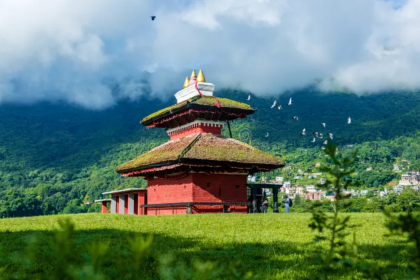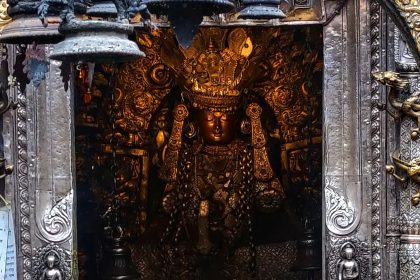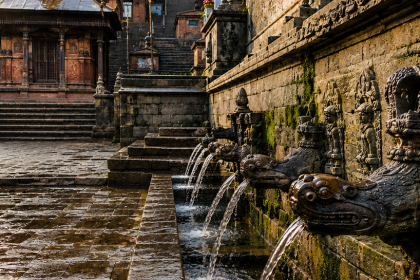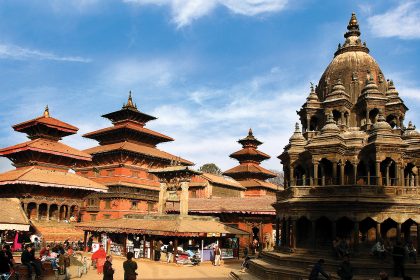
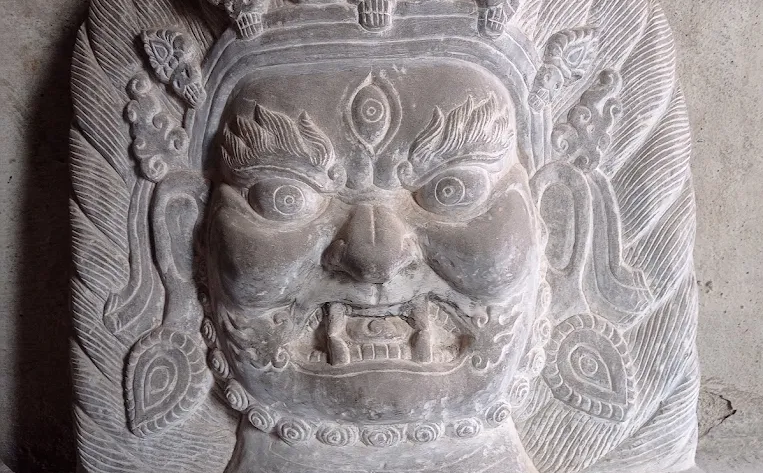
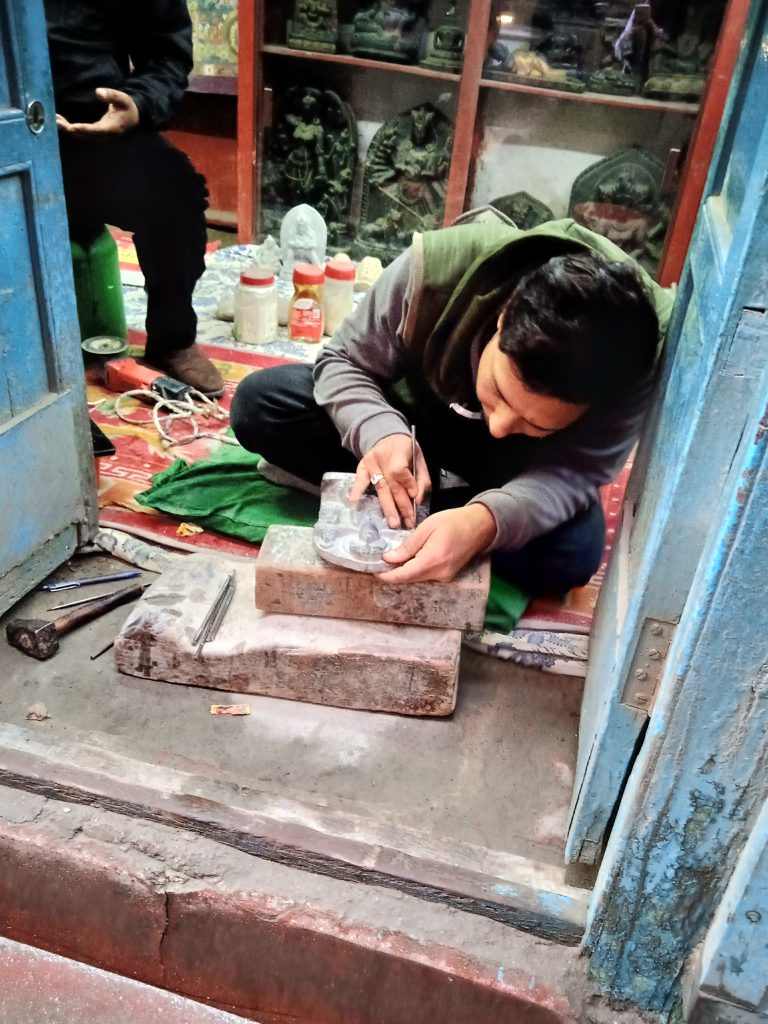
The Stone Carving Business in Lalitpur is very old. Lalitpur, which people also known as Patan is famous for its artisans. This city has a lot of temples, monasteries and palaces. It also has people who’re very good at making things with their hands. The stone carving business is also one of the important industries in Lalitpur. People make all sorts of things like sculptures and parts of buildings. This business is a part of the city’s heritage and it is still going strong today.
Historical Background of Stone Carving in Lalitpur
Origins of Stone Carving
Stone carving in Lalitpur began centuries ago and became an important part of Nepalese art and architecture.
Influence of Religion and Culture
Moreover, Hindu and Buddhist traditions greatly influenced the development of stone sculptures and temple carvings.
Growth During the Malla Period
During the Malla era, stone carving flourished in Lalitpur. As a result, many temples, statues, and monuments were created.
Traditional Skills Passed Through Generations
Furthermore, many artisan families passed carving techniques from one generation to another, preserving the craft for hundreds of years.
Modern Importance of Stone Carving
Today, stone carving remains an important cultural and economic activity in Lalitpur. Additionally, it supports tourism and heritage conservation.
By the 20th century, fewer people continued this profession. Only a small number of families carried on the tradition of stone carving and helped preserve this cultural heritage.
Techniques and Materials
One famous place connected to stone carving in Lalitpur is Stone Cutters Row, which is near Patan Durbar Square. This small street has many workshops where artisans create stone sculptures using traditional methods. Visitors can watch craftsmen carving limestone into detailed statues of Hindu and Buddhist gods.
Moreover, many of these artisans come from families that have practiced stone carving for generations. In fact, some families have continued this traditional craft for more than 500 years. Additionally, the workshops display both completed statues and unfinished works. As a result, visitors can clearly observe the hard work, patience, and skill required to transform raw stone into beautiful religious art.
Stone carving in Lalitpur relies heavily on tools and techniques. Today about 75% of the work is done manually using simple tools like hammers, chisels and mallets.
The process involves:
– Selecting the stone: Artisans primarily use limestone or similar durable stones.
– Rough shaping: The stone is cut into a form.
– Detailing: Fine chisels are used to carve features like facial expressions ornaments and textures.
– Finishing: The sculpture is. Sometimes treated for durability.
This process requires a lot of patience and skill. As one artisan described the figure is believed to exist within the stone. The sculptor simply reveals it.
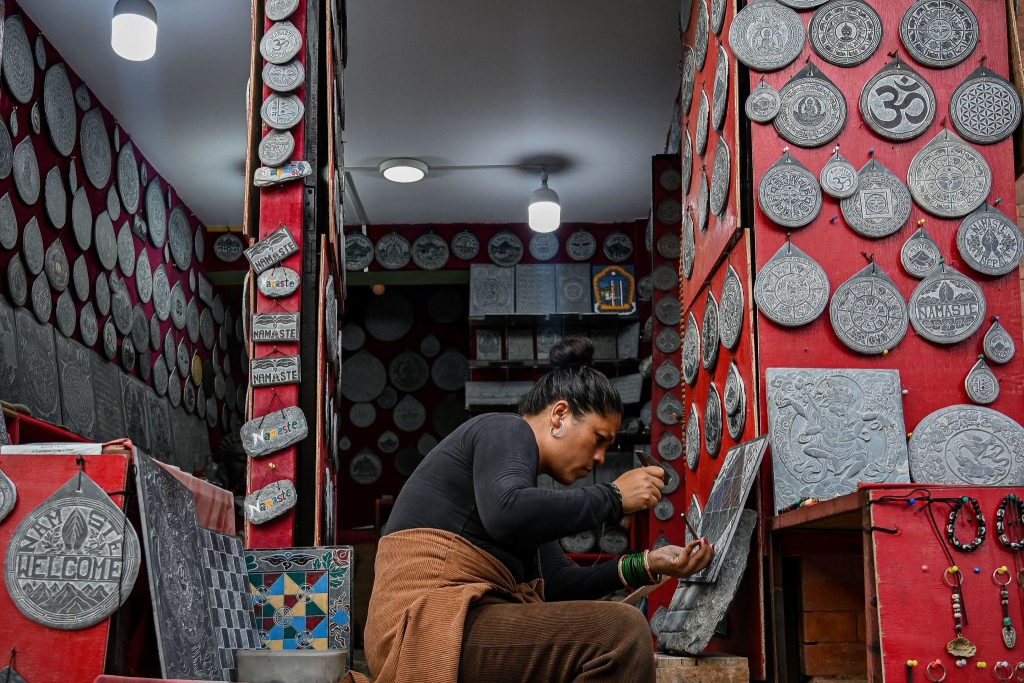
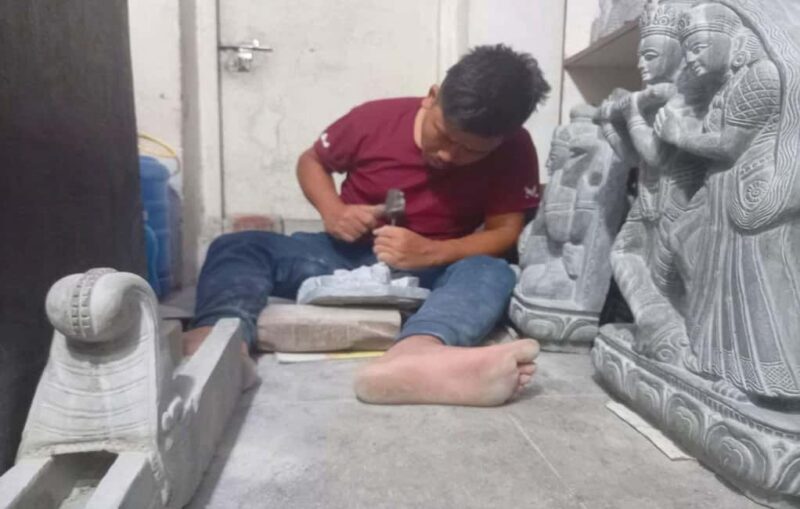
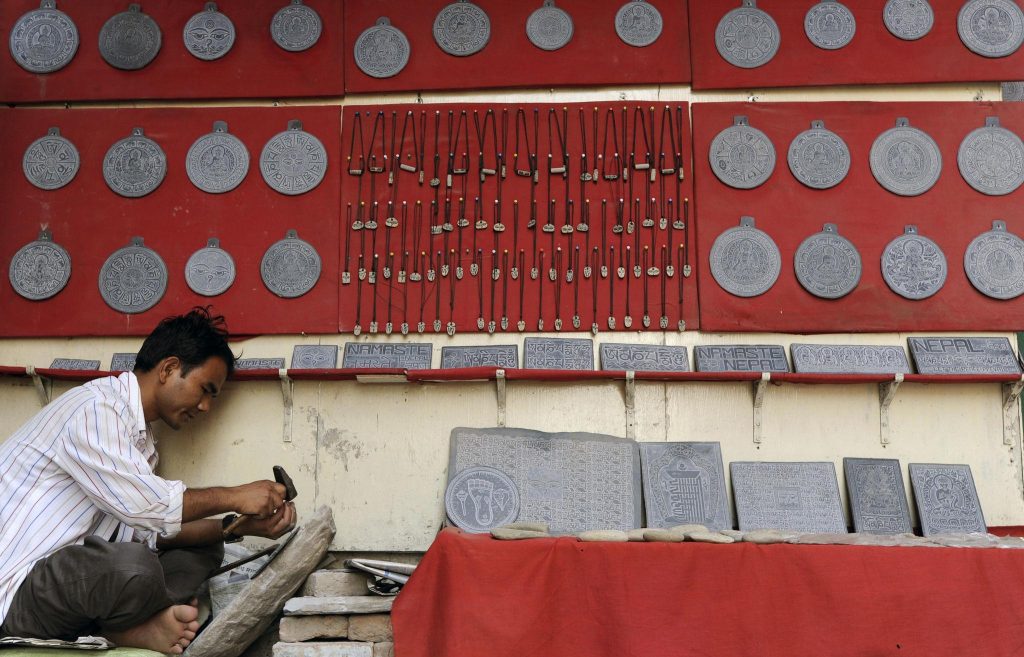
Stone crafting in Patan area
Types of Products
The stone carving business in Patan makes many different types of products, such as:
- Religious statues of Buddha, Shiva, Ganesh, and Tara
- Decorations and stone designs for temples and buildings
- Stone water spouts and fountains
- Garden statues and sculptures
- Decorative stone items for homes and hotels
Workshops such as Khokana Stone Carving create both traditional and modern designs. They combine old cultural styles with new artistic ideas. Another workshop, Arniko Stone Carving, is known for making statues and sculptures for temples. This shows that there is still a strong demand for religious stone art. Most sculptures are made from limestone and granite brought from nearby areas such as Dakshinkali and Hattiban.
The stone carving business in Lalitpur is mainly run by family workshops. In many cases, the artisans themselves own the workshops and sell their handmade products. There are mainly three kinds of stone carving businesses:
- Traditional family workshops where skills are passed from one generation to the next
- Commercial workshops that produce items for tourists and export markets
- Art studios that focus on creating artistic sculptures and high-quality artwork
After tourism began growing in Nepal during the 1990s, the demand for stone sculptures increased greatly.This has helped the stone carving business to grow again.Even today many artisans use simple tools, which shows how skilled and dedicated they are.
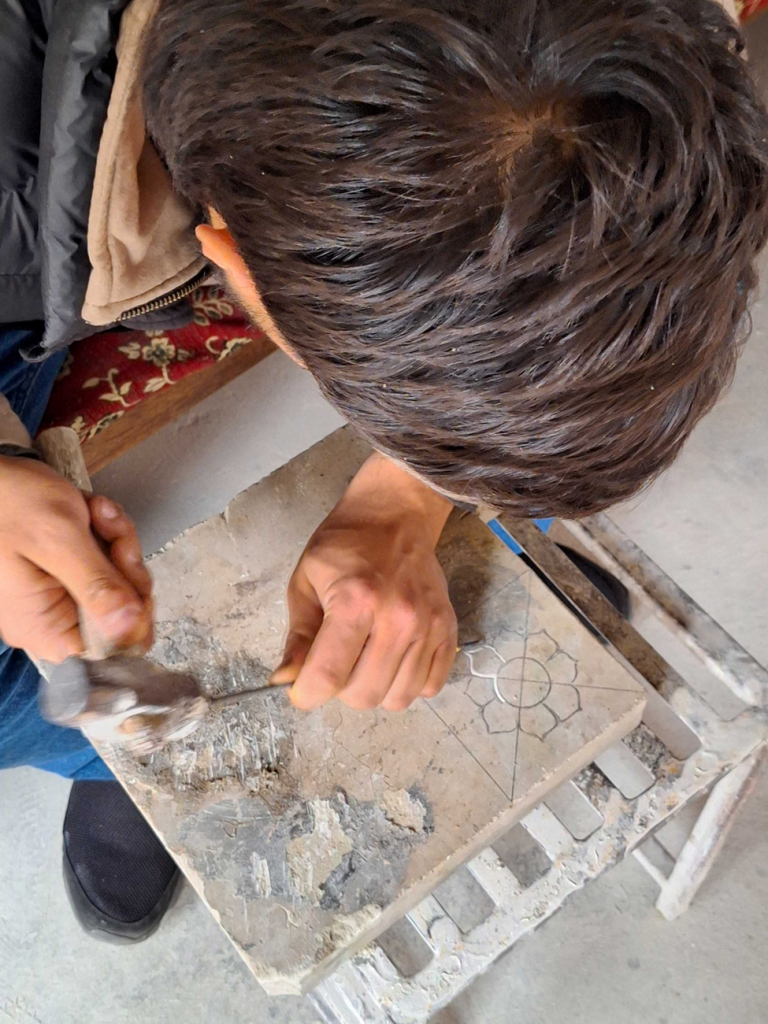
A man doing stone carving
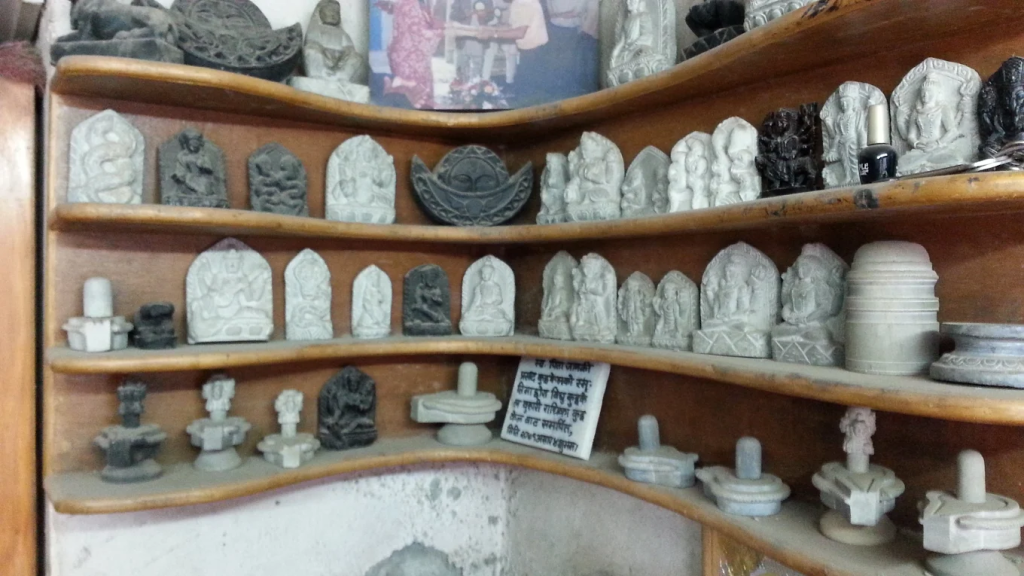
Stone carving products in shop in Patan
Business Structure and Economic Importance
The stone carving industry in Lalitpur is mainly composed of family-run workshops. Skills are typically passed down from one generation to the next. This makes it both a profession and a cultural inheritance.
The industry:
Creates jobs for artisans and trainees
Encourages tourism through handicraft products
Boosts Nepal’s artistic exports
Helps protect and restore cultural heritage sites
With the growth of tourism in Nepal since the 1990s demand for stone sculptures has increased. This has helped revive the industry. Recognition from organizations like the Federation of Handicraft Associations of Nepal has helped promote artisans and their work.
Role of Culture and Religion
Stone carving in Lalitpur has a strong connection with religion. Most stone sculptures show Hindu and Buddhist gods and are placed in temples, monasteries, and homes. These sculptures are not only used for decoration but are also important for worship and religious practices. In Newar culture, stone carvers are respected for their skill in creating sacred images. Making these sculptures is considered a special and meaningful work. Artisans need patience, dedication, and knowledge of traditional religious designs while carving the statues.
Challenges Facing the Industry
Despite its importance the stone carving business in Lalitpur faces challenges:
1. Declining Number of Artisans: Historically only a small number of families practiced stone carving. This number decreased significantly in the 20th century. Younger generations often prefer less labor-intensive careers.
2. Competition from Mass Production: The rise of machine-made sculptures and imported products has created competition. These alternatives are often cheaper. Lack the authenticity and craftsmanship of handmade pieces.
3. Labor-Intensive Nature: Stone carving is physically demanding and time-consuming. Completing a sculpture can take weeks or even months.
4. Limited Market Access: Many artisans rely on sales or middlemen. This can limit their profits and exposure to markets.
5. Preservation of Authentic Techniques: While modern tools can increase efficiency there is concern that traditional methods may be lost over time.
Modern Developments and Opportunities
Even though the stone carving business in Lalitpur faces many challenges, there are also some positive changes that are helping the industry grow.
1.Growth of Tourism: Many tourists who visit Patan Durbar Square and nearby places like to buy handmade stone products. This helps artisans earn income and keep their craft alive.
2.Online Selling: Some stone carving workshops now use online platforms to sell their products. This allows them to reach customers from different countries around the world.
3.Training New Artists: Different institutions and workshops are teaching young people the skills of stone carving. This helps preserve the tradition for future generations.
Worldwide Appreciation: Nepali stone sculptures are becoming popular in international art markets. People admire them for their beauty, design, and cultural value.
The Future of Stone Carving in Lalitpur
The future of the stone carving business in Lalitpur depends on keeping traditional skills alive while also accepting new ideas and modern methods. Support from tourism, education, and international markets is very important for the growth of this craft.
Some important ways to protect and develop the stone carving industry are:
- Encouraging young people to learn stone carving skills
- Giving financial and institutional support to artisans
- Promoting handmade stone products instead of machine-made items
- Using modern technology carefully without losing traditional carving methods
If these steps are continued, Lalitpur can remain an important center for stone carving and traditional art in the future.
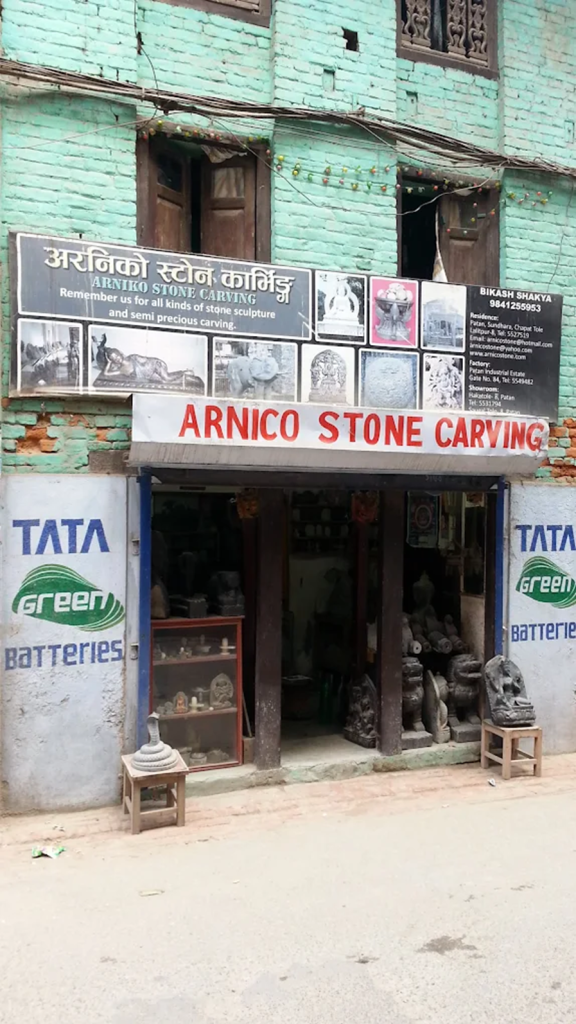
A Stone carving shop in Patan sundhara
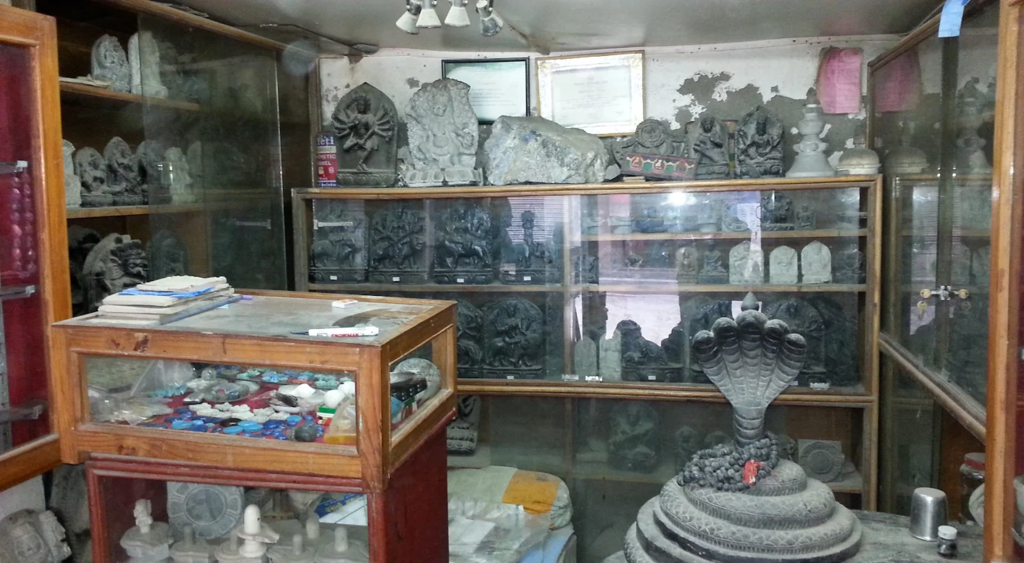
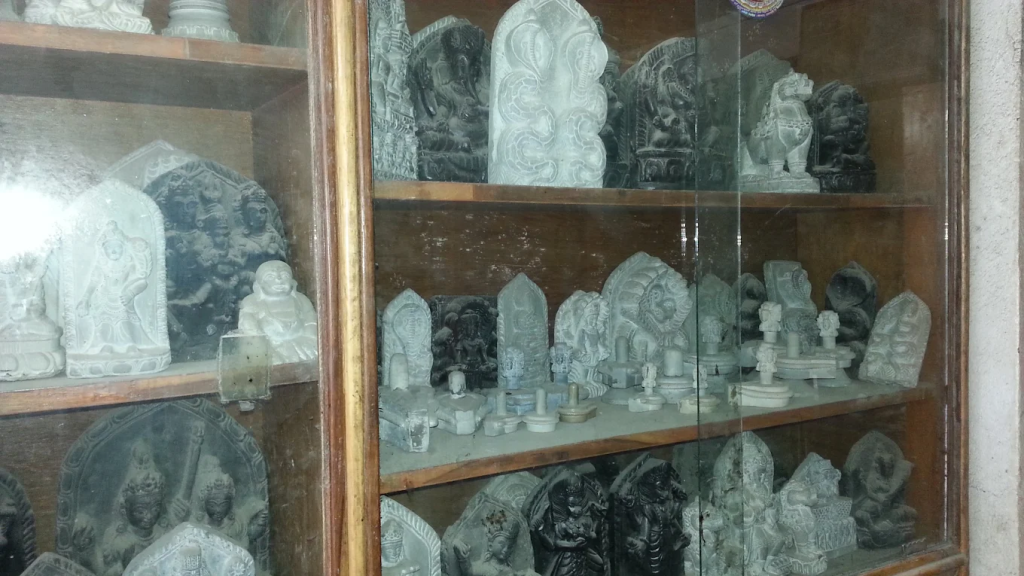
Some of the pictures of products inside the shop
Conclusion
The stone carving business in Lalitpur is not only a way of earning a living but also an important part of Nepal’s culture and history. From the skilled artisans of the Licchavi period to the busy workshops of Stone Cutters’ Row, this traditional craft has continued for many centuries.Today, the industry faces some challenges such as modernization, global competition, and less interest from younger generations. However, stone carving still has a bright future. With proper support, training, and new opportunities, this traditional art can continue to grow and survive for many years.The sound of hammer and chisel still heard in Lalitpur reminds people of the city’s rich artistic heritage. It shows that some traditions are too valuable to disappear and should be protected for future generations
Popular stone carving shops in Lalitpur
1. Khokana Stone Carving
📍 Karyabinayak / Sainbu area, Lalitpur
📞 +977 9851118412
🕒 Opens daily (morning–evening)
🛠️ Specializes in traditional Hindu & Buddhist stone sculptures (Buddha, Ganesh, Shiva, etc.)
ℹ️ Well-known workshop with decades of experience and hundreds of sculptures created.
2. Ramstone Handicraft
📍 Mahalaxmi Campus Road, Lalitpur
📞 +977 9817259427
🕒 Open long hours (early morning–late evening)
🛠️ Offers custom stone carvings, statues, and handicrafts
⭐ Popular for craftsmanship and wider product range
3. Arnico Stone Carvings / Nunem Stone Handicraft
📍 Haktole Ganesh area, Lalitpur
📞 +977 9841268412
🕒 Open daily
🛠️ Focus on decorative stone items and traditional carvings
4. Manakamana Stone Carving
📍 Lalitpur (central area)
📞 +977 9841401592
🛠️ Produces religious statues and temple-related carvings
5. Bhinchenbahal Stone Carving
📍 Patan (Bhinchenbahal / inner city area)
📞 +977 9808304186
🛠️ Traditional Newari-style stone carving work
6. Buddha Stone Carving
📍 Lalitpur
📞 +977 9841194533
🛠️ Specializes mainly in Buddha statues and spiritual sculptures
7. Om Shikhar Shankhar Stone Handcraft
📍 Lalitpur
📞 +977 9842570885
🛠️ Handmade stone idols and decorative pieces
8. Babu Ratna Stone Carving
📍 Mangalbazar Road, Patan
📞 +977 9841465753
🛠️ Combines workshop + display (handicraft style)
9. Kaji Stone Statue Factory
📍 Lalitpur
📞 +977 9851240105
🛠️ Focus on stone murti (statue) production
10. AS Mahankal Stone Carving Shop
📍 Tyagal–Lalitpur Road
🛠️ Known for detailed carvings inspired by epics like Mahabharata & Ramayana
Other known workshops (directory info)
- Arniko Stone Carving – Sundhara area (temple statues, marble/stone idols)
- Godawari Stone Carving – handmade deity sculptures, custom work
- Bajracharya Carving – traditional craft shop