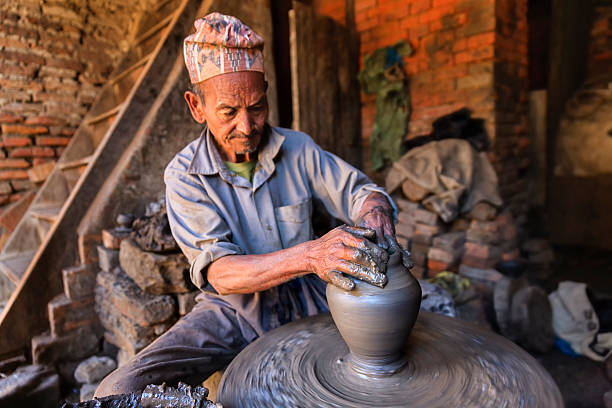
Nepal hardly needs an introduction. Tucked between India and China, this Himalayan country packs an amazing mix of scenery, history, and living culture. Every year, people from all over the world flock here climbing mountains, hiking trails, touring temples, and soaking up traditions that run deep. But there’s a side to Nepal that’s easy to miss if you only look at the peaks or the monasteries: its handicrafts.
Tourism and handicraft go hand in hand. One brings the visitors in; the other gives them something to take back home. Together, they provide jobs, protect tradition, and keep the money flowing. If you really want to understand Nepal’s economy and future, you’ve got to see how these two are connected.
Nepal as a Tourism Destination
Tourism is Nepal’s powerhouse. It’s the country’s biggest source of foreign income. Think about it Nepal boasts eight of the world’s ten tallest mountains, so adventurers, hikers, and nature-lovers all dream of coming here.Tourism bounced back strongly in 2024. Over 1.1 million foreign visitors arrived, up 13% compared to 2023, and nearly at pre-pandemic levels. If anything, the world is rediscovering Nepal’s charm.This isn’t just about big numbers. Tourism supports thousands of local businesses, from trekking companies and hotels to airlines and you guessed it handicraft shops. Tourism makes up about 7 – 8% of Nepal’s economy, and it’s especially vital in the mountain regions where other opportunities are slim.
People come to Nepal for a bunch of reasons. Some want to tackle Everest; others trek the Annapurna Circuit. There’s the spiritual draw of temples like Pashupatinath and Swayambhunath. And, honestly, many just want to dive into the food, festivals, and the genuine warmth of Nepali folks. One thing’s almost certain: before they leave, just about everyone browses the local markets and walks out with some piece of Nepalese handicraft.
What Are Nepalese Handicrafts?
Handmade goods and Nepal go way back. The skills and know-how have been passed down for generations. The craftsmen aren’t just making things they’re preserving social, religious, and cultural values you’ll find across the country.The history of Nepalese handicrafts stretches to the 5th century AD, when religions began to root themselves among Nepali communities. That’s why you see so many religious influences woven into these products.The Handicraft Association of Nepal says there are 42 types of products, including metalwork, pashmina, Thangka paintings, fine jewelry, stone carvings, woodwork, handmade paper, leather goods, ceramics, and plenty more.
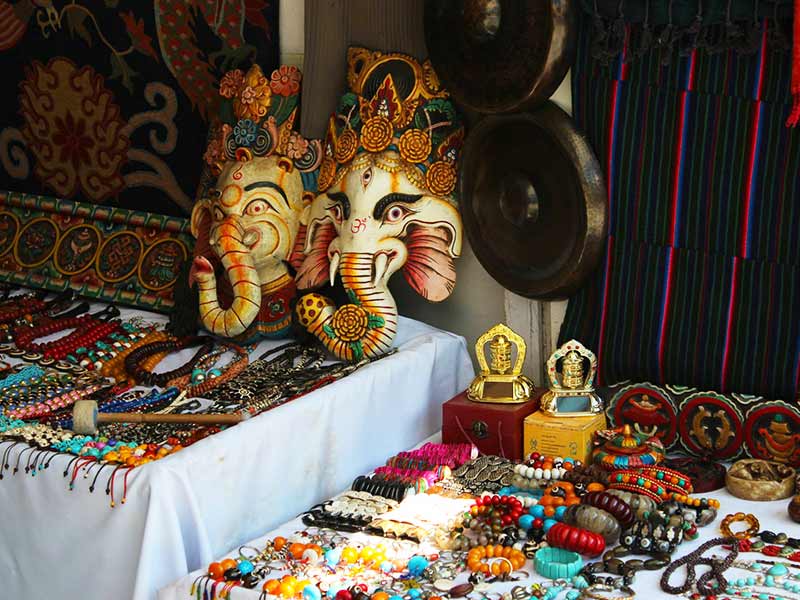
Here are a few favorites:
Pashmina Shawls – Made from the silky wool of Himalayan goats, these shawls are famous worldwide for softness and warmth. They’re one of Nepal’s best loved exports.
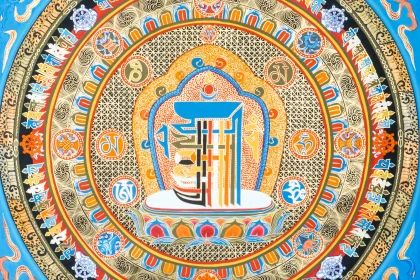
Thangka Paintings – Intricate religious artwork, often showing Buddhist deities or sacred scenes, rendered on cloth or paper. Some Thangkas take weeks or months to finish.
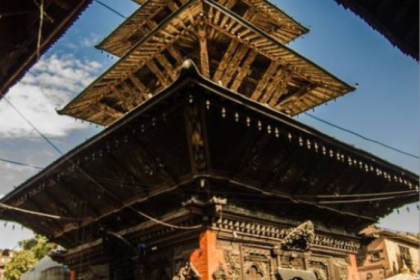
Wood Carvings – Walk around Bhaktapur, Patan, or Kathmandu and you’ll see temples covered in detailed woodwork. This craft has been around for centuries and hasn’t faded.
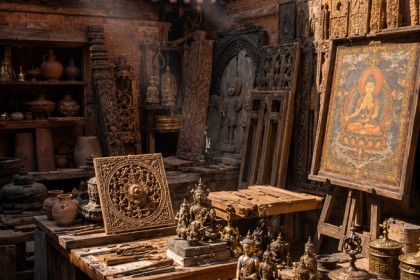
Metal Statues and Singing Bowls – The Newari metalworkers in Kathmandu Valley are legends. Their bronze and copper statues, plus those singing bowls used for meditation, are prized everywhere.
Handmade Paper – Lokta paper comes from a plant native to Nepal’s forests, and people have been making it for a millennium.
The Connection Between Tourism and Handicraft
Tourists and handicrafts are tied together in Nepal. Anyone visiting finds themselves swept up in the lively markets of Thamel, Bhaktapur, or Patan, where real handmade goods are everywhere. The global appetite for eco-friendly, fair-trade souvenirs just makes Nepal’s handicrafts even more attractive.
Wander through Thamel in Kathmandu and you’re surrounded by shops selling singing bowls, prayer flags, Thangka paintings, Pashmina scarves, hand-carved statues the works. These aren’t just mementos; they’re stories. Every piece holds an artisan’s skill, a community’s tradition, and Nepal’s identity. Tourists buying these aren’t just shopping they’re connecting with the culture.Tourism and handicraft depend on each other. If one slows down, the other feels it. If one grows, the other thrives. That’s why Nepal’s future hinges on nurturing both.
Nepal’s handicraft industry isn’t just a footnote in the country’s economy it’s front and center. The numbers make that clear. In 2023, Nepal exported Rs 12 billion worth of handmade goods. That’s not pocket change, and it’s even more impressive when you realize these crafts are shipped to more than 60 countries. Local data from Nepal Rastra Bank shows that this sector has been booming, growing by 16% every year for the last decade. What started as Rs 5 billion in exports now sits at more than double over Rs 12 billion.
And we’re not just talking about money. More than 1.1 million people earn their livelihoods directly or indirectly from handicrafts, making it one of Nepal’s biggest sources of jobs. Women and rural communities especially benefit, often forming the backbone of this workforce. The range of products is massive: pashminas, wool goods, silver jewelry, handmade paper, metalwork, woodwork the list goes on. These aren’t niche items either; they head out to about 85 countries, with the United States alone buying up a quarter of Nepal’s handicraft exports.
The Federation of Handicraft Associations of Nepal ties it all together, representing more than 900 manufacturers and 15,000 craftsmen. Kathmandu Valley is the main hub, but smaller workshops are scattered all over the country. Every artisan, like the Thangka painter with years of spiritual training, adds a piece of themselves to Nepal’s story.
But, handicrafts are about more than earning. They’re the heartbeat of Nepal’s cultural identity. Generations of artisans have kept traditions alive, passing skills and wisdom from parent to child, from ancestor to descendant. That kind of continuity isn’t easy to find, and it’s the reason Nepalese handicrafts have lasted centuries. President Ramchandra Paudel summed it up well: handicrafts aren’t just economic tools, they’re a living link to Nepal’s heritage. Many ethnic groups in Nepal call craftsmanship their ancestral profession skills so deeply rooted in history and tradition, you can’t just reproduce them overnight.
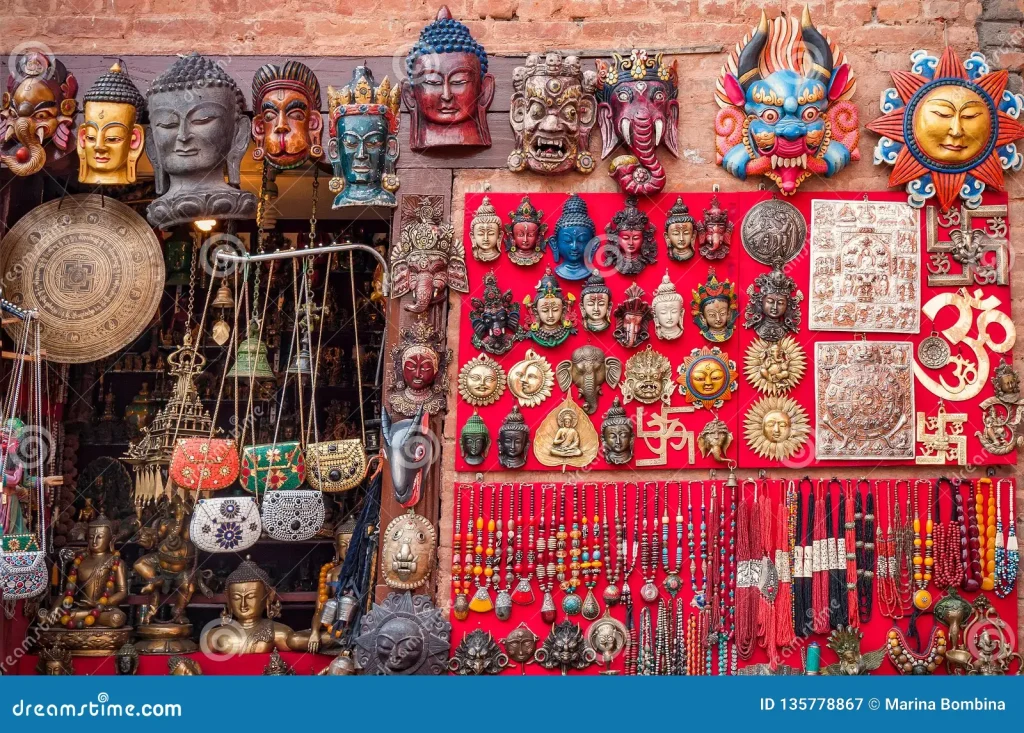
So when a craftsman in Bhaktapur carves a window just like his grandfather did, or a woman in Patan weaves a shawl with techniques as old as the hills, they’re doing more than creating something to sell. They’re keeping Nepal’s history alive, giving it an audience through tourism, and a reason to keep going.
Still, it’s not all smooth sailing. Nepal’s handicrafts face real threats. Cheap mass-produced imports undercut local artisans, and getting products to foreign markets isn’t easy. Younger generations often shy away from traditional crafts, and finding materials or new customers online is tougher than it should be. The Pashmina industry is a cautionary tale. In the 1990s, it was flying high, with exports topping USD 112 million. But prioritizing quantity over quality led to a major drop in both reputation and income.
Tourism presents its own hurdles. Sure, travelers are coming back after COVID, but Nepal still needs better roads, airports especially outside Kathmandu and stronger hospitality standards to really compete with its Asian neighbors.
On the bright side, the future looks promising. Nepal’s travel and tourism market is set to grow by 8.46% annually up to 2029, reaching around USD 686 million. The country plans to spotlight adventure tourism, cultural tours, eco-travel, and spiritual journeys, with new trekking routes, rural homestays, and improved transport options in the works. Handicrafts have a shot at something similar by balancing tradition with smart innovation. Organizing production, sharpening marketing, forging stronger global partnerships, and diving into digital platforms could open up entirely new worlds for Nepali artisans. If before, you needed tourists to wander into your shop, now people halfway across the globe can buy direct.
There’s government help too, with a 5% cash reward for exporting handicrafts and woodcraft. That boosts incentives, keeping the sector vibrant and growing.
Conclusion
Nepal’s tourism and handicraft industries aren’t two separate stories they’re intertwined. Tourism brings the world to Nepal. Handicraft gives visitors something to remember and cherish, long after their trip ends. Each Thangka painting on a wall in Germany, every singing bowl in Japan, every Pashmina scarf in the US they carry Nepal’s spirit and craftsmanship far beyond its borders.
If Nepal wants to keep moving forward, it needs to invest in both give artisans the recognition and support they deserve, and make sure tourists get the authenticity and quality they come looking for. When both sides flourish, you don’t just get economic growth. You get a nation whose story is proudly shared with the world. Nepal, in the end, is more than its mountains. It’s its people and the beauty crafted by their hands.
References
“Traditional Craftmanship in Nepal | The Cultural Craft | NTB” 🔗 https://ntb.gov.np/things-to-do/traditional-crafts
“Traditional Nepali Handicraft in Kathmandu, Nepal 🇳🇵” 🔗 https://www.youtube.com/shorts/FvggJ0_hCfg
Nepal Tourism Board – Official YouTube Channel: 🔗 https://www.youtube.com/@nepalitourism
The HRM Nepal — “Revitalizing the Nepali Handicraft Industry.” https://thehrmnepal.com/report/revitalizing-the-nepali-handicraft-industry
Nepal Tourism Board (NTB) — Tourism statistics and destination information. https://ntb.gov.np
Rising Nepal Daily — “Nepal’s tourism sector sees notable recovery with 13% growth in 2024.” https://risingnepaldaily.com/news/54769
Federation of Handicraft Associations of Nepal (FHAN) — Handicraft sector overview. http://fhan.org.np
Trade and Export Promotion Centre (TEPC), Government of Nepal — Handicraft export data. https://tepc.gov.np/major_products/full_content/handicraft
Nepal Desk — “Nepal’s Handicraft Exports Soar to Rs 12 Billion in 2023.” https://nepaldesk.com/news/nepali-handicraft-export-2023
Wikipedia — Nepalese Handicrafts — Historical overview. https://en.wikipedia.org/wiki/Nepalese_handicrafts
Wikipedia — Tourism in Nepal — Sector overview and statistics. https://en.wikipedia.org/wiki/Tourism_in_Nepal
Evamratna Blog — “Nepal’s Handicraft Market: Today’s Perspective and Challenges.” https://evamratna.com/blogs
Great Nepal Treks — “Nepal Tourism Statistics 2024.” https://www.greatnepaltreks.com/nepal-tourism-statistic-2024
Statista Market Forecast — Travel & Tourism, Nepal. https://www.statista.com/outlook/mmo/travel-tourism/nepal
Journal of Tourism and Hospitality Education (NEPJOL) — “A Study of Handicraft Products Tourism in Pokhara, Nepal.” https://www.nepjol.info