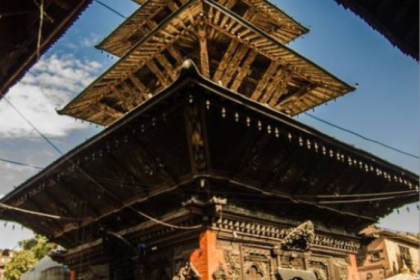

While wandering around Lalitpur, if you have paused beneath a low, tiled old style roof with wood columns, you have stood inside one of Nepal’s profound structures, the falcha.
What Exactly Is a Falcha?
The word comes from Nepalbhasa, fa meaning open space and lcha meaning to rest. Together, a falcha is a temporary resting place, a covered space, open on sides, where anyone could stop, sit, and simply be. They are also called pati or phalcha in different parts of the valley. Falchas can be used to take shelter in rain, from sun, while waiting for someone, waiting for your bus, as a place to just sit down and homeless people are seen sleeping in there as well.
Their history can be traced back to at least the medieval Malla era (12th–18th centuries), but according to historians, there have been instances where such buildings were constructed during the Licchavi period. Such buildings were normally erected by the upper classes, businessmen, and guthi, which is an ancient Newari social organization, as acts of public charity.

More Than Just a Roof
The falcha was the hub of community life for generations. Travelers en route to far-off shrines stayed here in its shelter without paying anything. Load bearers placed their cargo down on the raised portion of the falcha to have a break in the middle of the day. In the Malla era, farmers in Terai paid their tax at a falcha situated close to the Baghbhairab sthan. The people would spend their evenings engaged in dapha bhajan which includes singing songs of devotion with the help of madals and harmoniums.
In those days, when there were no cafes, parks, and public seats, the falchas were the venue of conversations, card games, exchanging gossip, and spending time in comfortable silences among close friends and family members. Even the following proverb exists in Nepal regarding the use of falchas: “When elders do not take rest in the falcha, it cannot be called a falcha.”
Dos & Don’ts at a Falcha
Please Do
– Sit down, relax, and spend as much time as necessary, that’s what these places are for
– Interact with other visitors, falcha culture is one of interaction and community building
– Remove your footwear if you are near shrines or gods installed in these places
– Notice and admire the intricately carved wood panels, tiled roof, and brick structure
– Look out for and participate in any cultural activities – such as Dapha Bhajan, watching
jatra, and festivities often occur in these spots
– Take pictures, especially with the permission of the people
– Encourage the local business people or artisans that come to sell their products here
– Be accommodating if elders and weary travelers require seats
Please Don’t
– Create littering as they keep these places clean with pride
– Use the area to behave noisily or disruptively as it is meant for resting purposes
– Damage, deface, or lean against the carved wood columns which cannot be replaced
– Consider it as storage space where goods or bags can be left overnight without authorization
– Enter the privately attached structure as the shelter itself is public but not this
– Interrupt religious activities, ceremonies, or rituals being performed inside
– Cook, make fire, and do whatever else may cause damage to the wooden structure
– Think it to be abandoned as its dilapidated condition means its frequent usage
Why They Matter?
In an era where everyone is living alone through the screens, the falcha is an extremely radical idea an unconditional space of public gathering that asks for nothing but promises a place in its shade, refuge from the sun, and the companionship of humans. Studies conducted on the renovated falchas of Kirtipur reveal that they operate as conflict resolution devices, mental wellness centers for the elderly, and agents of communal bonding – none of which has been achieved by any application.