

Introduction
If you wander into a narrow alley in Patan also known as Lalitpur you’ll find an elderly craftsman seated on a battered wooden stool, shaping copper into the form of a deity. His hands barely shake. He’s been at this since childhood, learning as his father did, and his grandfather before him. The air smells like metal and incense, while the tap-tap of his hammer echoes the rhythm of centuries.
Step outside and you’ll see the world has changed fast. Someone sits nearby, scrolling through YouTube, gossiping online, shopping for clothes and gadgets with a few swipes and a handful of rupees. The contrast is jarring, and honestly, it forces us to ask: Can Lalitpur’s age-old handicraft tradition survive in a world that’s speeding toward digital everything?
Let’s look this question squarely in the eye where Lalitpur’s handicraft stands, what’s changed, what’s hard, and maybe what’s possible too.
Lalitpur: The City of Arts and Craftsmen
Lalitpur isn’t just another city in Nepal. It’s special a living canvas for the country’s cultural soul. Patan (Lalitpur) earns its nickname “City of the Arts.” Walk through Okubahal and you’ll see clusters of metalworkers so dense, it’s hard to find their match anywhere else. That’s not an accident.
Even though Lalitpur’s official status as a National Art City is new, its roots run deep. Cultural historian Satya Mohan Joshi wrote that even in the Lichchhavi era, people called the city “Manju Patan,” after Manjushree, a symbol of wisdom. The name alone hints at how far back this art legacy goes.

Patan’s reputation for intricate metalwork and jewelry is well earned. Craftsmen here have refined their skills for generations. You’ll see top-notch statues, gorgeous ornaments, and jewelry everywhere. Shops around Patan Durbar Square a UNESCO World Heritage Site sell some of Nepal’s best handicrafts.
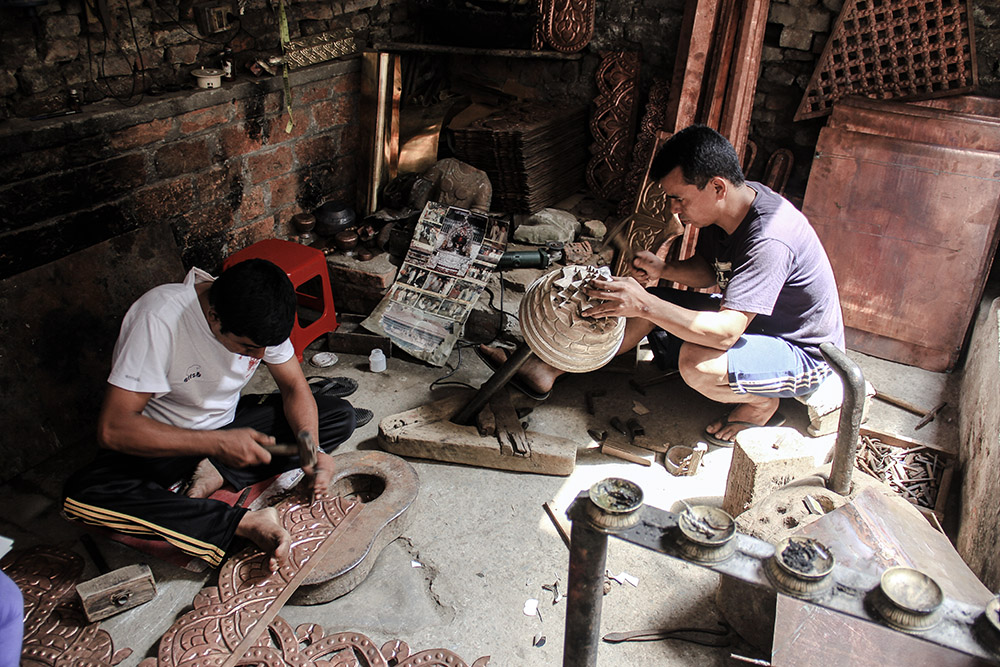
The crafts don’t stop at metal. There’s lost-wax bronze casting, Thangka and Paubha paintings, stone sculptures, silver filigree, woodwork all handed down from parent to child. These techniques aren’t just pretty; they carry stories, beliefs, and values from every corner of Nepal.
The Threat That Quietly Grows
The digital age didn’t burst into Lalitpur in a rush it slipped in gently. We all started using phones, logged onto faster Wi-Fi, shopped online, and watched a new generation grow up with screens instead of chisels.
Nepal’s handicraft industry faces massive challenges: cheap, factory-made imports flood the market, access to foreign buyers is tricky, and fewer young people care about learning these old skills. Tough economies, raw material shortages, and limited tech resources just pile on top.
For Lalitpur, the problem feels personal. A veteran craftsman recently confessed that Nepal lacks a formal academy for traditional arts, and the specific tools needed for this work are rare and expensive. Metal sculpting takes time and money, and it’s hard to convince young students that spending years to master the skill is worthwhile when the payoff is so small. Someone learning bronze casting after ten years might make a fraction of what a tech-savvy young person earns at an office job. When the gap is that obvious, it’s not about laziness just common sense.
And when those old masters retire, if nobody learns from them, their skills disappear. Many newer artists aren’t able to match the workmanship of their elders whose creations were crafted without glue or nails. The difference stands out and it worries anyone paying attention.
The Digital Age: Danger and Doorway
Here’s the paradox the digital age threatens Lalitpur’s handicrafts, but it also brings chances that never existed before.
Think about the threat: online shopping makes it easy for mass produced goods from China to flood the market. These knockoffs look a lot like authentic Nepali crafts and cost way less. A tourist browsing online might click “buy” without realizing there’s a huge difference between a genuine piece and a copy. People across the world are searching for sustainable, meaningful products Nepal’s handicrafts have what they want but competing with machines is an uphill battle.
But the opportunity is real, too. Now a skilled craftsman in Okubahal can, at least in theory, sell a bronze statue to a buyer in Paris or Tokyo. Social media, e-commerce, and international shipping mean even the smallest workshops can reach the world. Facebook and Instagram aren’t just for selfies anymore businesses use them to find customers.
Still, the digital marketplace in Nepal has gaps. Handmade goods from small artisans don’t always get to buyers, and e-commerce hasn’t connected sellers and producers well enough yet. Many families rely on handicrafts for their living, but their products aren’t finding a big audience online. That disconnect is a huge obstacle.
Lalitpur’s Status as a Craft City: Promise and Warning
Lalitpur got a big international recognition after the 2018 World Art Council Assembly. The city was named Nepal’s National Art City in 2021 but with that honor comes a warning. Despite the status, Lalitpur hasn’t kept up with progress reports demanded by the Council. More than thirty other cities have joined the Council’s list, but Nepal’s lack of updates means Lalitpur is now on the “red list” at risk of losing its recognition.
Sure, Lalitpur allocates NPR 10 million a year for arts and culture, and created showrooms like “Koseli Ghar.” But international outreach? Not much. The crafts are alive, but the systems that should protect and market them are too slow. In the digital age, slow means vulnerable.
What Is Being Done and What Could Be Done
There are honest attempts to bridge the gap. Take Sana Hastakala: since 1989 they’ve built a network of over 1,200 producers, boosting artisans through fair trade and reaching global markets for Nepali crafts.
The Association for Craft Producers helps low-income artisans with design, marketing, and technical training. They mix old techniques with modern designs and keep skills alive by constantly updating their product line.
Online efforts are making a dent, too. Platforms like Swodeshi and iMartNepal let Nepali artisans sell directly to international customers, with detailed descriptions and fair trade guarantees so artisans earn what they deserve.
Even the government is talking about policy reforms and support. Nepal’s Ministry of Communications and Information Technology has promised to help Nepali handicrafts reach foreign buyers, grow exports, and showcase Nepal’s identity abroad.
But promises mean nothing without follow-through. What craftspeople really need is practical: internet training, help photographing and listing products, better payment systems, and guidance on sharing the story of their work with the world.
Some progress shows up delegates from the World Art Council saw training programs in Lalitpur that teach Paubha art, clay sculpture, weaving, and even digital design. The old and new worlds are beginning to meet.
The Heart of the Matter: Identity and Survival
Let’s cut to the core it’s not just about economics. At the heart, the survival of Lalitpur’s handicraft is about identity. It’s about what Lalitpur wants to leave to its children.
Skills are handed down within families and tight-knit groups. The shapes, colors, and materials reveal Nepal’s history, faith, and culture. These aren’t just pretty decorations; they matter, spiritually and emotionally.
A Thangka from Lalitpur isn’t just a piece of art it’s a prayer. A bronze Buddha statue sent abroad carries not just metal, but the beliefs, effort, and identity of a whole community. Machines can’t replicate that. Algorithms won’t even come close.
Most importantly, the digital age doesn’t have to be an enemy. It becomes one only if artisans and the folks meant to support them don’t adapt. The future depends on using digital tools, reaching buyers, telling stories, and creating communities who care about real, handmade stones, metals, and paint.
Actually, handmade things aren’t disappearing they’re becoming more precious. As copies become common, it’s authenticity that gets valued. In fact, Nepali handicrafts are getting more global attention than ever. People crave items with history, individuality, and a human touch. These crafts deliver exactly that.
Conclusion
Lalitpur’s handicraft tradition isn’t dead. Far from it. But it’s at a crossroads.
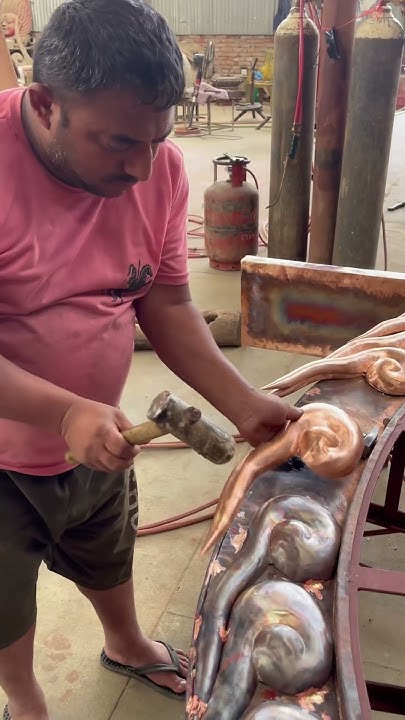
The old craftsman in Okubahal, hammering copper into shape, isn’t the problem he’s a gem. The challenge is building the bridges that help his work reach the millions online who’d treasure it if only they knew it existed.
Surviving the digital age doesn’t mean tossing tradition aside. It means learning the language of today, without losing the wisdom of yesterday. That’s a Thangka painter posting her process on Instagram. It’s a metal sculptor selling globally from his workshop. It’s schools teaching kids that being an artisan isn’t old-fashioned it’s a bold, meaningful choice.
If Lalitpur takes those steps and there’s plenty of evidence it’s starting to then not only will its crafts endure, they’ll flourish. The digital age isn’t just a threat; it’s also a stage. Lalitpur’s artisans just need to step onto it.
References
- Lalitpur Chamber of Commerce and Industry (LCCI) — “Declaration of Lalitpur as a Craft City and Its Challenges.” https://lcci.org.np/declaration-of-lalitpur-as-a-craft-city-and-its-challenges/
- ECS Nepal — “Master Craftsmen of Lalitpur.” http://ecs.com.np/craft-maker/master-craftsmen-of-lalitpur
- Evamratna Blog — “Nepal’s Handicraft Market: Today’s Perspective and Challenges.” https://evamratna.com/blogs/evamratna-blogs/nepals-handicraft-market-todays-perspective-and-challenges
- Trade and Export Promotion Centre (TEPC), Government of Nepal — Handicraft sector overview. https://tepc.gov.np/major_products/full_content/handicraft
- The Kathmandu Post — “Handicraft Year announced to revive the virus-ravaged curio industry.” https://kathmandupost.com/money/2020/12/14/handicraft-year-announced-to-revive-the-virus-ravaged-curio-industry
- Sana Hastakala — Fair Trade Nepali Handicrafts, Lalitpur. https://sanahastakala.com
- Association for Craft Producers (ACP) — Fair Trade Organization, Nepal. https://www.acp.org.np
- Swodeshi — “Best Handicraft Products in Nepal: 2025.” https://swodeshi.com/handmade-nepal-handicraft-products-in-nepal/
- Digital Gurkha — “Social Media Marketing in Nepal 2025.” https://digitalgurkha.com/blog/social-media-marketing-in-nepal/
- NIPoRe (Nepal Institute for Policy Research) — “Digitalization of Nepal — Few Policies and Possible Challenges.” https://nipore.org/digitalization-of-nepal-few-policies-and-possible-challenges/
- Hi Tours Nepal — “Best Markets for Handicrafts in Nepal.” https://www.hidmc.com/blog-posts/nepals-handicrafts-best-markets-to-buy-authentic-souvenirs
- Federation of Handicraft Associations of Nepal (FHAN) — http://fhan.org.np
