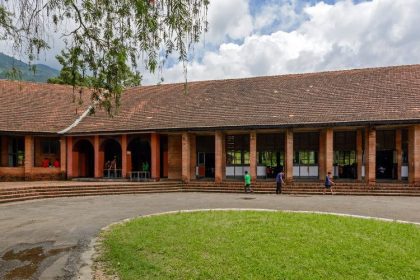
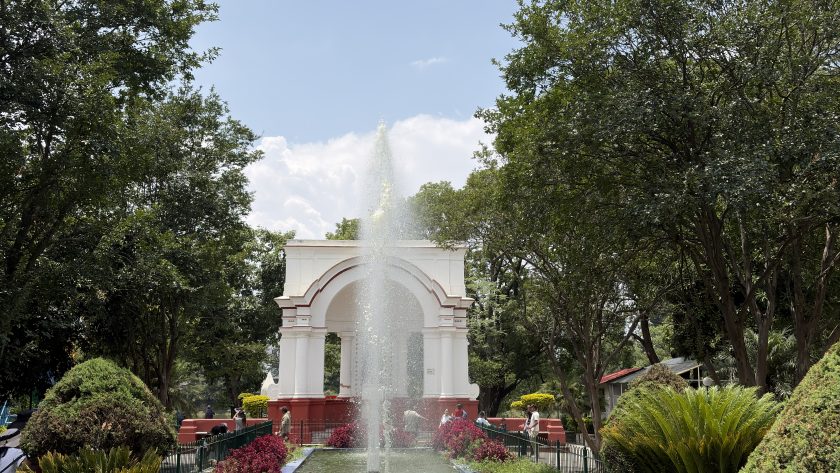
Curious to know which animals you can find at Central Zoo Jawalakhel? From mighty elephants and endangered rhinos to colourful tortoises and clever monkeys, Central Zoo Jawalakhel is home to animals of all kinds. This guide contains all the animals in the zoo, their habitat, diet and conservation status. Whether you’re planning a visit, or just curious, this guide will give you all the need-to-knows!
Spotted Deer
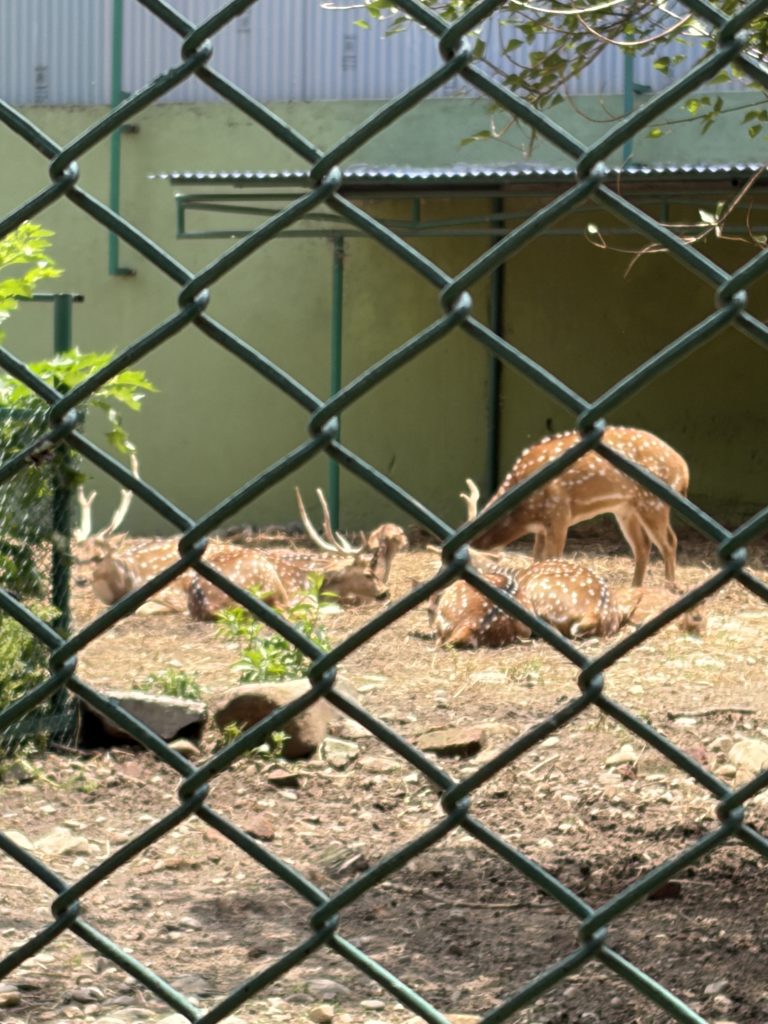
Scientifically, the Spotted Deer is called Axis axis. They are found in Nepal, India and Sri Lanka. Its natural habitat is short grasslands, moist riverine forests, and sal forests. This deer weighs between 45 and 85 kilograms and eats grasses, leaves, twigs, fruits, wild plants and agricultural crops. Gestation is 210 to 225 days and results in a single spotted fawn. The Spotted Deers live to be 12 to 18 years old. On the conservation status scale they can be listed as Least Concern.
Black Buck
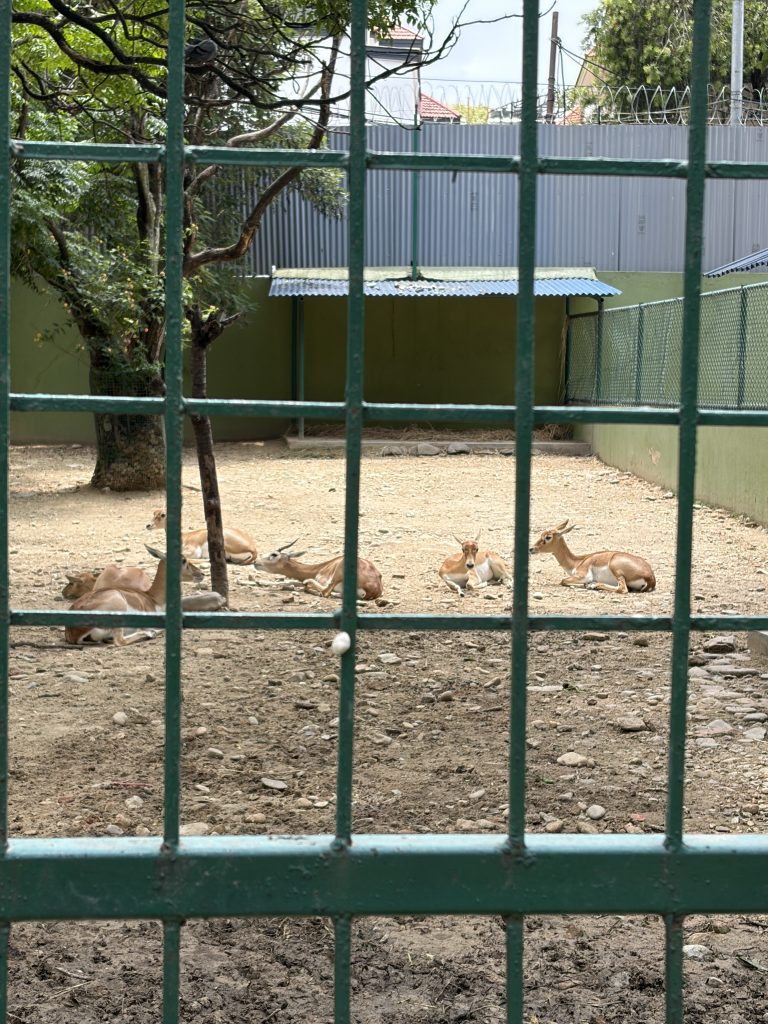
The black buck (Antilope cervicapra) occurs in Nepal, and India. It is found in semi-desert to open woodland and short grasslands. They weigh from 30 to 45 kilograms. Black bucks are grazers, but they will also browse the leaves and twigs of a number of trees and shrubs. They often invade nearby agricultural fields and feed on cereal crops. They have a gestation period of 150-180 days and give birth to one baby. Black bucks live from 12 to 15 years. We list them as Near Threatened currently.
Barking Deer
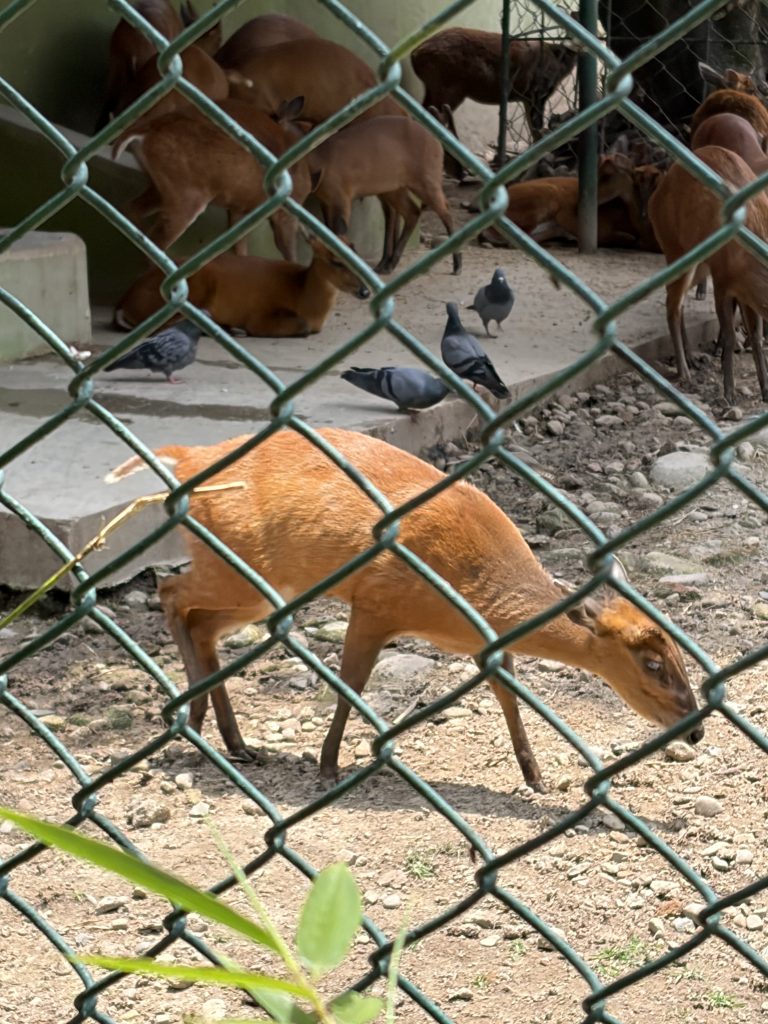
Scientific Name Of Barking Deer: Muntiacus vaginalis. They live in Nepal, India, Bhutan, Sri Lanka, Pakistan, Cambodia, Indonesia, Laos, Malaysia, Myanmar, Vietnam and China. It occurs in a variety of habitats from dense to fairly open woodlands, dry shrublands and oak and pine forests. The Barking Deer weighs between 15 and 25 kilograms and eats shrubs, grass, shoots and fruits of various plants and sometimes strips bark from shrubs and trees. Its gestation period is 7 months and it produces 1-2 fawns. Barking Deer is believed to live for 15 to 19 years. We list them as Least Concern.
Sambar Deer
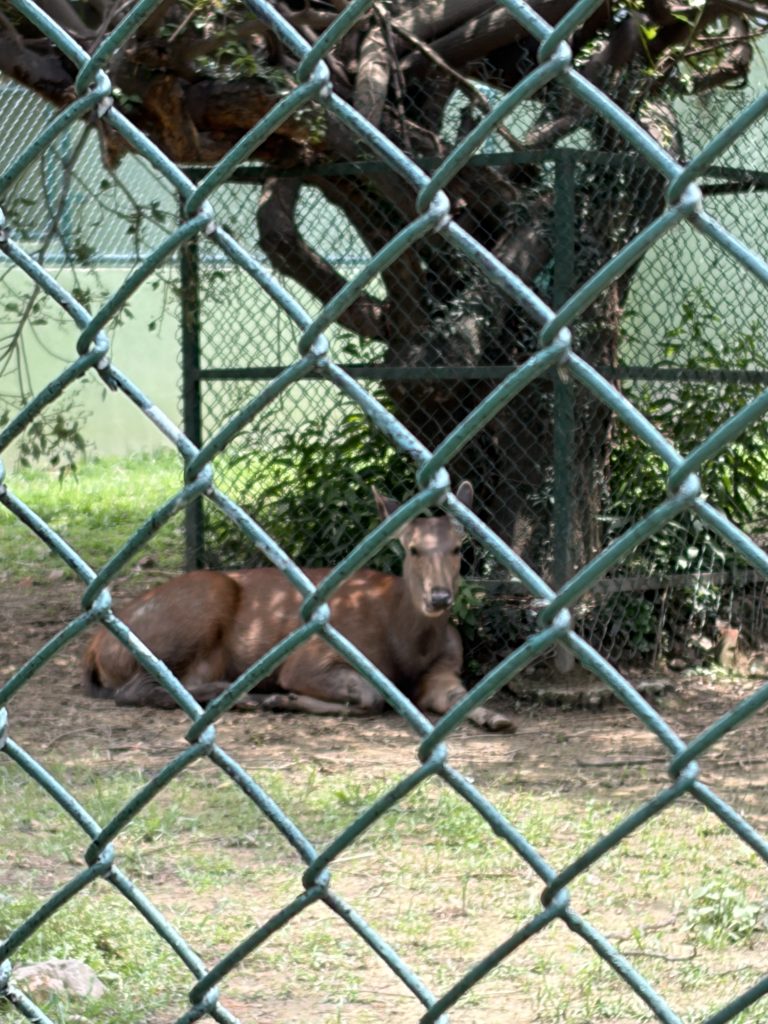
Sambar Deer (Rusa unicolor) is one of the largest deer species that you can see in Central Zoo Jawalakhel. It ranges from Southern Asia including Nepal and India, and mainland South East Asia including Burma, Thailand and Indochina. It extends from sea level to high elevations like the mixed coniferous forest zone in the Himalayan Mountains. The Sambar Deer eats leaves, grass, herbaceous plants, aquatic plants, bamboo buds, vines and fallen fruit. It carries its young for a period of 8 months and gives birth to a single fawn each year. This deer lives for 20 years. We are listed as Vulnerable.
Hippopotamus
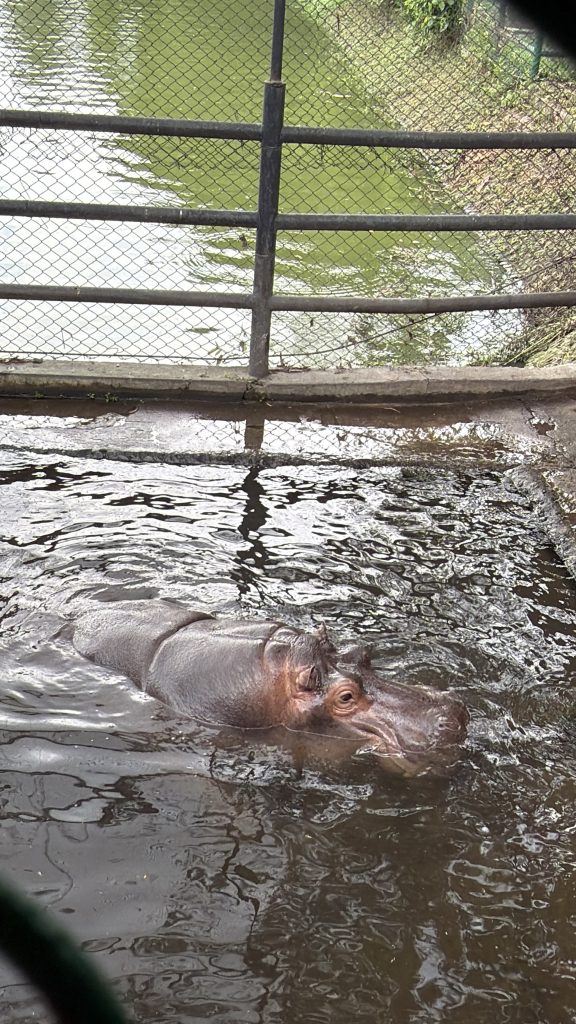
One of the most exciting animals in Central Zoo Jawalakhel is the Hippopotamus (Hippopotamus amphibius). It is native to Africa and large populations occur in the Nile river valley of east Africa. It is found in deep lakes and rivers with adjoining reed beds and grasslands. The Hippopotamus is one of the heaviest animals on earth and weighs from 1200 to 2800 kilograms. It is herbivorous and feeds mainly on short grasses and aquatic plants, and can also plunder agricultural fields. The gestation period is 7-8 months and it gives birth to a single calf. The Hippopotamus lives for 40 to 60 years. Now classified as Vulnerable
Greater One Horned Rhinoceros
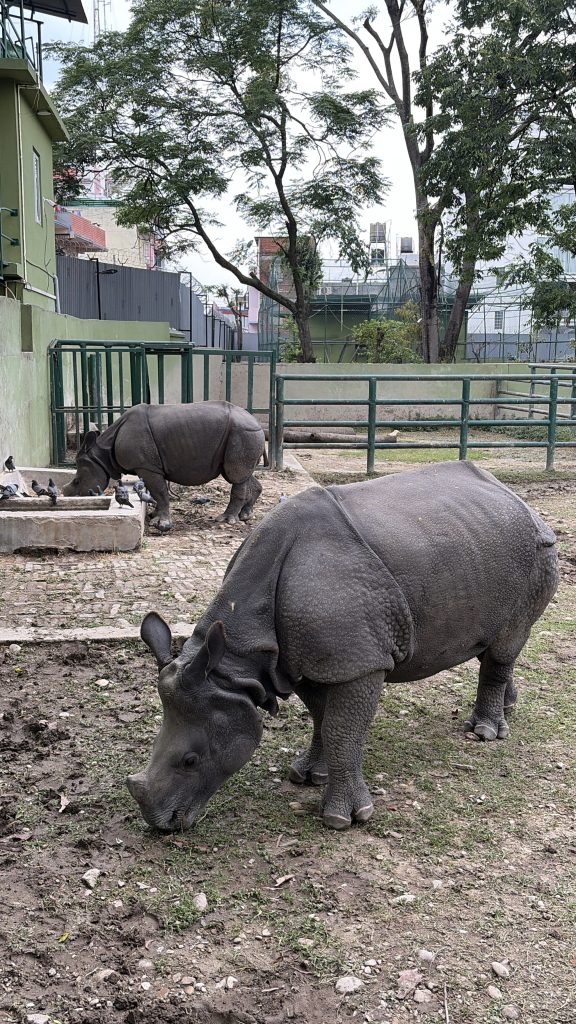
The Greater One Horned Rhinoceros, known scientifically as Rhinoceros unicornis, is one of the most endangered animals in Central Zoo Jawalakhel. Rhinos are found in Nepal, India, and Bhutan. They inhabit alluvial floodplains, nearby foothills, and moist forests. This large animal can weigh up to 2,000 kilograms and feeds on a variety of trees, shrubs, grasses, and fruit. Its gestation period lasts 16 to 18 months, and it typically gives birth to one calf. Rhinos can live between 40 and 50 years. A single black horn measuring 8 to 25 inches long and a grey-brown hide with skin folds give this animal a distinctive look. It is currently listed as Endangered.
At Central Zoo Jawalakhel, visitors can meet two special one-horned rhinoceroses named Pooja and Maila. Pooja is a female who suffered significant injuries from a tiger attack. She was rescued from Rapti Ghat, Sauraha, Chitwan, on 2 November 2022. After receiving treatment at the National Trust for Nature Conservation’s Biodiversity Conservation Center, she arrived at the zoo on 11 June 2025, at approximately 32 months old. Similarly, Maila is a male who also suffered injuries from a tiger attack, rescued from Bardiya National Park on 19 September 2024. He received care at the same conservation center and arrived at the zoo on 5 June 2025, at around 23 months old. Today, Pooja and Maila are healthy and thriving in their new home.
Patas Monkey
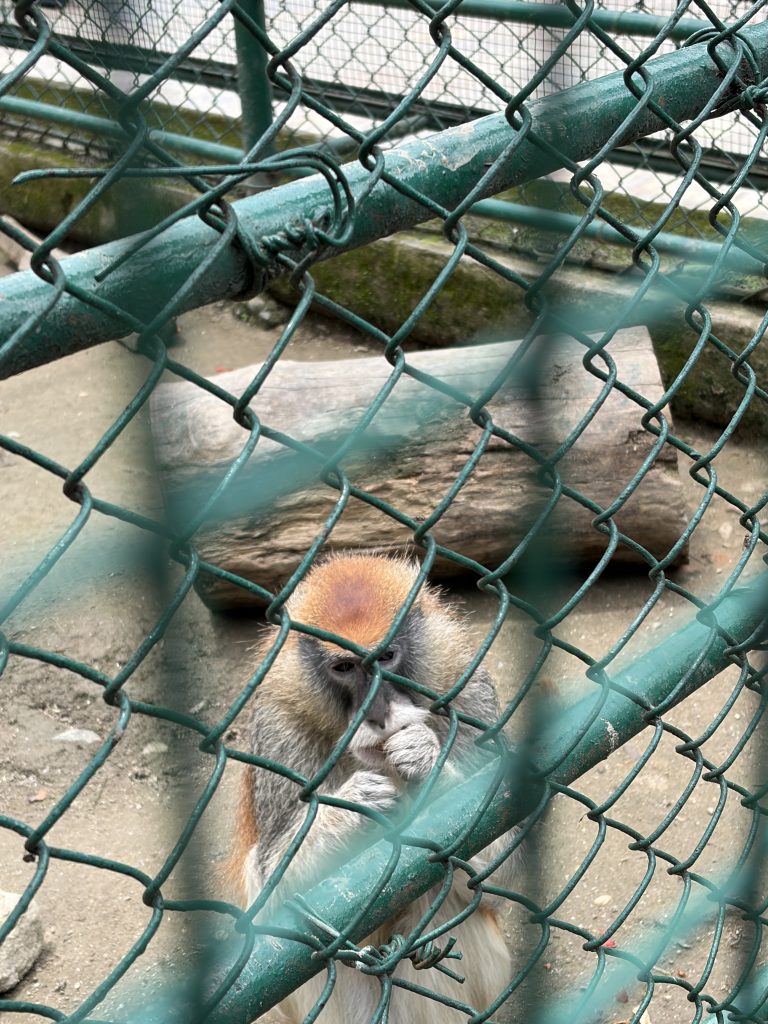
The scientific name for the Patas monkey is Erythrocebus patas. This animal inhabits parts of West, Central and East Africa. The habitat of the Patas monkey consists of grass savannas as well as dry and dense woodlands with thick grass cover. Its weight ranges from 7 to 12 kilograms; it is an omnivore that feeds on fruits, insects, leaves, roots and eggs of birds. Gestation takes place for 170 days while the lifespan of the species ranges from 15 to 20 years. Most importantly, the Patas monkey is the fastest primate and runs at a speed of up to 50 km/h.
Black Panther
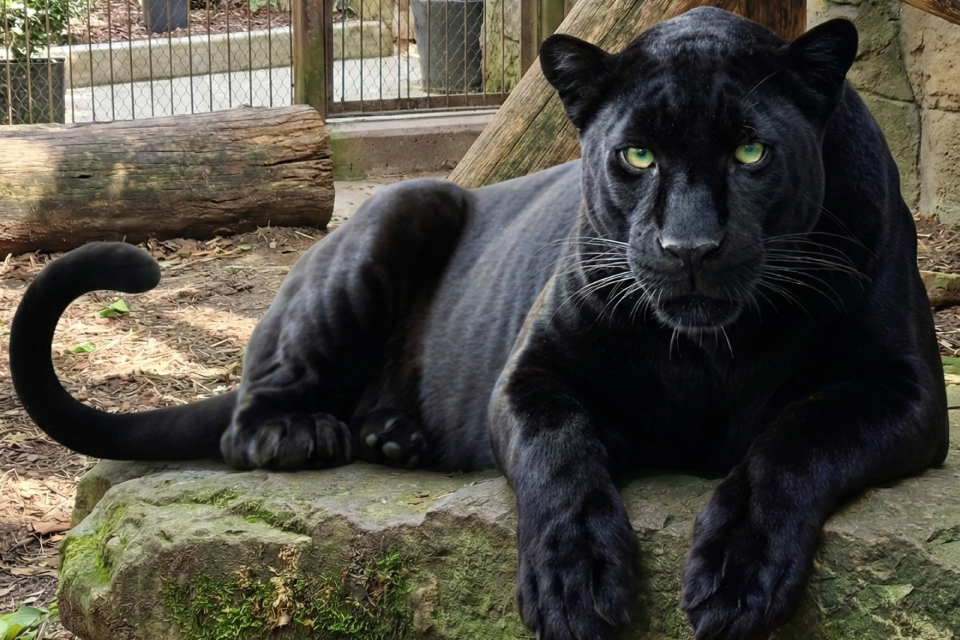
Panthera pardus is the scientific name for the Black Panther which is native to Nepal, India, Bangladesh, Bhutan, Pakistan, Sri Lanka, Indonesia, Vietnam, Afghanistan, among others in both Asia and Africa. Black Panthers can adapt to all habitats that provide an abundant source of food, such as open savannahs, thick forests, snowy mountains and even cities. They weigh from 17 to 90 kilograms and feed on pigs, goats, sheep, cattle, and other animals. The pregnancy lasts 3 to 4 months and captivity can make their lifespan last up to 23 years. The Black Panther is not a distinct species but rather a Common Leopard that produces extra melanin in its body hence turning black.
Golden Jackal
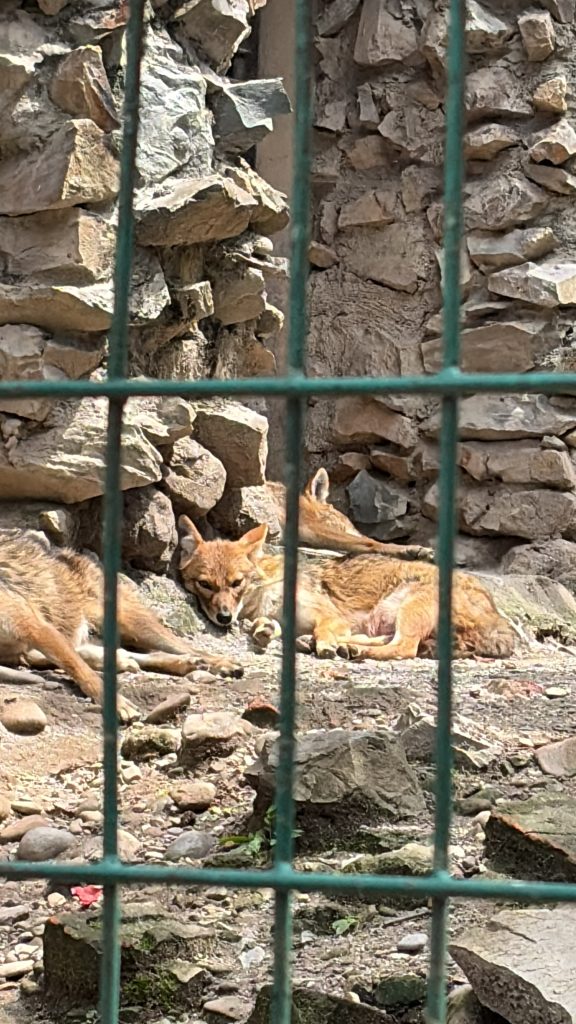
The Golden Jackal, commonly called Canis aureus, is an animal which can adapt to all kinds of conditions ranging from humid environments to desert areas and even areas surrounding people’s habitats. Its diet consists of various animals such as small mammals, snakes, birds, frogs, fruits, and sugarcanes. The lifespan of the Golden Jackal ranges from 10 to 15 years. We have marked these as Least Concern. These are social and clever animals who normally mate for life. These animals howl to communicate, and their diet includes dead animals which help maintain a clean environment. You will be able to sense their strong smell near the enclosure.
Chinese Alligator
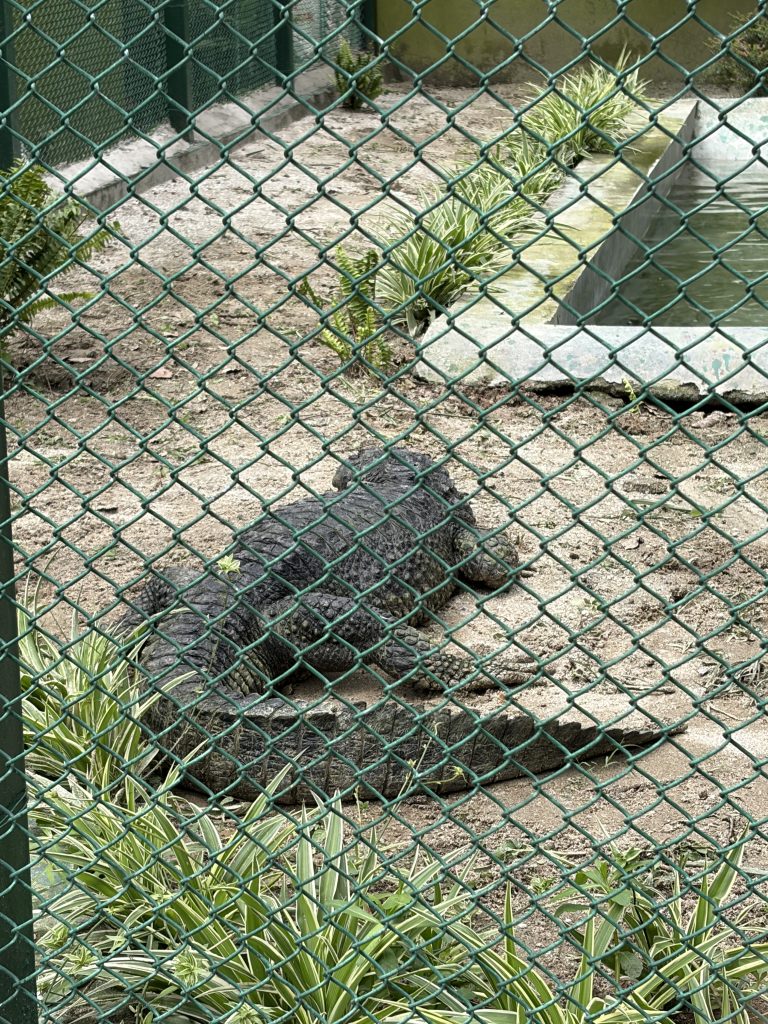
The scientific name for the Chinese Alligator is Alligator sinensis. They are distributed in the river basins of the Yangtze and King River in China. The animal inhabits warm and moist wetland environments like banks of rivers, sandy beaches, and mud flats. As a carnivore, it feeds on turtles, fish, birds, deer, pigs, and other small mammals, including toxic and nontoxic snakes. Their eggs number 20 to 30 and they take up to 70 days to hatch. Chinese Alligators can survive up to 50 to 60 years and measure 5 feet long on average.
Rabbit
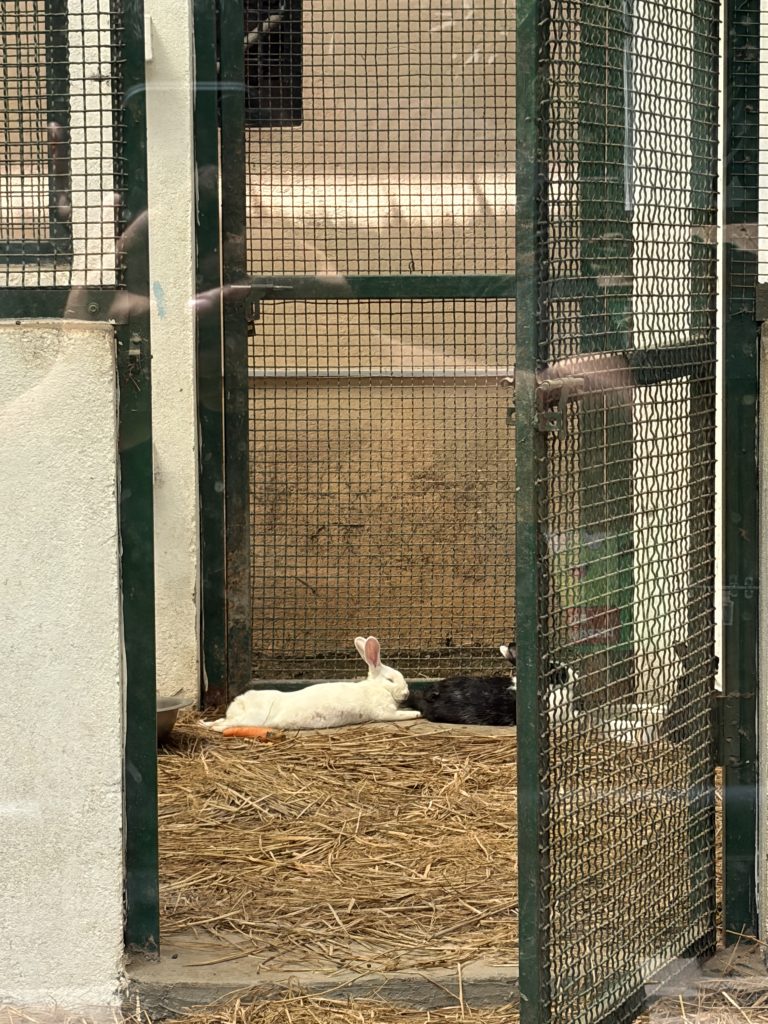
Scientifically known as Oryctolagus cuniculus, the Rabbit is an animal species found worldwide. It occurs in gardens and yards and has a weight of 2.5 kilograms. The rabbit is herbivorous and feeds on soft grasses, fruits, and vegetables. The rabbit has a gestation period of 28 to 34 days and gives birth to 3 to 6 young ones. The life span of the rabbit is five years or more. It is a social animal that requires companionship and its teeth grow continuously throughout its life.
Five Striped Palm Squirrel
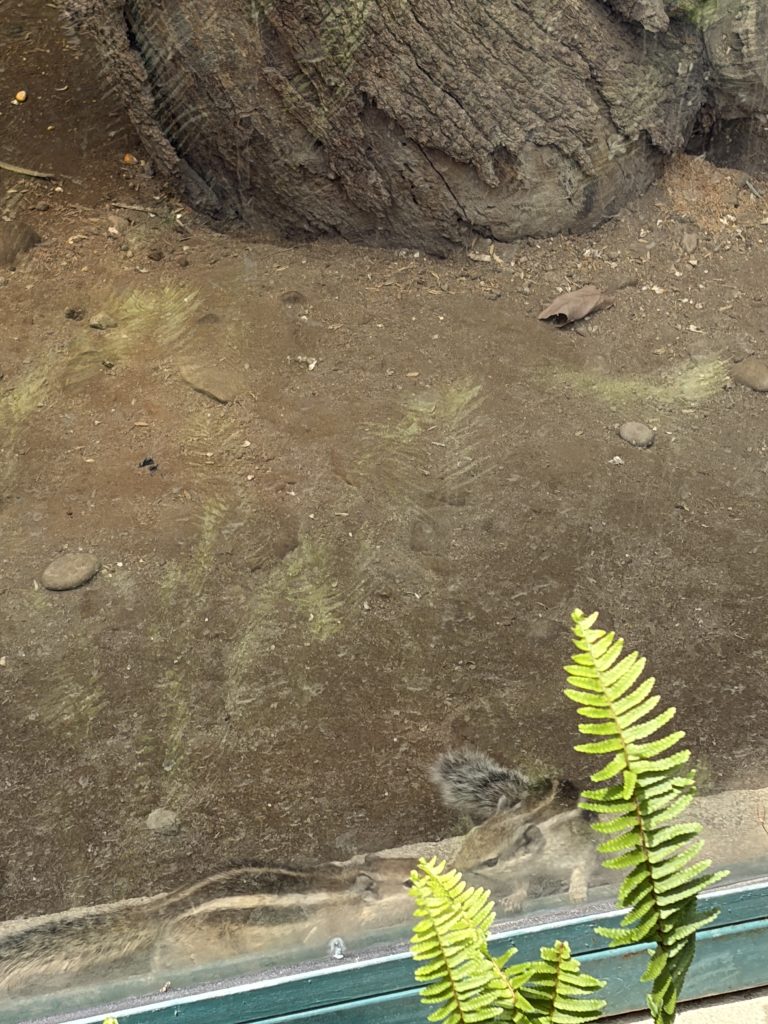
Five-striped palm squirrel (Funambulus pennantii) is a species that exists in countries such as Iran, Afghanistan, Pakistan, Northern India, Nepal and Bangladesh. The animal dwells in tropical or subtropical deciduous forest, grassland, scrubland, plantations and urban habitats. It is a small-sized animal with a weight of 147 grams. It has a diet comprising seeds, fruits, nuts, insects and bird eggs. Gestation period is 40-45 days while litter size is 1 to 5 offspring. Life span of the animal is 5 years.
Guinea Pig
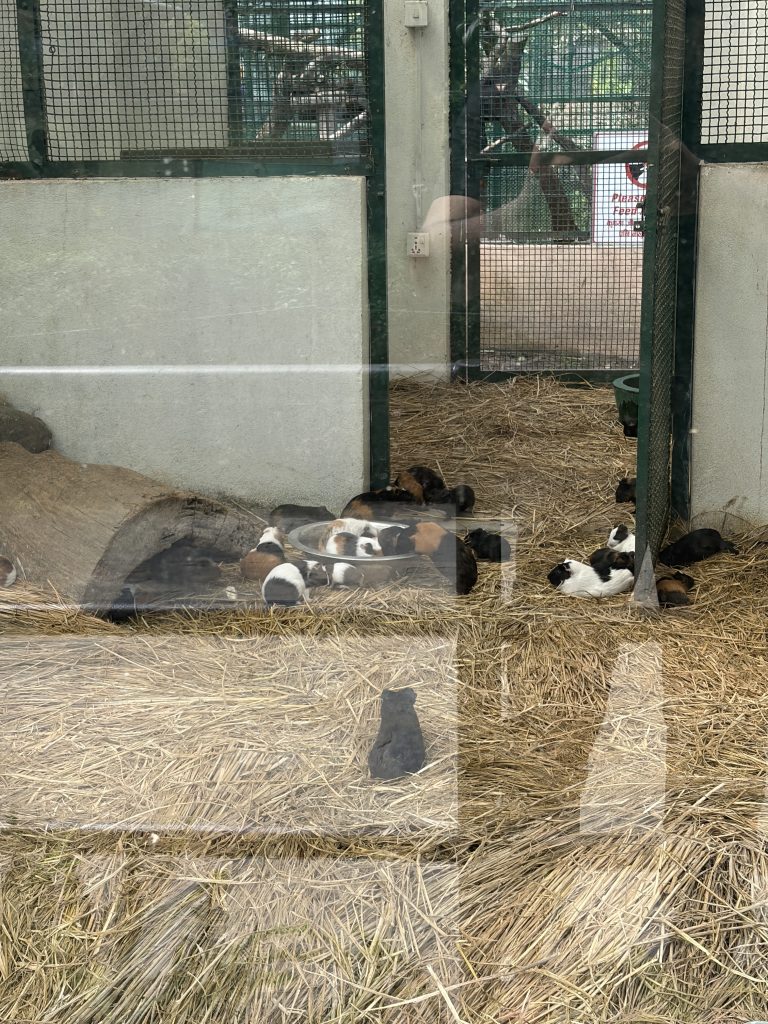
The Guinea Pig (Cavia aperea) lives in Peru, Argentina, Brazil, Colombia, Ecuador, French Guinea, Guyana, Paraguay, Surinam, Uruguay, and Venezuela. The animal inhabits open grasslands, edges of forests, marshes, and stony areas by digging burrows. The animal has a weight range of 400 to 600 grams, feeds on fruits, vegetables, plants, and twigs. The gestation period of the Guinea Pig is 2 months, and the number of offspring born is 2 to 6. It lives for a duration of 3 to 5 years.
Asian Elephant
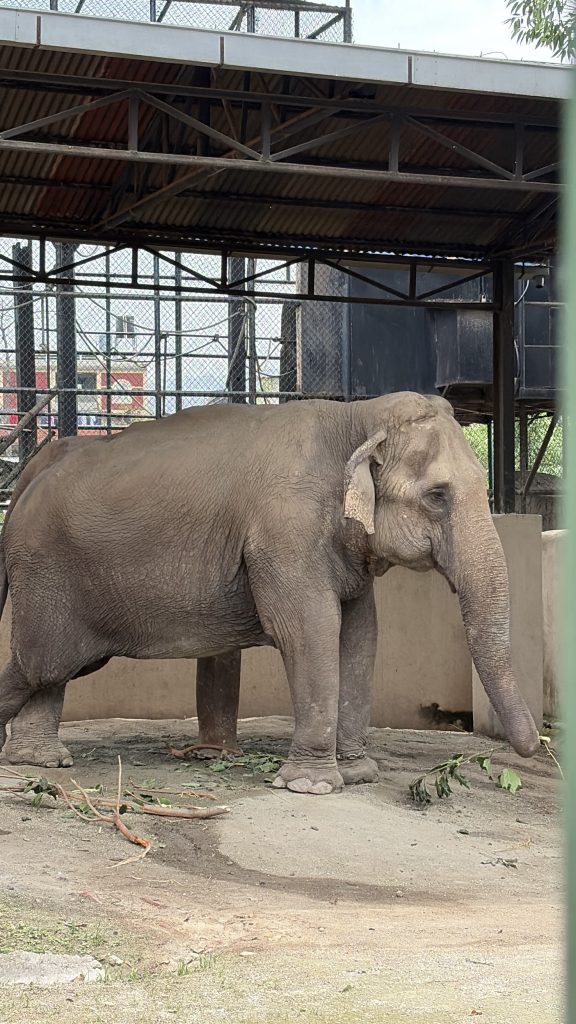
Elephas maximus, otherwise called the Asian Elephant, is among the most adorable species of animals in Central Zoo Jawalakhel. We find in many countries like Nepal, India, Bangladesh, Bhutan, Sri Lanka, Thailand, Myanmar, China, Indonesia, Cambodia, Malaysia, and Vietnam. This animal can be found in different areas such as thick forests, meadows, hill areas, low ground and low foothill areas. This animal weighs between 4000 to 5000 kilograms and feeds on a great diversity of grasses, leaves, twigs, fruits, branches, bark, shoots, succulents, creepers and palms. It takes about 18 to 22 months for a mother elephant to give birth to one baby elephant.
Sloth Bear
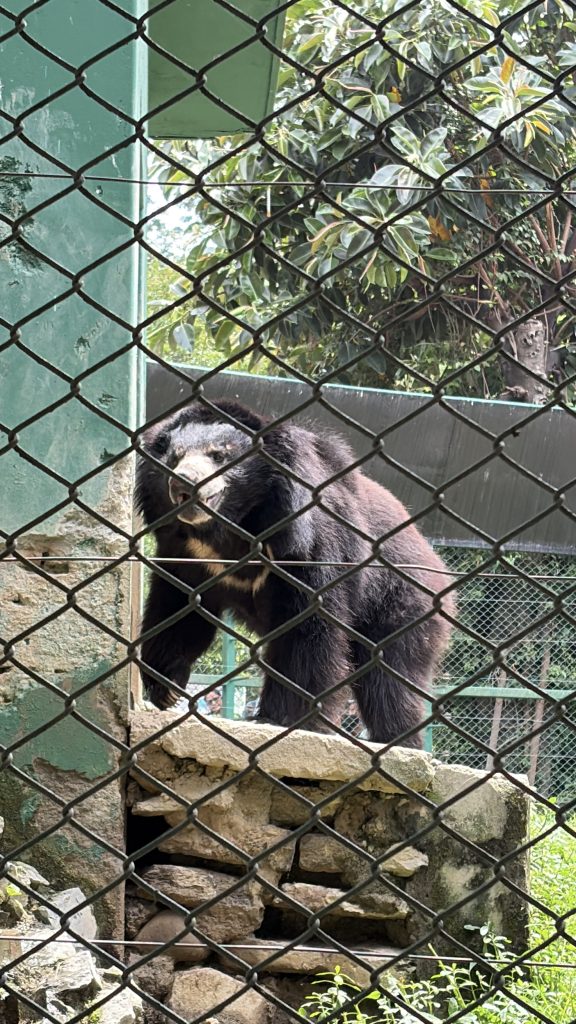
Sloth Bear (Melursus ursinus) is an animal that exists in Nepal, India, Bangladesh and Bhutan. They exist in hills of low altitudes, jungles, and grasslands. The female sloth bear weighs between 55-95kg and the male sloth bear weighs between 80-145 kg. The sloth bear is omnivore and its food sources are ants, insects, fruits and plants. Their gestation period is 7 months and they reproduce one to two offspring. The sloth bear lives up to 40 years in captivity. The sloth bear stands upright when threatened and utilizes their clawed forepaws as well as their canine teeth as offensive weapons.
Common Leopard
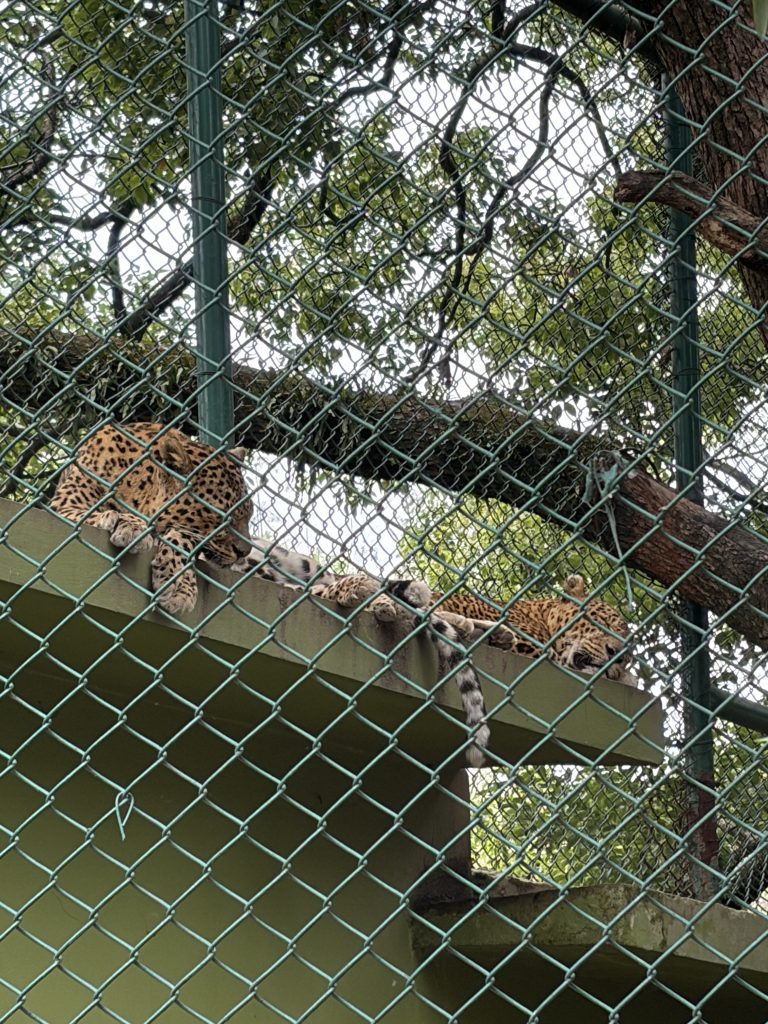
Panthera pardus or commonly called the Common Leopard is one of the most adaptive animals at Central Zoo Jawalakhel. It exists in Nepal, India, Bangladesh, Bhutan, Pakistan, Sri Lanka, Indonesia, Vietnam, Afghanistan and even Africa. They thrive well in any environment that has adequate prey and this ranges from open grasslands, thick forests, cold mountains, arid deserts, and even cities. With its weight ranging from 30-80 kg, it preys on pigs, goats, sheep, cattle and other animals. Gestation period lasts between 3-4 months while it gives birth to 2-4 babies. Life span is 15-20 years while our status right now we considered Near Threatened.
Royal Bengal Tiger
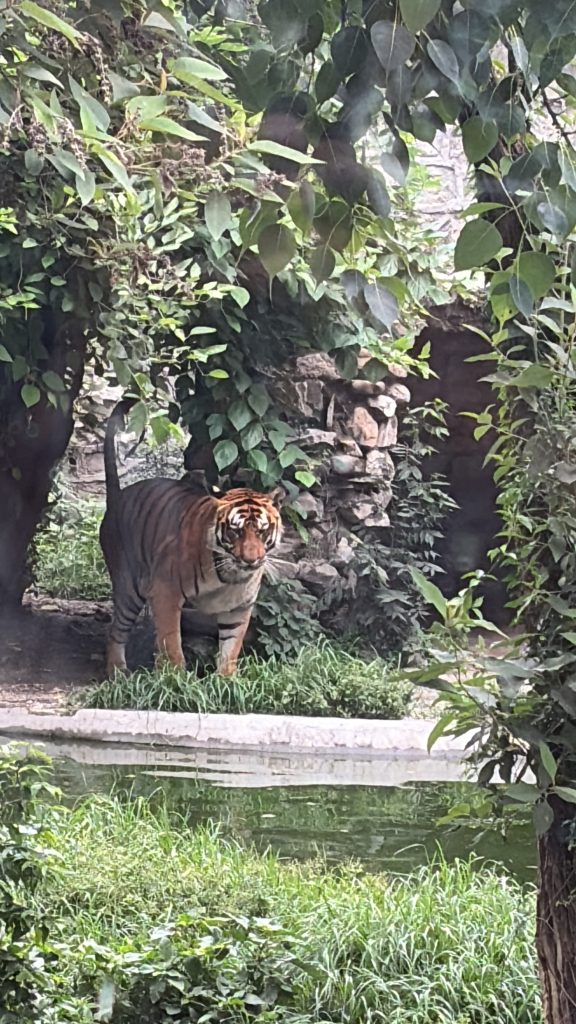
Royal Bengal Tiger is Panthera tigris in scientific name, and undoubtedly, it is one of the most beautiful animals in Central Zoo Jawalakhel. They are native to Nepal, Bhutan, India, Bangladesh, China and Myanmar, and they prefer dense forests, alluvial grasslands, and swamps. Having a weight between 100 to 300 kilograms, this strong animal preys on deer, wild boar, blue bull, and porcupine for survival. Gestation period of Royal Bengal Tiger is 15 to 16 weeks, and the number of offspring in a litter is 2 to 3.
Wild Water Buffalo
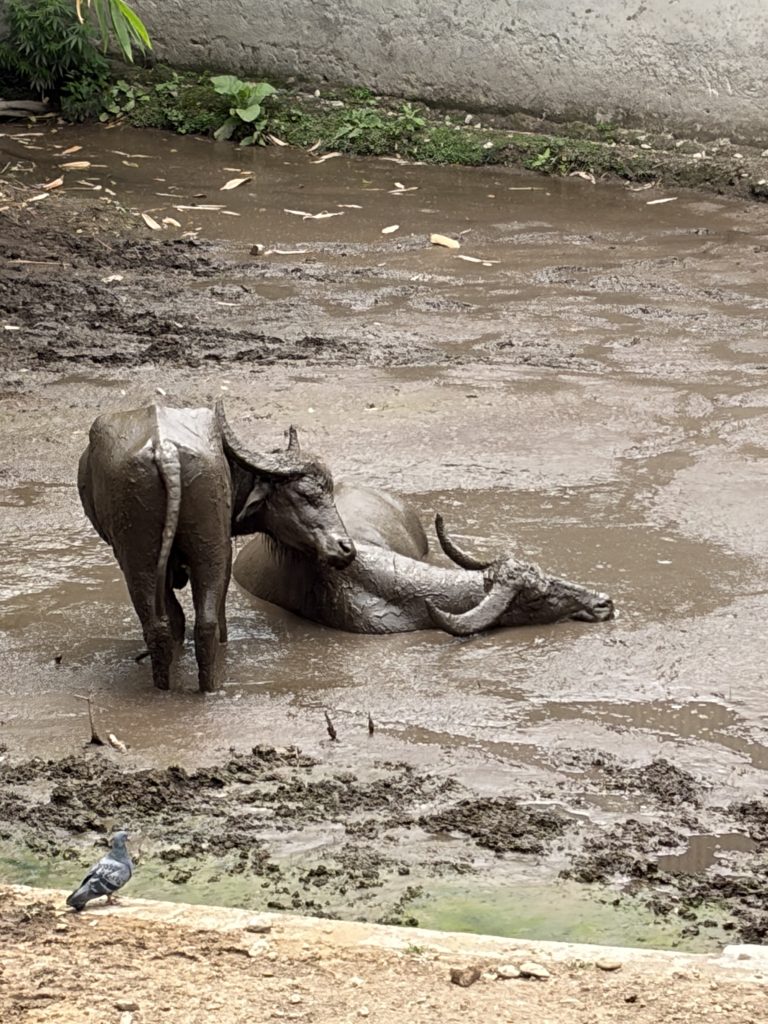
Wild Water Buffalo is known by its scientific name of Bubalus arnee. We can find them in South and Southeast Asia and inhabits regions like riverine forests, tall alluvial grasslands, wetlands and marshes. This creature ranges from 800 to 1200 kilograms in weight and has a diet which is mainly made up of grasses, shrubs and various tree species. Gestation period for this animal varies from 300 to 310 days and they have an average lifespan of 20 to 25 years. Male buffaloes possess large backwards-curving horn shaped crescents measuring about 5 feet in length.
Jungle Cat
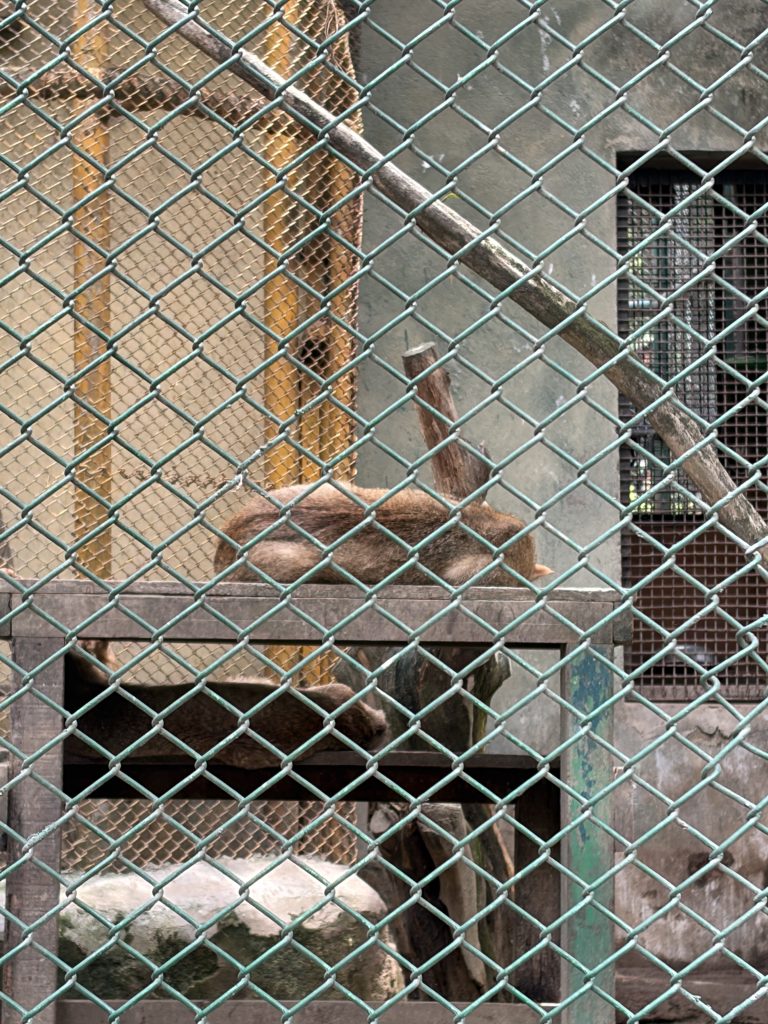
Felis chaus is the scientific name for the Jungle cat we can find in Nepal, India, Sri Lanka, East Asia, and Egypt. It prefers to inhabit arid regions around the scrub forest, riverside and marshlands, and sometimes it is even found in settlements and villages. Its weight ranges from 4 to 6 kilograms and it eats small animals, pigs, young deer, birds, reptiles, amphibians, insects, and domestic fowls. Gestation takes 63 to 68 days and produces 1 to 6 cubs. The Jungle Cat can live up to 15 years and its conservation status is we have listed as least concern.
Chimpanzee
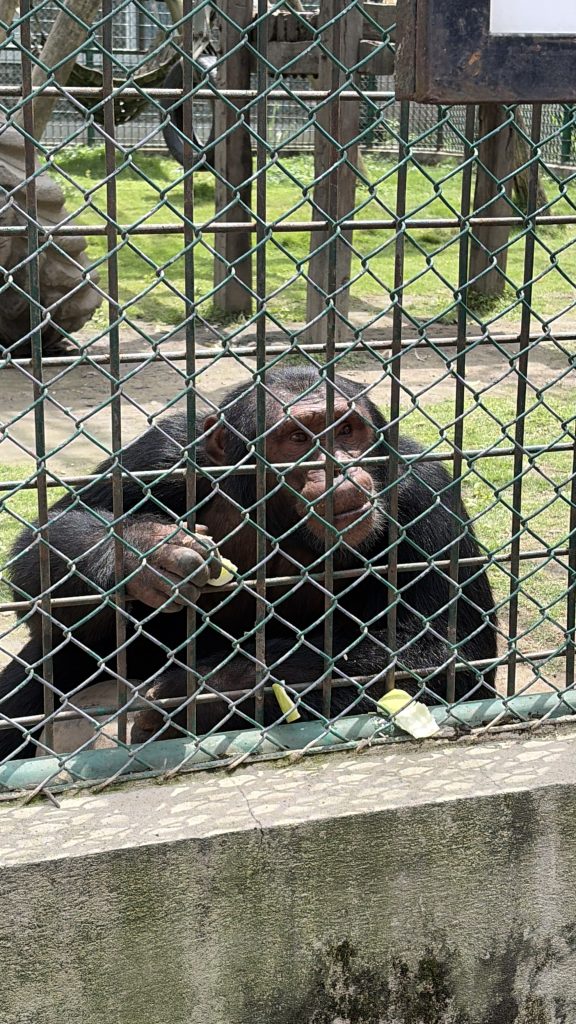
Pan troglodytes, commonly known as The Chimpanzee, lives in central and western Africa. Chimpanzees live in tropical rain forests, woodland, and grasslands. These primates are intelligent creatures. They make use of sticks and stones for digging up food from ant nests. This is one skill that no other creature possesses except humans. They feed on fruits, leaves, insects, and occasionally small animals. The lifespan of a chimpanzee in the wild is 40 years, whereas in captivity it lives even longer. They are social animals and communicate by making sounds and using gestures. We mark Chimpanzees as endangered creatures.
Conclusion
The Central Zoo Jawalakhel has a fascinating collection of fauna that originates from all parts of the world. Visitors have access to many animals such as the Asian Elephant, the Snow Leopard, the Guinea Pig, various types of tortoises, and many more.
Most of the animals at Central Zoo Jawalakhel belong to critically endangered species that have a special ecological importance and significance for our planet. Some animals at Central Zoo Jawalakhel including Greater One Horned Rhinoceros, Royal Bengal Tiger, Chinese Alligator, etc. Central Zoo Jawalakhel helps with the conservation and education of these creatures.
When visiting the Central Zoo Jawalakhel, make sure to learn about each animal and appreciate the amazing diversity of fauna. What is your favourite animal at the Central Zoo Jawalakhel? Comment below!