Lalitpur Metropolitan City, Nepal — May 2026
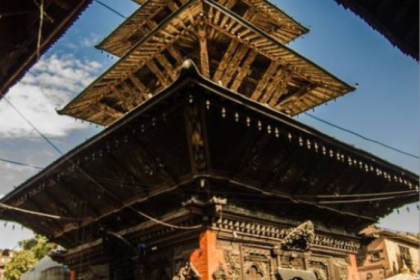
Tucked within the ancient city of Lalitpur known since the era of Kirant king Yalambar as Yala Mahanagar, the City of Fine Arts Ward 4 occupies a stretch of ground that has been inhabited and venerated for well over a millennium. Centred on the bustling crossroads of Jawalakhel, the ward is home to a constellation of temples, stone water fountains, rest shelters, and sacred courtyards whose stones carry the memory of kings, craftsmen, and generations of daily life. Today, after decades of neglect, earthquake damage, and the pressures of rapid urbanisation, Ward 4 is the site of one of the most visible and community-rooted heritage restoration efforts in the Kathmandu Valley.
A Ward Defined by Its Heritage
Ward 4’s office is located in Jawalakhel, and among its recognised heritage assets are the Vishnudevi Temple, the Brahmani Temple, the Paringal Temple, the Jawalakhel Dhunge Dhara, the Ikuhiti Dhunge Dhara, the Dhobi Ghat Saraswati Temple, the Pattipa Ganesh Temple, the Bhanimandal Mahadevsthan, the Bagdol Ganesh Temple, the Bagdol Inarachowk Shiva Temple, the Ram Temple at Afaldol, the Jawalakhel Lalit Mandap, and the Pattipa Dhunge Dhara.
This dense inventory temples, stone spouts, and mandapas all within a single ward reflects Lalitpur’s extraordinary concentration of living heritage. These are not museum exhibits. They are places where morning puja is performed, where neighbourhood festivals converge, and where residents still draw ritual water before entering a shrine.
Lalitmandap: From Neglect to Public Centrepiece
The most high profile restoration project in Ward 4 in recent years has been the revival of Lalitmandap, the historic ceremonial pavilion at Jawalakhel Chowk.
Previously disorganised, the area was systematically arranged by the Lalitpur Metropolitan City and transformed into a waiting space and public park. Benches have been installed around the area, and green plants in decorative pots have been placed at various spots, turning the main intersection into a comfortable place for the public to rest and wait.
The significance of Lalitmandap extends beyond civic beautification. Every year, after the Rato Machhindranath chariot-pulling festival, the tradition of displaying the sacred Bhoto an ancient jewelled vest takes place at Lalitmandap. According to Ward Chairperson Santosh Khadka, the benches and potted plants placed in the area are temporarily relocated before this ceremony so that the sacred space can be used in its traditional form when the President of Nepal displays the Bhoto to the public.
The Lalitpur Metropolitan City also reconstructed the traditional resting shelter (Falcha) and the historic Jawalahiti (Gairedhara) near Lalitmandap, and a Detailed Project Report (DPR) was prepared before reconstructing Lalitmandap itself in a historic style.
Mayor Chiribabu Maharjan has stated that the initiative aligns with his goal of establishing Lalitpur as a beautiful cultural city: “Jawalakhel is a historic site. The metropolis is systematically working to preserve, promote, and manage its heritage.”
Dhunge Dharas: The Veins of the City
Among the most poignant symbols of Lalitpur’s heritage are its dhunge dharas the intricately carved stone water spouts that once formed the backbone of the valley’s water supply system. Ward 4 contains several of these ancient fountains, including the Jawalakhel Dhunge Dhara and the Ikuhiti Dhunge Dhara.
A dhunge dhara is a traditional stone drinking fountain through which water flows from underground sources. The first known hiti, or water spout, is said to have been built in Kathmandu in approximately 550 AD, and the Mangal Bazar hiti in Patan is considered to be the oldest working dhunge dhara on record, built in 570 AD.
In Nepalese culture, water from dhunge dharas is considered pure and has played an important role in rituals and ceremonies. The spouts, typically located near temples and holy places, are used for purification rites before entering sacred spaces, and people make offerings and prayers at them, believing that deities residing in the carvings will bless them with health and prosperity.
Beyond the spiritual, these spouts have a civic function. In 2020, the Lalitpur Metropolitan City launched a campaign to revive several hitis beginning with Sundhara and two others, with eight additional hitis to follow, using water drawn from a new rainwater harvesting site at Sinchahiti. The restoration of the Jawalakhel and Ikuhiti dharas in Ward 4 falls within this broader metropolitan campaign to return functional, flowing water to the ancient stone spouts.
The Earthquake’s Long Shadow
No conversation about heritage restoration in Lalitpur can ignore the 2015 earthquake. The disaster left widespread destruction across the valley, deeply affecting the three Durbar Squares of Kathmandu, Patan, and Bhaktapur all UNESCO World Heritage Sites and impairing the wider cultural heritage of the Kathmandu Valley.
Ward 4, which borders the historic core of Patan, was not spared. Structures damaged in 2015 have required painstaking reconstruction, with the challenge of ensuring that modern repairs remain faithful to traditional Newari craftsmanship. Organisations such as the Kathmandu Valley Preservation Trust (KVPT) worked alongside the Lalitpur Metropolitan City and the Department of Archaeology, mobilising local communities, security personnel, and hundreds of volunteers to secure artifacts from rubble and coordinate restoration efforts.
Preserving Names, Not Just Stones
Heritage restoration in Ward 4 is not confined to physical structures. Lalitpur is a city where every place, street, and alley carries a cultural name with deep historical, religious, and traditional meaning. These names have been under threat as new names replace old ones and historic names are misspelled, stripping them of their original significance.
To counter this, the Centre for Integrated Urban Development (CIUD) and the Heritage Conservation and Reconstruction Centre of LMC signed a “Traditional Naming of the Settlements” agreement, implementing activities across ten wards of Lalitpur to recover and reinstate original place names. This effort recognises that intangible heritage the oral geography encoded in names like Jawalakhel, Pattipa, and Bagdol is as fragile and irreplaceable as carved stone.
Community, Identity, and the Road Ahead
What distinguishes the heritage work in LMC Ward 4 is that it remains, at its core, a community endeavour. The Falcha rebuilt near Lalitmandap is not an exhibition piece it is a resting shelter for ordinary people. The dhunge dharas are not fountains in a heritage park they are nodes of neighbourhood ritual and gathering. The Bhoto Jatra ceremony at Lalitmandap is not a tourist performance it is a living festival that still draws the President of Nepal as its presiding official.
Lalitpur’s cultural heritage includes a tradition of arts and crafts, with a multi-ethnic population among whom religious and cultural festivities form a major part of daily life. Ward 4, spanning 2.04 square kilometres and home to a population of over 15,000, is a microcosm of that larger story.
The challenge going forward lies in balancing restoration with authenticity, and development with access. As Lalitpur grows and as Jawalakhel becomes ever more connected to the expanding urban fabric of the Kathmandu Valley, Ward 4’s temples, dhunge dharas, and mandapas face not only the threat of physical deterioration but of being reduced to backdrop picturesque but passive, photographed but no longer used.
The work underway suggests a different vision: one where heritage sites are managed, staffed, and maintained not as relics of the past but as living infrastructure for the present places where a child can splash water from a 600-year-old stone spout on the way to school, where a grandmother can light incense at the Brahmani Temple in the morning, and where, once a year, a whole city gathers to witness the Bhoto displayed at Lalitmandap just as it has been displayed for centuries.
That continuity fragile, contested, endlessly requiring care is the true subject of heritage restoration in LMC Ward 4.
Sources: Lalitpur Metropolitan City Ward 4 Office; Tourism Info Nepal; Wikipedia (Dhunge Dhara, Lalitpur); CIUD; Spotlight Nepal / KVPT.