Introduction
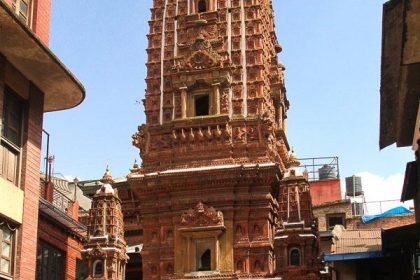
Nestled within the neighbourhood of Bagdol in Lalitpur one of the three ancient cities of the Kathmandu Valley the Bindhabasini Temple stands as a quiet but significant centre of devotion for the local community. Like many neighbourhood temples scattered across the Valley, it serves not just as a place of worship but as a living pillar of cultural identity, community life, and spiritual heritage for the people of the area.
Bagdol itself is a locality in Lalitpur (Patan), situated in Bagmati Province at an elevation of around 1,314 metres. The area lies to the south of central Kathmandu and is home to a tight knit community that has maintained its religious traditions through generations of Newar and Hindu cultural practice.
The Goddess Bindhabasini: Who She Is
The deity Bindhabasini also spelled Bindhyabasini or Bindabasini is a revered manifestation of Goddess Durga (Bhagwati), widely worshipped across Nepal. Her name literally translates as “she who dwells in the Vindhya mountains,” drawing a spiritual connection to the ancient Vindhya Range of India, where the goddess is said to have taken residence after the destruction of the demon Mahishasura.
In the broader Hindu tradition, Bindhabasini is regarded as a powerful form of Shakti the divine feminine energy and is believed to be a protector deity who shields her devotees from misfortune and grants blessings of strength and prosperity. She is often identified with Goddess Kali and Parvati, embodying both fierce power and maternal compassion.
Temples dedicated to Bindhabasini can be found across Nepal, with the most famous example located atop a hillock in Pokhara, Gandaki Province. That temple, founded around the mid-18th century, became a model of Bindhabasini worship throughout the country. Local Bindhabasini temples like the one in Bagdol reflect how this devotion spread deep into neighbourhood and community life throughout the Kathmandu Valley.
Historical and Cultural Context
The Kathmandu Valley has been a crucible of Hindu and Buddhist civilisations for well over a millennium. Lalitpur (Patan) in particular is renowned for its extraordinary density of temples, courtyards (chowks), and sacred architecture, much of which was constructed during the Licchavi and Malla dynasties. The spiritual landscape of Lalitpur is characterised by numerous neighbourhood shrines each locality (tol) typically having its own tutelary deity whose temple forms the social and spiritual nucleus of community life.
The Bindhabasini tradition in Bagdol fits squarely within this framework. Worship of goddess Bhagwati in her various forms including Bindhabasini became particularly widespread in Nepal during and after the Shah period, when royal patronage elevated Shakti worship to a prominent place in Nepalese religious practice. Many localities across the Kathmandu Valley established their own Bindhabasini or Bhagwati shrines, either through royal decree, community initiative, or divine inspiration according to local legend.
Architecture and Setting
Like most neighbourhood Hindu temples in Lalitpur, the Bindhabasini Temple in Bagdol is characterised by traditional Newar religious architecture. Nepal’s pagoda style temples, with their tiered roofs, ornate wooden carvings, and richly decorated entranceways, represent a centuries old architectural heritage unique to the Kathmandu Valley.
The temple precinct typically includes the main shrine housing the idol of the goddess, along with smaller subsidiary shrines dedicated to other deities such as Ganesh, Shiva, and Hanuman creating a comprehensive spiritual environment where devotees can offer prayers to multiple gods in a single visit. The premises are often shaded by ancient trees that lend a serene, meditative atmosphere to the site.
Stone staircases, traditional dhunge dharas (stone water spouts), and surrounding courtyards are common features of such sacred spaces, reflecting the deep integration of religious architecture into daily urban life in Lalitpur.
Religious Significance and Worship
The Bindhabasini Temple in Bagdol is primarily a community temple, meaning it serves the day-to-day spiritual needs of local residents rather than functioning as a major pilgrimage destination. Devotees visit regularly to offer flowers, incense, fruits, and prayers (puja) to the goddess.
Tuesdays and Saturdays hold special religious importance at temples dedicated to goddess Bhagwati. On these days, the flow of worshippers increases notably, with families and individuals coming to seek the goddess’s blessings for health, prosperity, new beginnings, and protection from harm.
Special rituals and life-cycle ceremonies such as bratabandha (sacred thread ceremonies for boys), marriage rituals, and naming ceremonies are also conducted at such neighbourhood temples, underscoring their role as community anchors for both the spiritual and social milestones of local life.
Festivals Celebrated at the Temple
The most vibrant period at any Bindhabasini or Bhagwati temple in Nepal is the festival season, particularly:
Dashain (Vijaya Dashami): The most important Hindu festival in Nepal, spanning fifteen days in autumn. During Dashain, Bindhabasini temples across the country become focal points of worship, with large numbers of devotees gathering to offer tika, jamara, and prayers. Animal sacrifices are traditionally made on Mahanavami (the ninth day) as an offering to the goddess.
Navratri: The nine-night festival honouring the nine manifestations of Goddess Durga is another time of intense religious activity. Devotees observe fasts, sing devotional songs, and participate in collective rituals.
Shivaratri and Teej: These festivals, while primarily dedicated to Shiva and the well-being of women respectively, are also celebrated in the precincts of Bhagwati temples throughout Lalitpur.
During all these occasions, the temple premises come alive with the sights and sounds of traditional Nepalese worship oil lamps (diyas), marigold garlands, the sound of bells, and the fragrance of dhoop (incense).
The Temple’s Role in Community Life
In Bagdol, as in much of Lalitpur, the local temple is far more than a place of prayer. It serves as a community gathering point, a venue for cultural events, and a living link to ancestral traditions. Guthi the traditional social institution of the Newar community often plays a role in managing the affairs of such neighbourhood temples, organising festivals, maintaining the premises, and preserving ritual customs passed down through generations.
For the elderly residents of Bagdol, the temple is a place for daily morning and evening worship. For younger generations, it represents a connection to their roots and an initiation into the rhythms of sacred time that structure life in the Kathmandu Valley. For visitors and travellers, it offers an intimate and authentic glimpse into living Nepalese spirituality, away from the more tourist-frequented sites of central Patan.
Getting There
Bagdol is easily accessible from central Lalitpur and Kathmandu. The locality is well connected by local buses and microbuses from central Patan (Jawalakhel, Lagankhel) as well as from Kathmandu’s Ratnapark and Tripureshwar areas. Taxis and ride hailing services provide a comfortable and direct option. The neighbourhood is also within walking or cycling distance of Jawalakhel, where the famous Central Zoo is located, making it possible to combine a temple visit with other sights in southern Lalitpur.
Conclusion
The Bindhabasini Temple in Bagdol may not command the fame of Nepal’s most celebrated religious monuments, but it embodies something precious and irreplaceable: the living religious tradition of a community that has, for centuries, shaped its spiritual life around the worship of the divine feminine. In the goddess Bindhabasini, the people of Bagdol see a protector, a mother, and a source of strength values that continue to resonate across the changing rhythms of modern life in the Kathmandu Valley.
Visiting this temple is an invitation to step beyond the well worn tourist trail and experience the soul of Nepali religious life in its most genuine, neighbourhood form.
Note: Specific historical records about the founding date and detailed architectural features of the Bindhabasini Temple in Bagdol are limited in publicly available documentation. This article draws on the wider traditions of Bindhabasini worship and Newar religious heritage in the Kathmandu Valley. Local residents and temple management would be the best sources for detailed historical accounts specific to this temple.