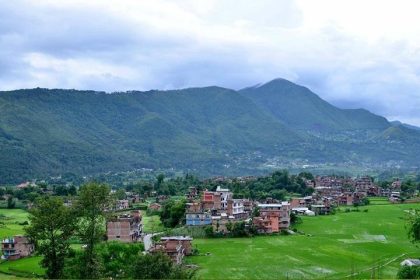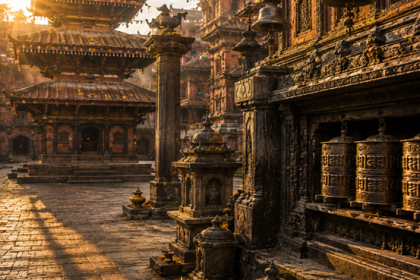
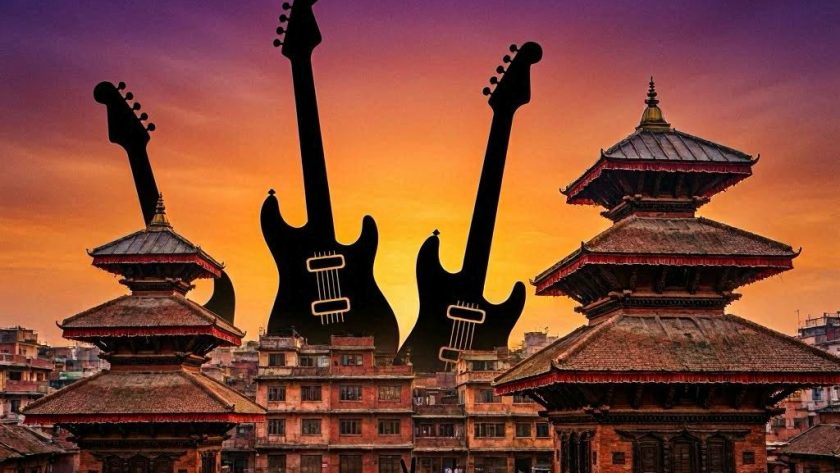
Lalitpur is more than Nepal’s artistic capital. It is the living, breathing heartbeat of the Kathmandu Valley’s creative soul. Most visitors arrive for the UNESCO-listed Durbar Square and the ancient Newari temples. Few know that Lalitpur also gave birth to some of the most powerful musical bands of Lalitpur — acts that went on to define entire generations of Nepali sound. The Lalitpur music scene spans an extraordinary range. From Latin-flavored pop to raw deathcore, from ancient folk traditions to modern rock-fusion, this city refuses to be boxed in. This is not a Wikipedia summary. This is the story of musicians who grew up in the lanes of Patan and turned their lived experiences into anthems for Nepal.
Why Lalitpur Is Nepal’s Musical Heartbeat
Patan is one of the oldest cities in the Kathmandu Valley. For centuries, it has been a centre of Newari arts: bronze casting, woodcarving, painting, and music.
The Newari cultural tradition values artistic expression deeply. Music has always been woven into religious festivals, community gatherings, and the rhythms of daily life. That foundation created ideal conditions for extraordinary creativity.
When modern genres arrived in Nepal — rock, pop, metal — Lalitpur absorbed them and made them its own. The result is a Lalitpur music scene that is simultaneously ancient and completely contemporary.
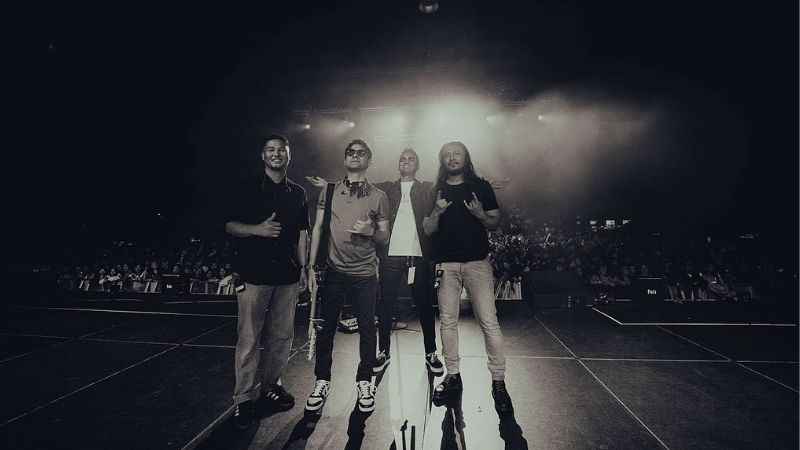
The Uglyz — Pop-Rock Royalty Born in Kathmandu, 1995
Their Origin Story
The Uglyz did not start in a professional studio or a music school.They started in a classroom.The band was initially formed in 1995 by three students at Little Angel’s School in Hattiban, Nepal: Sarun Tamrakar (vocalist), Sudip Tamrakar (guitarist), and Rakin Lal Shrestha (drummer).Three teenagers. One shared obsession with music. And a decision that would shape Nepali pop-rock for the next three decades.
The Hiatus and the Comeback
Like many great bands, The Uglyz almost did not make it. As the original members pursued higher education, the band went on hiatus. Sarun relocated to Australia. Sudip continued his studies in Nepal. Rakin moved to India. The band that had started so promisingly in a school in Hattiban was suddenly scattered across three countries. But in 2003, with the support of their families and friends, The Uglyz reunited in Nepal. That reunion turned out to be one of the most important moments in Nepali pop-rock history.
Rush — The Debut Album That Changed Everything
Two years after reuniting, The Uglyz released their debut album Rush on January 31, 2005.
Rush resonated with both teenagers and adults across Nepal. That cross-generational appeal is rare — most debut albums find one audience. Rush found everyone.
The follow-up album In Transit arrived in 2011, further cementing their place in Nepal’s music scene. The band then embarked on global tours, taking Nepali pop-rock to international stages.
The Band Today
The Uglyz are still active. Their current lineup — Sonam Lama, Sarun Tamrakar, Anuj Shrestha, and Nishan Shrestha — performed at LG Nite 2024, proving that nearly 30 years after forming in a Hattiban school, the band still commands a stage and an audience.
🎵 Cultural Impact: The Uglyz are one of the longest-running pop-rock bands in Nepali music history. Formed in 1995, they survived a full international hiatus, reunited, released two landmark albums, and are still performing today. They are not just a band — they are a blueprint for persistence in the Nepali music industry.
⚡ Quick Facts
🎸 Genre: Pop-Rock
📅 Formed: 1995, Kathmandu
🏫 Origin: Little Angel’s School, Hattiban, Nepal
👥 Founders: Sarun Tamrakar, Sudip Tamrakar, Rakin Lal Shrestha
📅 Era of Fame: 2000s
🔄 Reunited: 2003
💿 Debut Album: Rush (January 31, 2005)
💿 Second Album: In Transit (2011)
🌍 Activity: Global tours, still performing as of 2024
👥 Current Members: Sonam Lama, Sarun Tamrakar, Anuj Shrestha, Nishan Shrestha
Deepak Bajracharya & Rhythm Band — Where Latin Rhythms Meet Nepali Soul
Deepak Bajracharya & Rhythm Band created something rare: a fusion of Latino-influenced music wrapped around Nepali lyrics and cultural sensibility. The result is music that makes audiences want to move and feel deeply connected to their culture — simultaneously.
Latin rhythms — their syncopation, warmth, and infectious pulse — sit beneath Nepali language and Nepali emotion. It is a combination that should not work. It works brilliantly.
Signature Tracks
🎵 Man Magan — a cultural touchstone that resonated across generations
🎵 Kali Kali Hissi Pareki — a beloved favourite still celebrated and performed today
🎵 Cultural Impact: Deepak Bajracharya & Rhythm Band proved that Nepali music can absorb global rhythms without losing its soul. Their cross-cultural fusion model remains a blueprint for creative experimentation in Nepal’s music industry.
⚡ Quick Facts
🎸 Genre: Latino-Nepali Fusion / Pop
🎵 Key Tracks: Man Magan, Kali Kali Hissi Pareki
🏆 Legacy: Pioneers of cross-cultural musical fusion in Nepal
Shreekali Band — The Guardians of Nepali Folk Tradition
Folk Instrumentation as Cultural Preservation
Not every band chases the spotlight. Some chase something more important — preservation.
Shreekali Band, based in Lalitpur, dedicates itself entirely to performing and preserving traditional Nepali culture through folk instrumental music. In an era of digital production and algorithmically optimised content, their commitment is both artistic and deeply political.
Every note they play carries the weight of generations. They are not simply performing at events. They are custodians of a sonic tradition that time and modernisation threaten to erase.
🎵 Cultural Impact: Shreekali Band is a living archive of Nepali folk music rooted in Lalitpur. Their presence ensures that the sounds of traditional Nepal are not quietly swallowed by modernity. They are custodians — not just musicians.
⚡ Quick Facts
🎸 Genre: Folk Instrumental
📍 Based: Lalitpur, Nepal
🏆 Mission: Preserving traditional Nepali musical heritage
Zenith Band — Pioneer Rock from the Heart of Patan
Pioneer Rock from Patan
Zenith Band carries a title earned through years of groundwork: pioneer rock band from the heart of Patan. They are among the earliest Nepali rock bands to emerge from Lalitpur’s historic core, helping lay the foundation for a generation of Nepali rock musicians.
Originating from the “Heart of Patan,” Zenith proved that Lalitpur could produce rock music of the highest quality music that stands alongside the best from anywhere in Nepal.
Kahi Bata Koi Aai — An Enduring Anthem
Their signature track Kahi Bata Koi Aai is one of those rare songs that does not age. It captures emotion with precision — a track that holds up across decades and at different stages of a listener’s life. That longevity is the mark of genuine songwriting craft.
🎵 Cultural Impact: Zenith Band is foundational to the Lalitpur music scene and to Nepali rock as a whole. They came before the scene fully existed and helped create it. For any serious student of Nepali rock history, Zenith is required listening.
⚡ Quick Facts
🎸 Genre: Rock
📍 Origin: Heart of Patan, Lalitpur
🎵 Standout Track: Kahi Bata Koi Aai
🏆 Status: Pioneer Nepali rock band
Band Brothers — Godawari’s Rock-Fusion Force
Five Members, One Cohesive Identity
Lalitpur extends south — to forests, hills, and communities that carry their own creative energy. Godawari is one such place, and Godawari gave Nepal Band Brothers.
This five-member rock and rock-fusion group was built from the chemistry that only forms when musicians grow together in the same environment. Five members. One cohesive sound. A musical identity rooted in southern Lalitpur but reaching far beyond its borders.
Their Godawari origins are not incidental — they shape the band’s perspective, their sound, and their sense of where they belong.
🎵 Cultural Impact: Band Brothers represent the grassroots musical energy of Lalitpur’s wider geography. They prove that the city’s creative reach extends well beyond its famous historic squares into the communities of Godawari.
⚡ Quick Facts
🎸 Genre: Rock / Rock-Fusion
📍 Origin: Godawari, Lalitpur
👥 Members: 5
The Underground Metal Scene of Lalitpur — Nepal’s Heaviest Sound
Meet the Bands of the Underground
Behind the folk traditions and pop-rock anthems, the Lalitpur music scene has a fierce underground pulse. These bands do not seek commercial radio play. They seek extreme sonic territory — and they find it.
| Band | Genre | Scene |
|---|---|---|
| Desperate Mile | Deathcore | Lalitpur Underground |
| Disorder | Thrash Metal | Lalitpur Underground |
| False Brain Tumor | Grindcore | Lalitpur Underground |
| Gamo Grind | Grindcore | Lalitpur Underground |
The presence of deathcore, thrash, and grindcore in Lalitpur is not an accident. It reflects a city where artistic freedom runs deep — the same freedom that produced centuries of world-class Newari visual art now fuels Nepal’s most extreme music.
🎵 Cultural Impact: The underground metal scene connects Lalitpur and Nepal to a global community of extreme music. These bands operate entirely on their own terms — proving that Lalitpur’s musical identity has no ceiling.
Musical Bands of Lalitpur — Quick Reference Table
| Band Name | Genre | Lalitpur Connection | Standout Track |
|---|---|---|---|
| The Uglyz | Pop-Rock | Nepal (2000s era) | — |
| Deepak Bajracharya & Rhythm Band | Latino-Nepali Fusion | Lalitpur-based | Man Magan, Kali Kali Hissi Pareki |
| Shreekali Band | Folk Instrumental | Based in Lalitpur | — |
| Zenith Band | Rock | Heart of Patan | Kahi Bata Koi Aai |
| Band Brothers | Rock / Rock-Fusion | Godawari, Lalitpur | — |
| Desperate Mile | Deathcore | Lalitpur Underground | — |
| Disorder | Thrash Metal | Lalitpur Underground | — |
| False Brain Tumor | Grindcore | Lalitpur Underground | — |
| Gamo Grind | Grindcore | Lalitpur Underground | — |
FAQs About the Musical Bands of Lalitpur
What genre of music is most popular in Lalitpur?
Lalitpur’s scene spans multiple genres. Rock, pop-rock, and folk instrumental are most established. Underground metal and grindcore form a thriving alternative movement.
Which is the most famous band from Lalitpur?
The Uglyz and Zenith Band are among the most recognised — The Uglyz for 2000s pop-rock dominance, and Zenith for pioneering rock from the heart of Patan.
Is there an underground music scene in Lalitpur?
Yes — and it thrives. Desperate Mile (Deathcore), Disorder (Thrash Metal), False Brain Tumor and Gamo Grind (Grindcore) represent the underground metal movement.
What makes Lalitpur special for music in Nepal?
Lalitpur’s centuries-old Newari arts culture, combined with its geographic diversity from historic Patan to southern Godawari, creates ideal conditions for creativity across every genre.
How These Bands Shaped Lalitpur’s Sonic Identity
Lalitpur did not simply produce musicians. It produced musical identities.
The bands in this guide form a spectrum that mirrors the city itself: ancient and contemporary, spiritual and rebellious, locally grounded and globally aware. Shreekali preserves what time might erase. Zenith pioneered a rock tradition. Deepak Bajracharya built cultural bridges. The Uglyz brought pop-rock to the national stage. Band Brothers gave Godawari a voice. And the underground scene proves Lalitpur has no musical ceiling.
The Lalitpur music scene is not a museum exhibit. It is active, evolving, and producing new voices right now.
.
🎸 Now It’s Your Turn
Which band from Lalitpur’s music scene means the most to you?
Drop your favourite local track in the comments — and share this post with someone who thinks they know everything about Nepali music.