Lalitpur Metropolitan City (LMC), often called the cultural heart of Nepal, has long been renowned for its exceptional tradition of metal craftsmanship. From intricate religious icons to large-scale contemporary installations, the city’s metal sculpture production reflects centuries of artistic heritage, technical mastery, and community dedication. Behind every finished sculpture lies the skilled hands of artisans whose knowledge has been passed down through generations.
A Legacy Rooted in Tradition
Metal sculpture in Lalitpur traces its origins to ancient Newar craftsmanship, deeply connected to religious and cultural practices. Artisans traditionally created statues of Hindu and Buddhist deities, ritual objects, and temple decorations. The techniques—especially the lost-wax casting method—have remained largely unchanged, preserving authenticity while maintaining high artistic standards.
Communities such as those in Bungmati, Patan, and surrounding areas continue to sustain this legacy. Families often inherit the craft, with skills transferred from parents to children through years of observation and practice rather than formal education.
The Process: From Wax to Masterpiece
The creation of a metal sculpture is a labor-intensive process involving several stages:
Design and Modeling: The artist first creates a detailed wax model, capturing every feature and proportion.
Mold Preparation: Layers of clay are applied over the wax model to form a mold.
Casting: Molten metal—commonly bronze or brass—is poured into the mold after the wax is melted away.
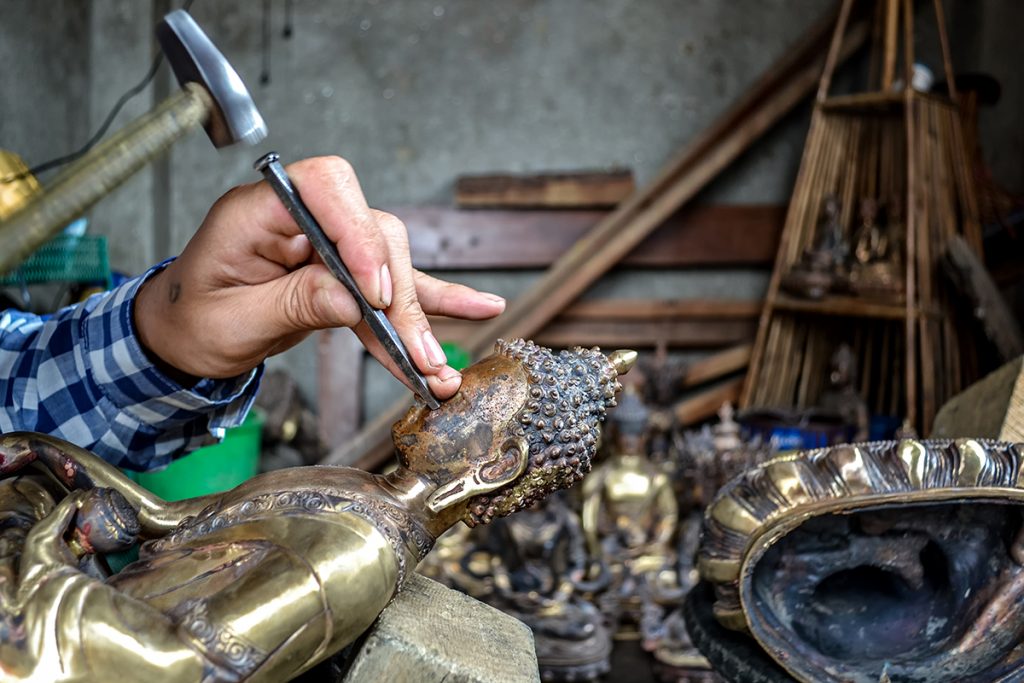
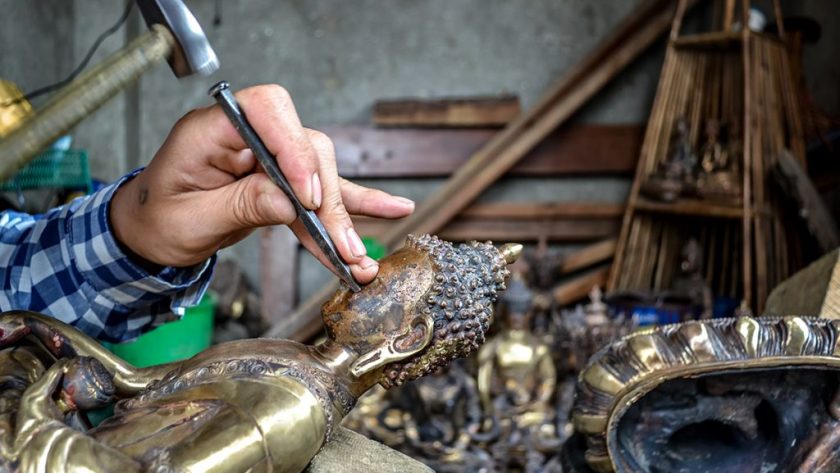
Finishing: Once cooled, the sculpture is refined through chiseling, polishing, and engraving.
Detailing and Patina: Final touches include adding fine details and applying chemical treatments for color and texture.
Each step requires precision and patience, often taking weeks or even months depending on the complexity of the piece.
The Artisans Behind the Craft
The true strength of LMC’s metal sculpture industry lies in its artisans. These craftsmen and craftswomen combine artistic vision with technical expertise. Many work in small family-run workshops, while others are part of larger cooperatives or export-oriented studios.
Despite their skill, artisans often face challenges such as limited financial security, competition from mass-produced items, and a lack of recognition. Younger generations are sometimes reluctant to continue the tradition due to better opportunities elsewhere, posing a risk to the continuity of this heritage.
Economic and Cultural Significance
Metal sculpture production contributes significantly to the local economy. Many pieces are exported worldwide, appreciated for their craftsmanship and cultural value. Tourism also plays a vital role, with visitors drawn to observe workshops and purchase authentic handmade items.
Culturally, these sculptures are more than decorative objects—they embody spiritual beliefs, historical narratives, and community identity. Temples, monasteries, and public spaces throughout Nepal feature these works, reinforcing their importance in daily life.
Modern Influences and Adaptation
While rooted in tradition, LMC’s metal artisans are gradually adapting to contemporary demands. Some are experimenting with modern designs, abstract forms, and new markets such as interior décor and international art exhibitions. Training programs and government initiatives have also begun to support skill development and innovation.
However, balancing modernization with tradition remains a delicate task. Preserving authenticity while embracing change is essential for the sustainability of the craft.
Conclusion
The metal sculptures of Lalitpur Metropolitan City are not merely products—they are expressions of history, devotion, and human creativity. Behind each piece are artisans whose hands shape molten metal into enduring works of art. Protecting and promoting their craft is crucial, not only for economic reasons but also for safeguarding a cultural legacy that defines the identity of Lalitpur.